In the heart of Japan, beneath the vibrant and bustling city of Tokyo, lies one of the world’s most ambitious and costly flood prevention projects: the Tokyo Flood Tunnels, officially known as the Metropolitan Area Outer Underground Discharge Channel (MAOUDC). This project, which cost a staggering $2.6 billion and took 17 years to complete, stands as a testament to human ingenuity and Japan’s resolve to protect its urban environment from the devastating effects of flooding.

In this article, we’ll delve deep into the story behind the Tokyo Flood Tunnels, exploring the problem it addresses, the planning and engineering efforts that made it possible, and how it stands today as a critical piece of infrastructure for one of the world’s largest metropolitan areas.
The Problem: Tokyo’s Urban Flooding Challenge
Tokyo is a megacity situated in a region prone to natural disasters, particularly typhoons and heavy rainfall, which can cause severe flooding. Tokyo’s geography exacerbates this issue. The city is built on low-lying terrain, with rivers like the Arakawa and Edogawa crisscrossing the area. During the rainy season and typhoon periods, these rivers swell, often overwhelming the drainage systems, leading to floods in urban and residential areas.
Before the construction of the flood tunnels, Tokyo experienced recurrent floods that caused significant damage to infrastructure, homes, and lives. For example, the 1958 Typhoon Ida caused major flooding in the city, highlighting the inadequacy of the city’s existing flood control measures. Given Tokyo’s status as a global economic hub and densely populated urban center, the risks associated with floods could no longer be ignored.
The frequency and intensity of such natural events were also expected to increase due to climate change, putting even more pressure on Tokyo’s flood management system. Something had to be done, and on a massive scale, to protect the city from future disasters.
The Plan: A Visionary Flood Control System
The Tokyo Metropolitan Government, along with the Japan Ministry of Land, Infrastructure, Transport, and Tourism (MLIT), spearheaded the plan to develop a massive underground flood control system. The goal was to protect Tokyo’s residents and infrastructure by channeling excess floodwater away from the city and into the surrounding rivers without causing disruption on the surface.
The idea was simple yet grand in scale: an underground system capable of diverting floodwaters before they reached the city. Engineers and planners envisioned a series of giant vertical shafts, massive tunnels, and an enormous underground reservoir that could store floodwaters during peak periods.
This plan, however, was not without its challenges. Designing and building such a massive structure beneath a densely populated city presented significant engineering difficulties. The project would require drilling through bedrock, ensuring the system could withstand earthquakes, and finding a way to discharge the water efficiently into rivers without causing downstream flooding.
The Engineering Solution: Building the Tokyo Flood Tunnels
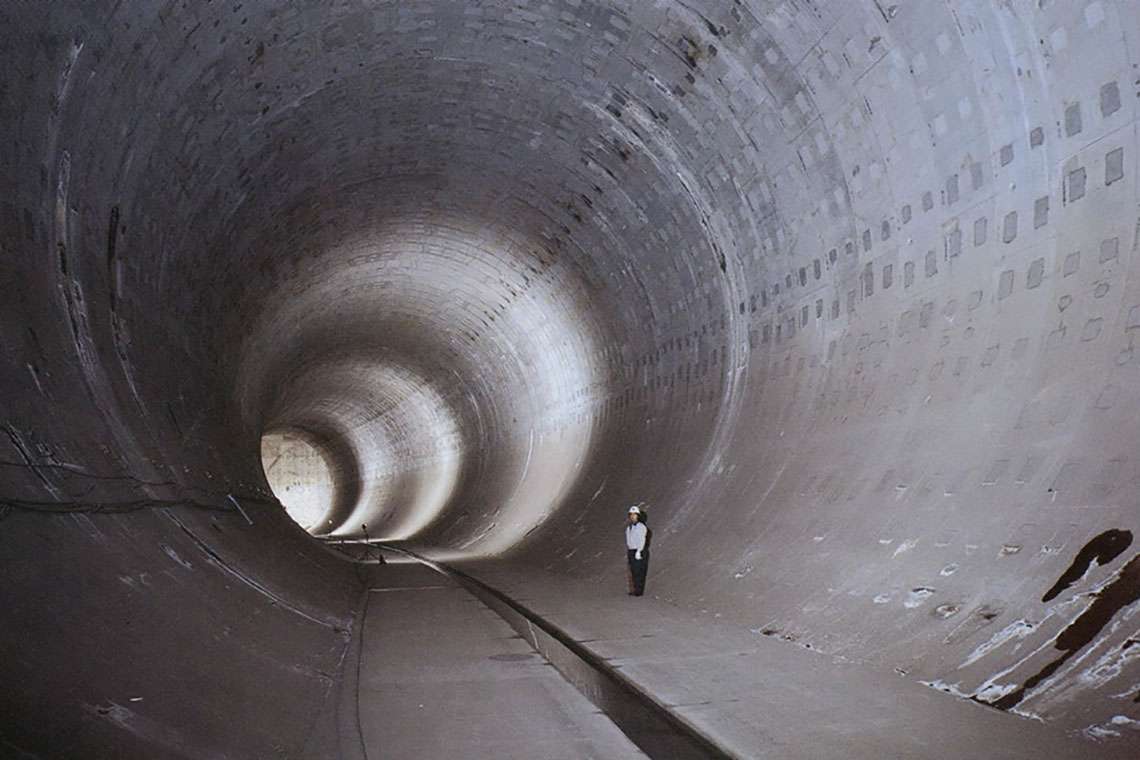
Construction of the Tokyo Flood Tunnels began in 1992 and was completed in 2009, taking a total of 17 years. The sheer scale of the project is mind-boggling. The system consists of five large vertical shafts, each about 30 meters in diameter and 70 meters deep, connected by a 6.3-kilometer-long tunnel with a diameter of 10.6 meters. The tunnel network acts as a conduit to divert floodwater to a massive underground storage tank located beneath Kasukabe, a suburban area to the north of Tokyo.
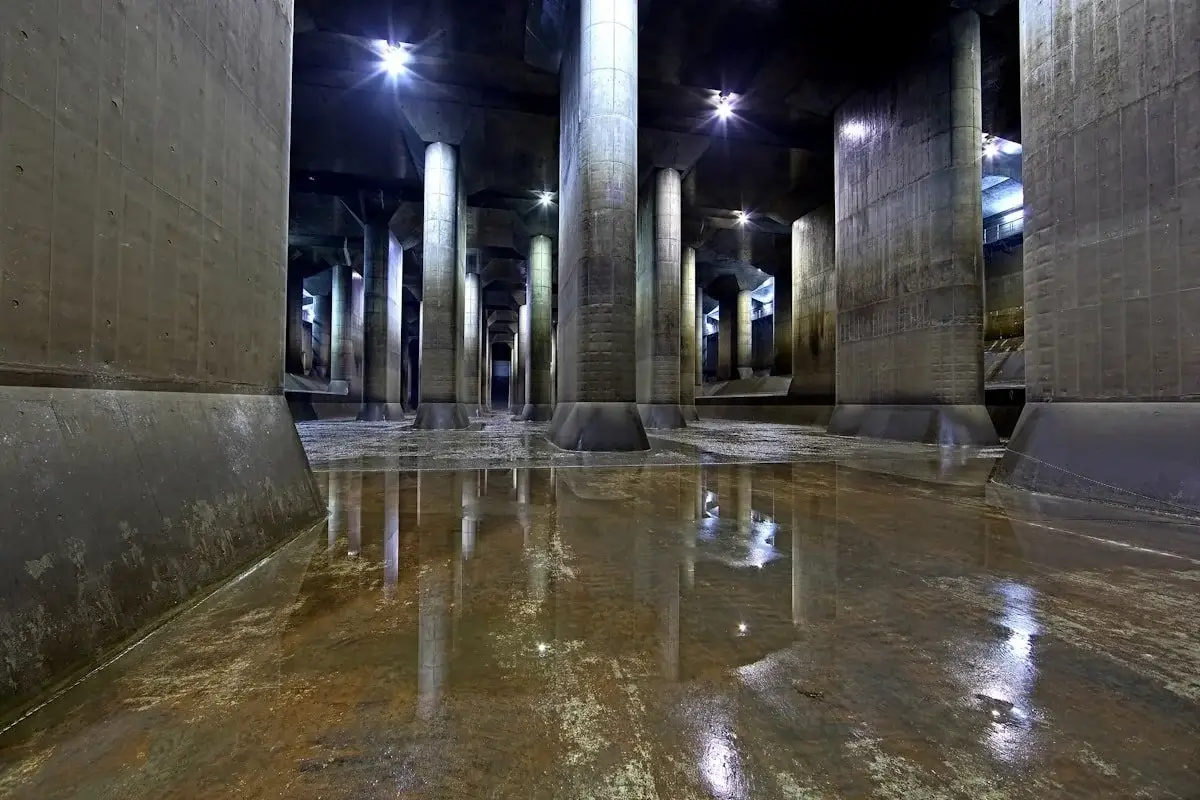
This underground tank, often referred to as the “Underground Temple” due to its awe-inspiring architecture, is one of the largest of its kind in the world. It spans 177 meters in length, 78 meters in width, and 25 meters in height, with 59 enormous concrete columns supporting the ceiling. This reservoir can hold up to 670,000 cubic meters of water, enough to fill 300 Olympic-sized swimming pools.
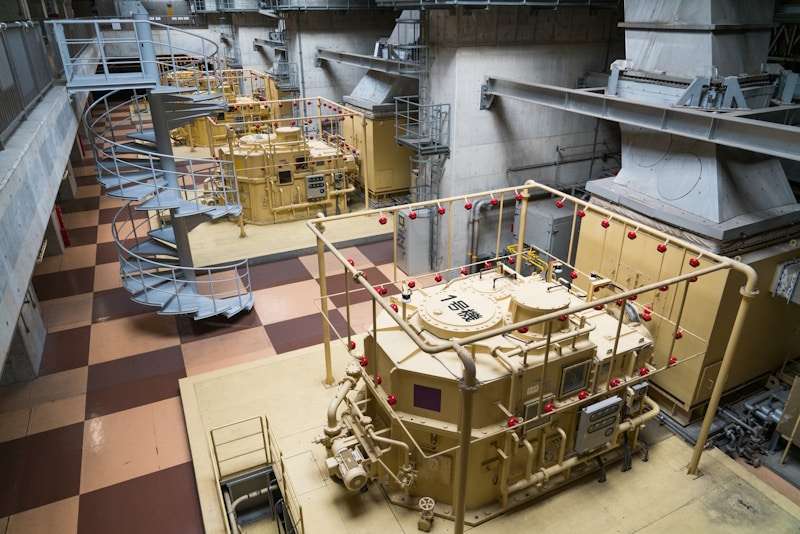
The system works by collecting excess water from overflowing rivers and storm drains in the city and directing it into the vertical shafts. From there, the water flows through the tunnels and into the underground reservoir. Once the water levels in the rivers have receded, the stored water is pumped out of the reservoir using 78,000-horsepower pumps and released into the Edogawa River, which is large enough to handle the additional water without flooding.
Concept and Design Considerations
The design of the Tokyo Flood Tunnels was guided by several key considerations:
1. Seismic Resilience: Given Japan’s location on the Pacific Ring of Fire, the tunnels and shafts had to be built to withstand earthquakes. This required extensive geotechnical surveys and the use of specialized construction techniques to ensure that the system remained intact and operational during seismic events.
2. Hydraulic Efficiency: The system needed to efficiently channel water through the tunnels and into the reservoir without causing bottlenecks or pressure buildups. The tunnels were designed with a slight gradient to ensure a smooth flow of water, aided by gravity.
3. Maintenance and Accessibility: Although the system is located deep underground, it was essential to make it accessible for regular maintenance. The shafts and tunnels are equipped with access points and ladders, allowing engineers to inspect and repair the system as needed.
4. Aesthetic and Educational Value: The “Underground Temple” was designed not only as a functional space but also as a site that could be used for educational tours. The grandeur of the reservoir, with its towering columns and vast open space, has become a popular destination for visitors interested in engineering and disaster prevention.

The Timeline: From Concept to Completion
The Tokyo Flood Tunnels were developed over several phases, reflecting the complexity and scale of the project:
– Initial Planning (1980s): The concept for the flood control system was developed in the late 1980s, following years of research and consultation with experts in hydrology, civil engineering, and urban planning. Feasibility studies were conducted to identify the best locations for the shafts and tunnels.
– Construction Begins (1992): In 1992, construction officially began. The first phase involved drilling the vertical shafts, which required specialized drilling equipment and careful monitoring to avoid disruption to the surrounding areas.
– Tunnel Construction (Mid-1990s): Once the shafts were completed, work began on the tunnels connecting the shafts to the underground reservoir. This phase required precise engineering to ensure the tunnels were aligned correctly and could handle the enormous volume of water.
– Reservoir Completion (2006): By 2006, the underground reservoir was completed. The final phase involved installing the massive pumps and testing the system to ensure it could handle floodwaters as intended.
– Project Completion (2009): After extensive testing, the Tokyo Flood Tunnels were fully operational by 2009, ready to protect the city from future flooding events.
Uses of the Tokyo Flood Tunnels: A Lifeline for Tokyo
Since its completion, the Tokyo Flood Tunnels have played a vital role in safeguarding the city. The system has been activated numerous times during typhoons and heavy rainstorms, successfully diverting floodwaters and preventing significant damage to the city.
1. Flood Control: The primary use of the Tokyo Flood Tunnels is, of course, flood control. By diverting excess water away from the city, the system has significantly reduced the risk of flooding in low-lying areas, protecting homes, businesses, and critical infrastructure.
2. Urban Development: The presence of the flood tunnels has allowed for more confident urban development in areas that were previously at high risk of flooding. Developers can build in these areas with the assurance that the city’s flood control measures are capable of handling extreme weather events.
3. Disaster Preparedness: The tunnels are also an important part of Tokyo’s overall disaster preparedness strategy. By mitigating the risk of flooding, the system helps to ensure that the city remains operational during and after natural disasters, minimizing disruptions to daily life and economic activities.
4. Tourism and Education: The “Underground Temple” has become a popular destination for tourists and engineering enthusiasts. The Tokyo Metropolitan Government offers guided tours of the facility, providing visitors with an inside look at one of the world’s most impressive engineering feats. These tours serve an educational purpose as well, raising awareness about flood control and disaster prevention.
A Symbol of Engineering Excellence
The Tokyo Flood Tunnels are more than just a flood control system—they are a symbol of Japan’s commitment to disaster resilience and urban sustainability. The project showcases the power of engineering to solve complex problems and protect cities from the forces of nature.
As climate change continues to increase the frequency and severity of natural disasters, projects like the Tokyo Flood Tunnels will become even more critical. They serve as a model for other cities around the world facing similar challenges, demonstrating how innovative engineering solutions can safeguard urban environments and ensure the safety and prosperity of their residents.
In the end, the Tokyo Flood Tunnels are not just an underground marvel but a lifeline for Tokyo—a city that, despite its vulnerability to natural disasters, remains one of the most dynamic and resilient urban centers in the world.
Leave a Reply