When Japanese sergeant Shoichi Yokoi returned to Japan after nearly three decades on the run, his primary emotion was regret. He said that his return was full of embarrassment.
Yokoi, then 56, had spent the previous 27 years surviving in the jungles of Guam, where he had fled to avoid capture when American forces in August 1944 seized the island. As per journalist Robert Rogers, Yokoi was one of the 5 000 Japanese troops who refused to surrender to the Allied Forces after the Battle of Guam and went into the forest to hide. Most of these stragglers were captured or executed within a few months, but at the end of World War II in September 1945, 130 people were successful in hiding. Yokoi came back to the society in January 1972 after two local fishermen caught him trying to mess with their fish trap. He showed an extreme example of the emphasis of Japanese Bushido philosophy on honor and self-sacrifice. Yokoi was one of the last to surrender.
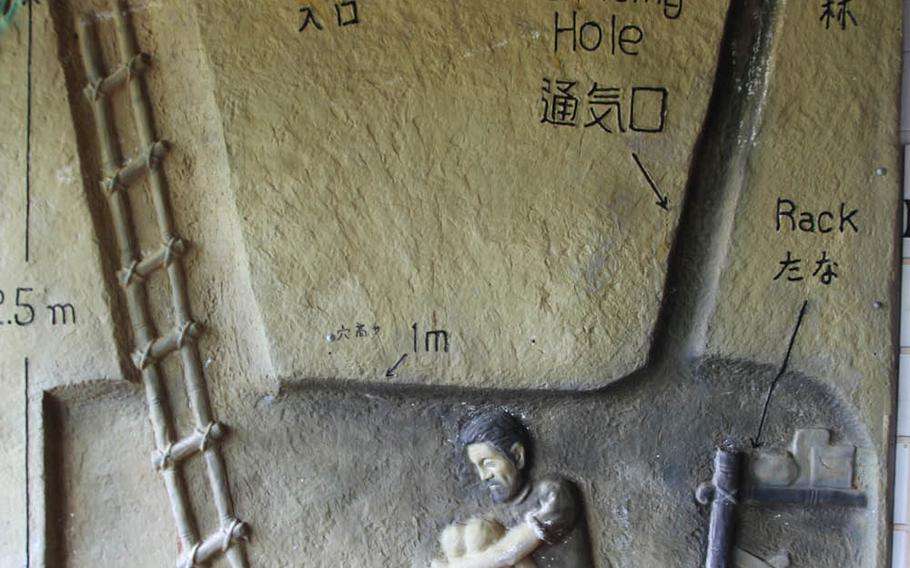
Model of cave where Yokoi hid 27 years in Talofofo Falls Resort Park Guam (Wyatt Olson/Stars and Stripes)
When Sho Yokoi passed away at the age of 82 from a heart attack, Nicholas D. Kristof wrote that he was a symbol of prewar diligence, loyalty to the emperor, and the principles of hard work in the 1997 New York Times. When he returned to Japan, he “began a huge inward quest… to determine whether he reflected the noblest impulses of Japan or the most deranged.”
Born around 1915, in Aichi Prefecture, Japan, Yokoi was a tailor until he was joined the Imperial Japanese Army in 1941. He was in China only till February 1943 and after that in Guam, according to Wanpela.com. In the summer of 1944, after the U.S. military nearly wiped out the regiment Yokoi was in, he fled into the jungle with a handful of soldiers.
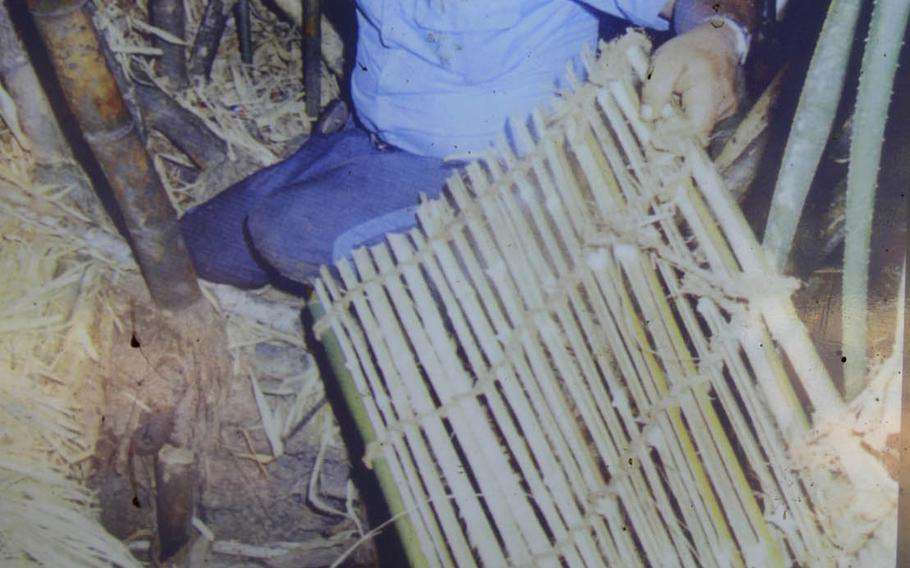
A Guam official inspects the entry to Shoichi Yokoi’s cave. (Wyatt Olson/Stars and Stripes)
In 2012, Yokoi’s nephew, Omi Hatashin, told BBC News‘ Mike Lanchin that they took extreme care not to be identified, deleting their traces as they journeyed through the jungle.
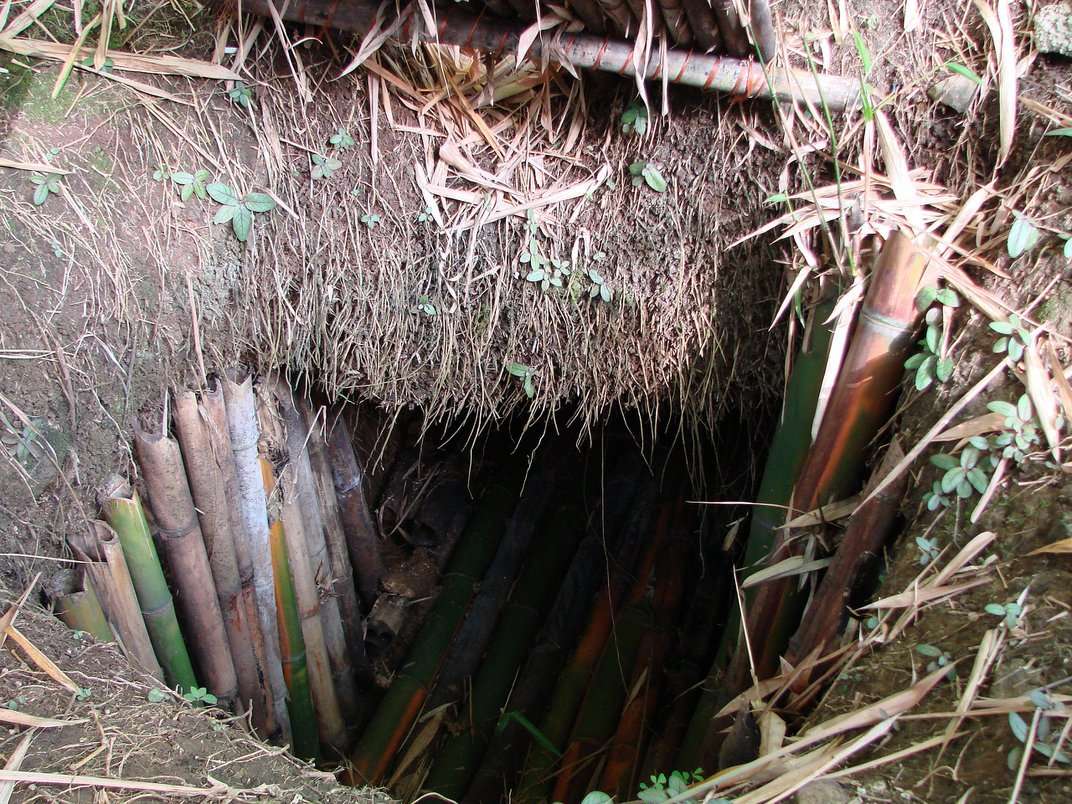
A recreation of Yokoi’s hiding place in the jungle of Guam ( Wikipedia Commons)
They survived by devouring locals’ cattle. As their numbers dwindled and the likelihood of discovery increased, they retreated to progressively distant parts of the island, living in caves or makeshift subterranean shelters and feasting on coconuts, papaya, prawns, frogs, toads, eels, and rats. According to the Washington Post, Yokoi used his tailoring abilities to weave garments out of tree bark and record time by studying moon phases. He ultimately parted ways with his fellow soldiers after they either surrendered or met their end through hostile soldiers or lost their lives because of their lifestyle in the jungle.
On the 24th of January, 1972, fishermen Jesus M. Duenas and Manuel D. Garcia observed as Yokoi eyeing a bamboo fishing trap within the Talofofo River about four miles from the closest village. According to the Associated Press (AP), Yokoi attempted to charge at the guys, who quickly overpowered him in his weakened position. (Doctors eventually determined that he was slightly anemic but otherwise in good health.)
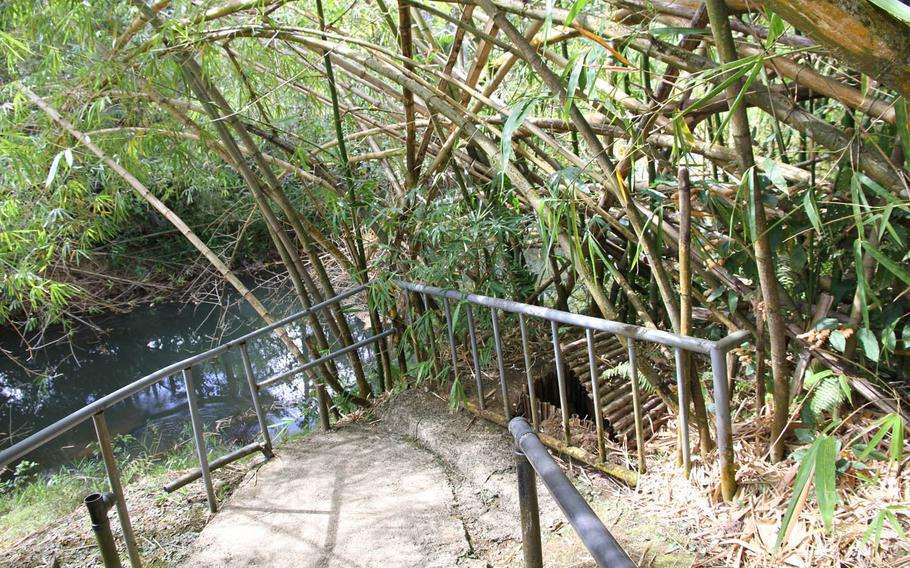
The entry to Shoichi Yokoi’s cave near the Ugum River in Guam. (Wyatt Olson/Stars and Stripes)
Yokoi was scared when he saw humans approach him for the very first time in so long, as Hatashin explains to BBC News. “He believed they’d treat the man as a prisoner of war, and that would be the worst humiliation to the Japanese soldier as well as his loved ones returning home.” After hearing his story, officials in Guam arranged for Yokoi’s repatriation to Japan. Although he’d discovered leaflets and newspapers outlining the conflict’s end two decades before, he dismissed these stories as American propaganda and refused to surrender.
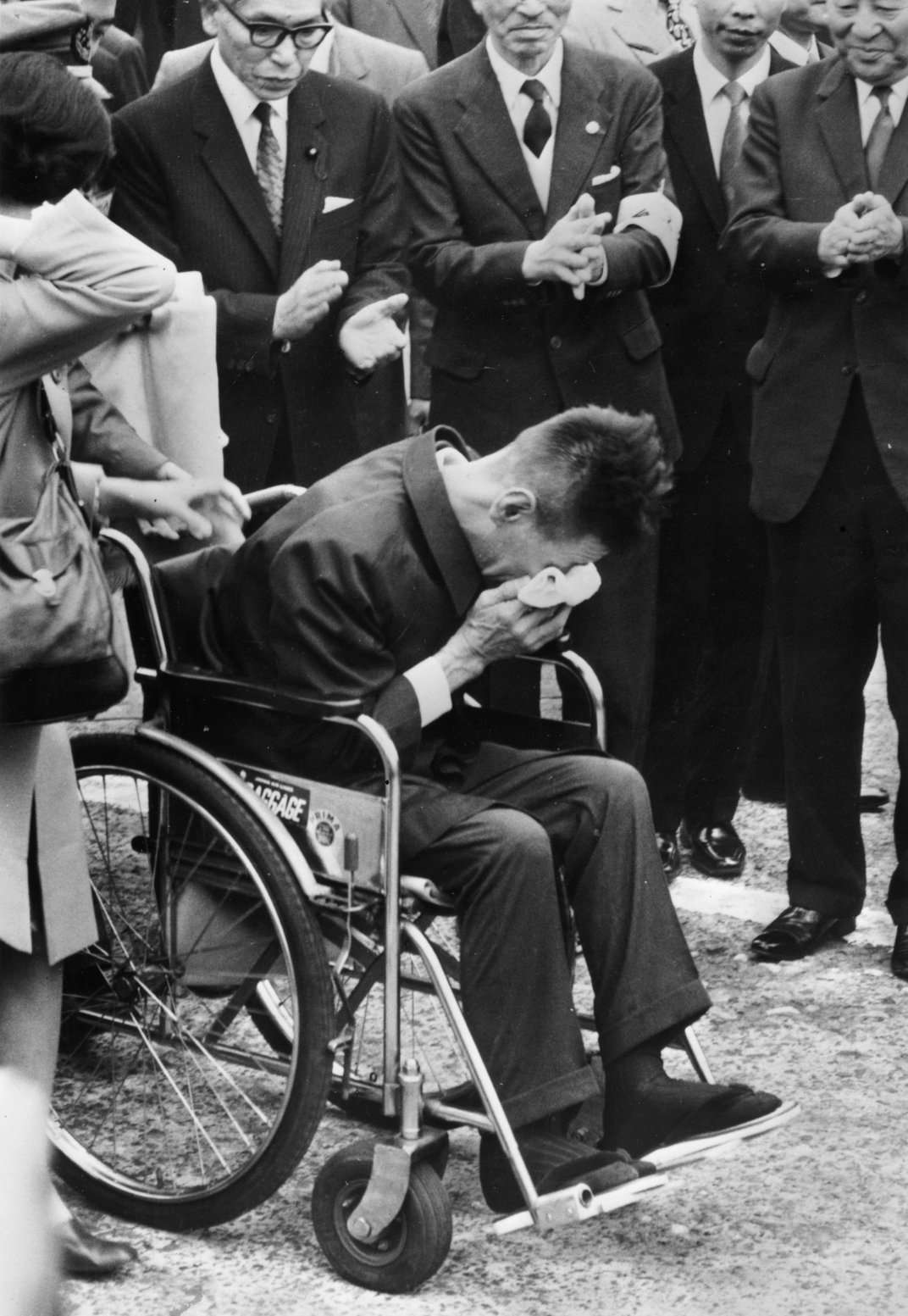
Shoichi Yokoi weeping upon his return to Japan in February 1972
According to Wyatt Olson of Stars and Stripes, the soldier later stated that the Japanese soldiers were taught to choose death to the shame of being taken alive.
In February 1972, Yokoi returned home to a hero’s welcome from a gathering of 5,000. When he returned, he told the New York Times that he had returned with the firearm the emperor gave him and apologized for not being able to service him satisfactorily. In Japan, older residents saw Yokoi’s refusal to surrender as an encouraging memory of a bygone period. In comparison, younger residents saw it as “pointless and indicative of an age that pushed youngsters to cling to what they were doing rather than to think about where they were headed,” as Kristof wrote.
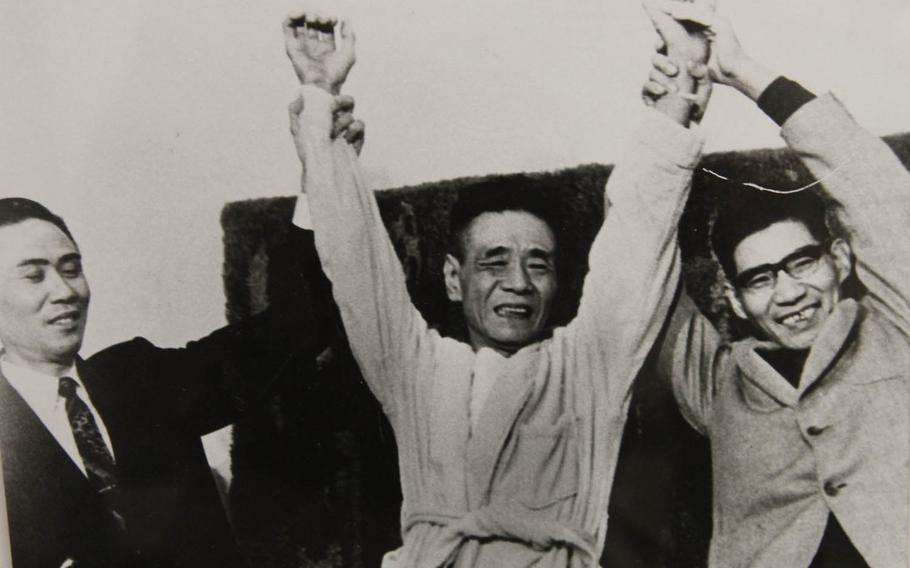
Yokoi (in the middle) and two other world war II former holdouts clicking photo together on July 30, 1972. (Wyatt Olson/Stars and Stripes)
According to Hatashin, Yokoi tried to fit into a “world that had passed him by,” as one contemporary columnist put it. Yet, he was nostalgic for the past, sometimes denigrating modern life’s accomplishments. In November 1972, he entered into an arranged marriage, campaigned unsuccessfully for Parliament in 1974, recorded his experiences in a best-selling book, and delivered lectures around the country. Nonetheless, he “never fully felt at home in modern life,” according to Lanchin for BBC News, and he returned to Guam numerous times before his death in 1997.
Lieutenant Hiroo Onoda was another World War II holdout, and was found in Lubang Island in the Philippines after 29 years of hiding, two years following the return of Yokoi, Japan. Similar to Yokoi, the man claimed to fight to the end instead of submitting. He did not want to go off the island until his regiment’s commander officer officially released him from duties at Lubang in March 1974.
Why was he scared? Because people had actually gone missing many years later and he was suspected. Locals knew he was up there. They finally got fed up, went and dragged him out. He was a coward thru and thru. Unwilling to face reality. Unwilling to face himself. He should’ve been tried for murder.