What led to the establishment of the first shogunate was the Genpei War (1180–1185). It was a pivotal conflict in Japanese history then, as the war was fought between two powerful samurai clans, the Taira (Heike) and the Minamoto (Genji).
The whole scenario resulted in the rise of the Kamakura Shogunate under Minamoto no Yoritomo. This conflict marked the end of the Heian period (794-1185) and the start of Japan’s feudal era, which was defined by samurai domination and military governance.
Background and Causes
The Genpei War began as a power struggle between samurai clans and the royal court in Kyoto. During the Heian period, the Taira clan, led by Taira no Kiyomori, had gained considerable influence in the imperial court, even placing his grandson, Emperor Antoku, on the throne.
Kiyomori’s increasing control over the government, coupled with his oppressive policies, alienated many factions, including rival samurai, aristocrats, and even members of the imperial family. The Minamoto clan, who had been defeated and largely exiled after the Heiji Rebellion of 1160, saw an opportunity to challenge Taira rule.
Prince Mochihito, a discontented member of the imperial family, issued a call to arms against the Taira, urging the Minamoto and other disgruntled warriors to rise in rebellion. This call led to the outbreak of open war in 1180.
Major Battles and Key Events
1. Battle of Uji (1180): The War Begins
The first major engagement of the Genpei War occurred at the Battle of Uji in 1180. Minamoto forces, led by Minamoto no Yorimasa, attempted to escort Prince Mochihito to safety but were intercepted by the Taira army. The battle ended in a Taira victory, with Prince Mochihito killed and Yorimasa committing ritual suicide (seppuku), marking one of the earliest recorded instances of this samurai practice.
2. Minamoto’s Regrouping and the Kamakura Stronghold
Following initial setbacks, the Minamoto forces regrouped under the leadership of Minamoto no Yoritomo, who established a stronghold in Kamakura, a strategic base that would later become the seat of the shogunate. With support from local warriors and influential samurai families, Yoritomo built a formidable army to challenge the Taira.
Don’t Miss: The Human Toll of the Tokaimura Incident: Hisashi Ouchi’s Story
3. Battle of Ishibashiyama (1180)
One of the earliest confrontations between Yoritomo and the Taira occurred at Ishibashiyama, where Yoritomo’s forces suffered a defeat. However, he managed to escape and continued to gain allies, strengthening his position.
4. Battle of Fujigawa (1180): Minamoto Gains Momentum
By the end of 1180, the Minamoto forces gained a crucial victory at Fujigawa, where the Taira army, believing they were under attack by a large force (partially due to birds flying off the river), retreated in confusion. This victory bolstered Minamoto’s confidence and turned the tide in their favor.
5. Taira Retreat and the Siege of Kyoto
By 1183, the Minamoto, now led by Minamoto no Yoshinaka, managed to push the Taira out of Kyoto. Yoshinaka, however, soon faced opposition from Yoritomo, who saw his cousin as a potential rival for power. Yoshinaka was eventually defeated and killed at the Battle of Awazu (1184) by Yoritomo’s half-brother, Minamoto no Yoshitsune.
6. Naval Battles and the Fall of the Taira
The final phase of the Genpei War saw the Taira retreating to western Japan, where they attempted to regroup. However, the Minamoto navy, led by Yoshitsune, pursued them in a series of naval battles.
- Battle of Yashima (1185): Minamoto forces successfully attacked a Taira stronghold, forcing them to retreat further.
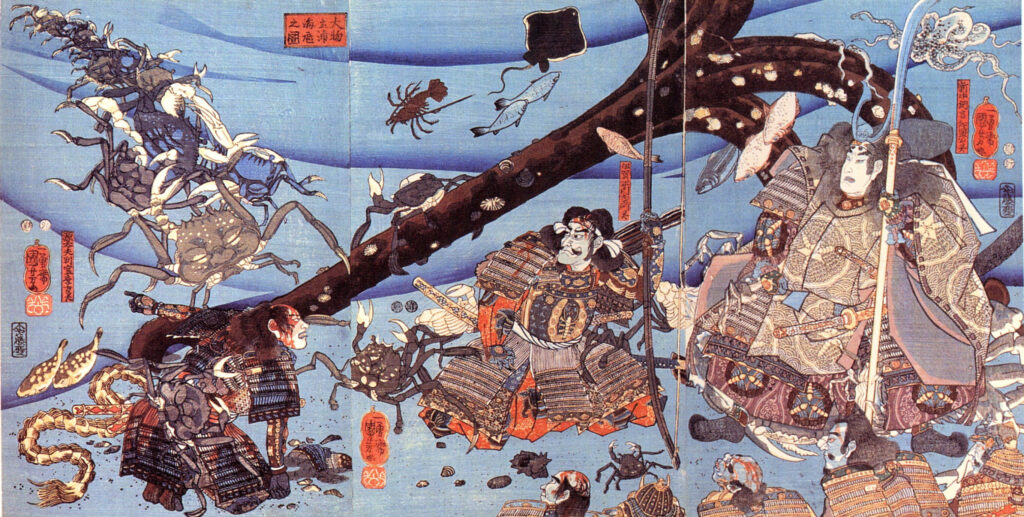
- Battle of Dan-no-Ura (1185): The decisive battle of the war, fought in the Inland Sea near Shimonoseki. The Minamoto, using superior naval tactics, defeated the Taira. Emperor Antoku and many Taira nobles drowned, and Taira no Munemori was captured.
Aftermath and Legacy
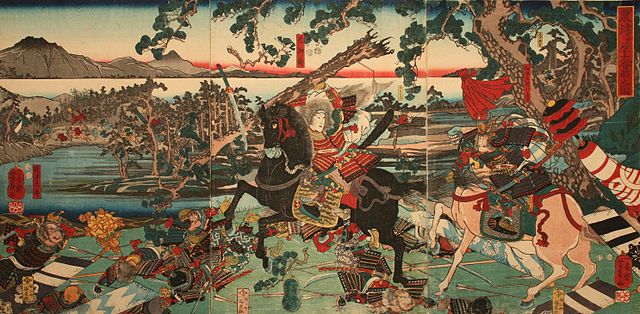
The victory of the Minamoto at Dan-no-Ura marked the end of the Taira dominance and the beginning of a new era. Minamoto no Yoritomo consolidated power and, in 1192, became Shogun, establishing the Kamakura Shogunate, the first military government in Japan. This marked the beginning of samurai rule, which would last for centuries.
The Genpei War had lasting impacts on Japanese history:
- Feudal System: It led to the rise of the feudal system, where the shogun wielded real power while the emperor became a ceremonial figure.
- Samurai Culture: The conflict cemented the samurai’s role as Japan’s ruling class.
- Literature: The war was memorialized in “The Tale of the Heike,” an epic that is still one of Japan’s most famous historical chronicles.
The Genpei War remains a defining moment in Japan’s history, marking the shift from imperial court rule to samurai-led governance, a system that would dominate Japan for nearly 700 years.
Read More: The Dark History Of ‘Comfort Women’ During World War II
Leave a Reply