People who visit Nara Park in Japan every year are surprised when a wild deer comes up to them, bows its head, and waits expectantly, often for a snack called Shika Senbei (deer crackers). This beautiful deer bow has become a popular Nara tradition, and gentle herbivores seem to copy human gestures to ask for food.
This amazing behavior is not just something to see for tourists. It is a very interesting example of how animals learn to adapt and how humans and wildlife can connect in a special way. In this article, we’ll discuss the origins of the deer bow, its significance, and the impact it is having on both the animals and the people who come to see it.
What Is the Deer Bow?
The deer bow is precisely what it sounds like: a Nara deer gently lowers its head in public. Researchers believe this is a learned behavior, similar to bowing, in exchange for snacks rather than a natural greeting. According to travel guides, if you hold a cracker in your hand and bow toward a deer, the animal will bow back to accept the treat. This endearing bow exchange isn’t unique. The deer engage in this routine with various individuals several times throughout the day. To guarantee they get their well-earned cracker, some deer are more eager than others and will bow several times.
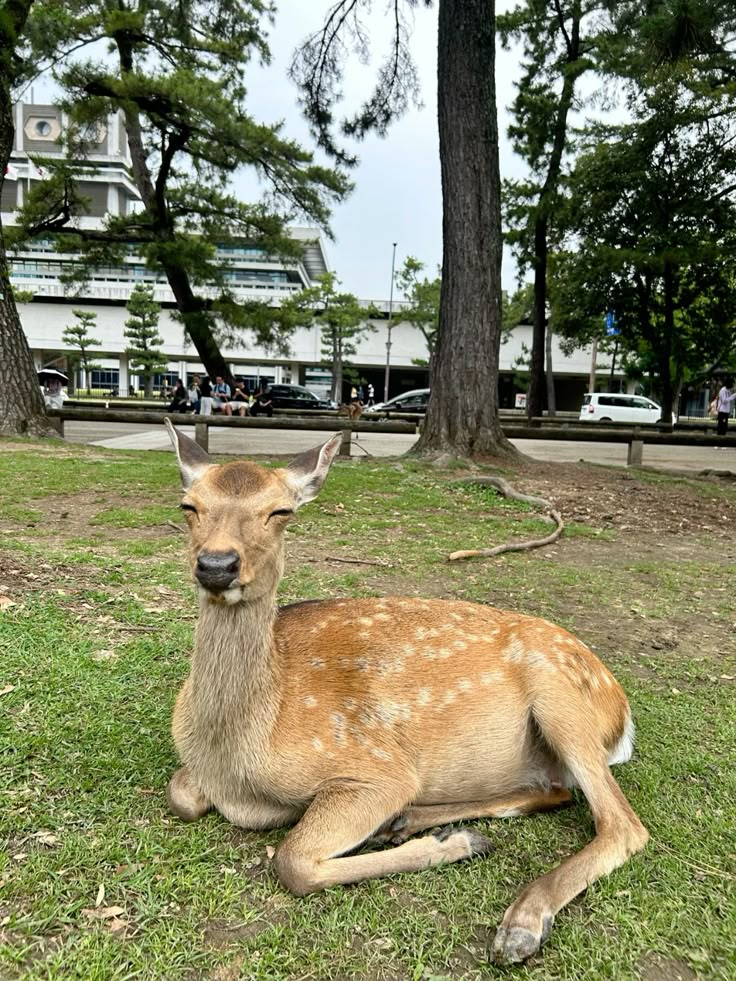
Recent studies at Nara Women’s University indicate that the deer bow is not instinctual. Sika deer in Nara, on the other hand, have learned to bow to talk to people. When people bow with crackers, the deer do the same thing. This smart imitation is similar to Pavlovian responses, where deer learn that bowing their heads gets them what they want. Scientists think that fawns learn how to act this way by watching their mothers or older deer interact with people. Over the years, this behavior has spread among the deer in Nara Park, making it a local event.
Scientific Insight: Study on Deer Bowing
According to a study headed by Professor Yoichi Yusa, before the COVID-19 pandemic, Nara’s deer averaged roughly 10.2 bows per healthy tourist interaction; when visitor numbers decreased, this average dropped to about 6.4. These findings support the idea that human presence and reward expectations are directly related to the deer bow. Even more intriguing is the apparent correlation between the quantity of bows and the conduct of the tourists. The deer may bow more to convince someone who seems uncertain or hesitant. The deer might only bow once or twice if the offer of a cracker is obvious.
It appears that Nara’s deer are the only ones that exhibit this behavior. This deer bow ritual is not practiced by deer in other places, like Miyajima. Nara Park’s emergence is largely due to its social environment, where thousands of visitors interact every day. Human-deer interaction has a long history in Nara Park. In the Shinto tradition, deer are revered messengers of the gods and have been protected for centuries. Human-deer interactions have become unusually intimate as a result of this cultural reverence.
Why Deer Bow Matters for Visitors
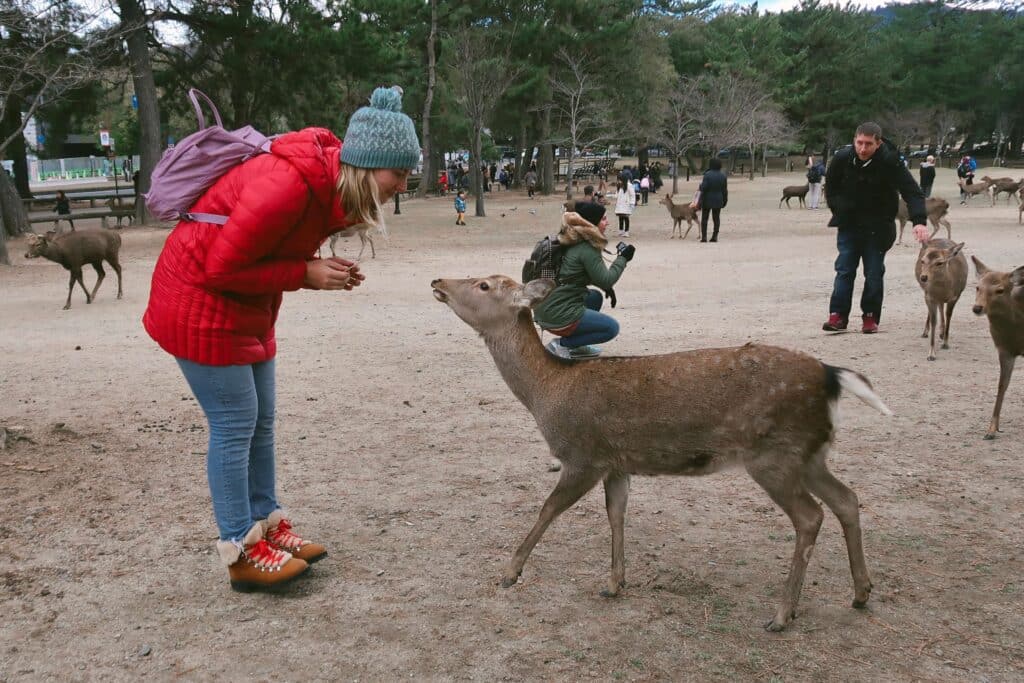
The deer bow is iconic and endearing to tourists. Families, couples, and lone tourists all find it to be a memorable aspect of their time in Nara Park. It is marketed as a charming, must-see interaction in travel guides and online. Social media is mostly bombarded with images and videos of the bowing deer. Travelers can’t find this experience anywhere else in the world, which makes Nara a more alluring travel destination. Some even refer to it as the high point of their trip to Japan.
The deer bow may have unexpected consequences despite its allure. Small children are particularly vulnerable to being bumped or head-butted, and deer that are accustomed to human contact may become hostile if they anticipate food. Furthermore, feeding crackers as their main food has led to health problems; when crackers accounted for one-third of the deer’s diet, they became malnourished.
The city warns visitors to exercise caution and has posted warning signs throughout the park. Feeding must be done politely and in the park’s visible area. The goal of conservationists is to strike a balance between maintaining the custom and safeguarding the welfare of the animals.
Guidance for Enjoying the Deer Bow Safely
- Buy Official Crackers: Only feed official Shika Senbei, sold around the park.
- Learn the Bow: Hold the cracker above your head, bow once, and wait for the deer bow.
- Respect the Animal: If the deer bows multiple times, it’s your cue to offer the cracker.
- Be Mindful: These are wild animals—watch children and avoid teasing.
- Signal the End: Show empty hands to let the deer know you have no more food.
If we stick to these guidelines, everyone can have amazing and safe experiences with the deer. Plus, it helps keep this beautiful tradition alive for future generations!
The deer bow really highlights how wonderfully animals can pick up on human social cues, especially when there’s something in it for them. It’s fascinating to see how quickly they learn and adapt, driven by a little motivation. Associating a human action with a food reward—a behavior that is obviously conditioned—is a clever survival strategy rather than an expression of gratitude. It also serves as a reminder of our obligations when dealing with wild animals. Those animals behavior is influenced by our actions, so it’s critical to make sure that these changes are advantageous to both sides rather than one side.
Broader Cultural Context
Bowing your head for someone is typically a way to greet in Japan, and their culture express gratitude, and show respect. The deer bow, which offers guests their own simple bow in return, adds a playful twist. Fundamentally, this illustrates how wildlife and people have co-adapted in common natural areas.
A distinctive, instructive, and emotionally impactful tourist experience is produced by this blending of wildlife behavior and cultural tradition. It is a testament to how human society and nature can coexist in harmony.
The number of deer bow incidents may fluctuate once more as a result of post-pandemic tourism changes. Experts stress the need to strike a balance between permitting safe, sustainable interactions and allowing wildlife to behave naturally. As a result, laws and visitor education are changing.
Some recommendations include limiting cracker sales, establishing feeding zones, and encouraging interaction. These precautions preserve the distinct charm that makes Nara Park so special while also protecting the deer and tourists.
The Power of a Simple Bow
One of the subtle act you going to experience when you visit Nara, Japan is the gentle bow of the deer, as it more than just nice behavior. Another thing is the good invitation from the local wildlife, showing a long-standing cultural exchange between humans and animals. Is this your first time exchanging a bow with a deer, whether it’s your first time or tenth, you must not loses its magic. It’s a beautiful symbol of mutual respect and a touching reminder that even the smallest gestures can create meaningful connections across species.
Read More: Eisā Dance of Okinawa Unveils the Midnight Rhythm and Cultural Spirit of the Islands
Leave a Reply