Wakayama Prefecture – In a remarkable display of innovation, West Japan Railway Company (JR West) has successfully constructed the world’s first 3D-printed train station, marking a new era in railway infrastructure development. Located at Hatsushima Station on the Kisei Line in Wakayama Prefecture, the pioneering project was completed in a record-breaking time, showcasing Japan’s commitment to leveraging advanced technology to address modern challenges.
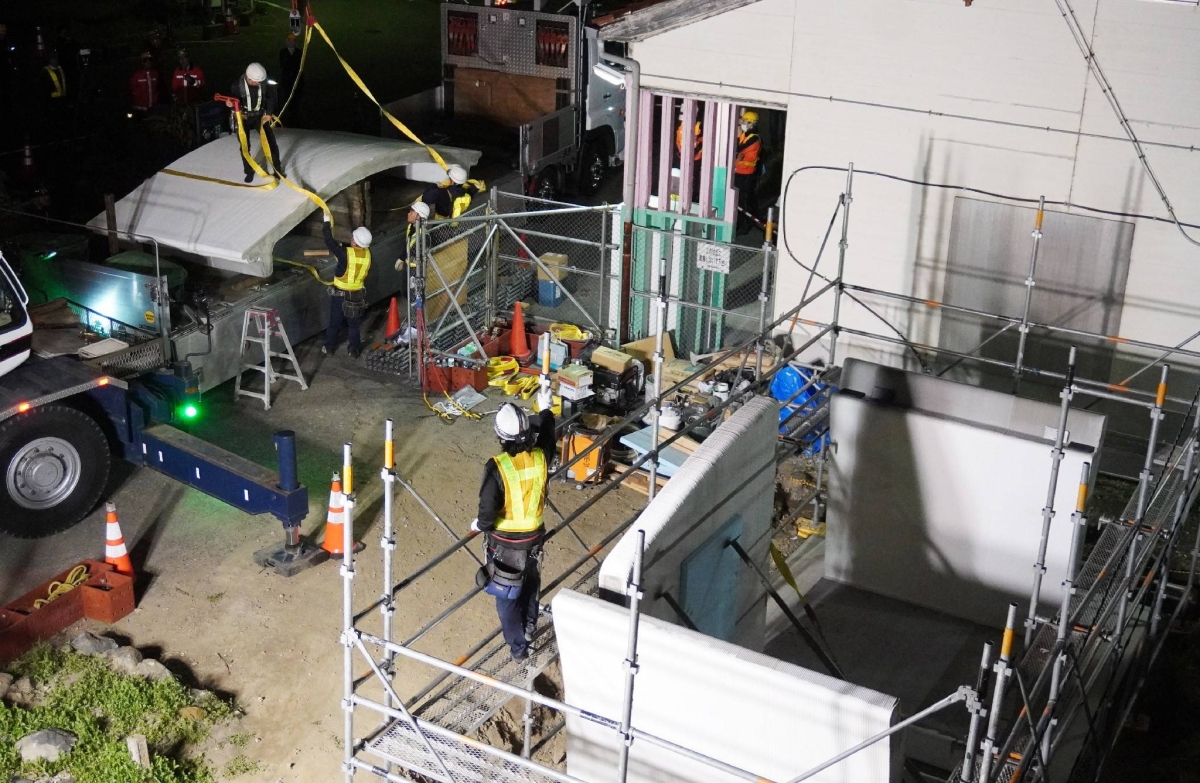
The construction, a collaboration between JR West and Japanese housing manufacturer Serendix, utilized 3D printing technology to create prefabricated components, which were then assembled on-site. The entire process took just two and a half to six hours, depending on the source, a stark contrast to the months or years typically required for traditional construction methods. This rapid assembly was carried out after daily train services, ensuring minimal disruption to commuters.
The new station, a small but modern structure measuring approximately 10 square meters and standing 2.6 meters high, replaces an aging wooden building. Designed with a minimalist aesthetic, the station features a curved roof and a façade adorned with a mandarin orange motif, paying homage to the region’s agricultural heritage. The use of reinforced concrete, printed using mortar formwork and filled with steel reinforcement, ensures durability and resistance to environmental wear, including corrosion from the nearby sea.
JR West estimates that the cost of constructing the 3D-printed station is about half that of a conventional reinforced concrete structure, highlighting significant potential savings in both time and money. The project also addresses Japan’s aging workforce and labor shortages, as the technology reduces reliance on extensive manual labor. With over 40% of Japan’s population projected to be 65 or older by 2070, such innovations are seen as critical for maintaining and modernizing public infrastructure efficiently.
“This is a game-changer for railway construction,” a JR West official stated. “We will closely evaluate the costs, maintenance, and management of this project, with plans to potentially expand 3D printing to other stations in the future.”
The station is scheduled to open to the public by July 2025, pending final inspections and preparations. If successful, this initiative could set a global precedent, inspiring other countries to adopt similar technologies for infrastructure projects. The project has already garnered international attention, with media outlets and industry experts praising Japan’s forward-thinking approach.
Japan’s history of embracing cutting-edge technology in transportation—from bullet trains to smart city initiatives—makes this development a natural progression. However, the use of 3D printing for such a critical public facility is unprecedented, blending sustainability, cost-efficiency, and design flexibility in ways that could revolutionize construction worldwide.
As the world watches, Japan continues to lead in innovation, proving that even traditional sectors like railway infrastructure can benefit from the future of manufacturing. The Hatsushima Station project not only modernizes a small stop on the Kisei Line but also signals a broader shift toward automated, sustainable, and rapid construction techniques.
For more details, JR West and Serendix are expected to release additional information in the coming weeks, including technical specifics and future plans for 3D-printed infrastructure.
This report was compiled based on recent developments and statements from JR West, as reported by multiple news outlets, including The Japan Times, Nikkei Asia, and CNN, with the most recent updates as of March 30, 2025.
Leave a Reply