Japanese swords are available in a variety of kinds, varying in size, shape, form, and use. A few of the most well-known types are the katana, which is a single-edged weapon used by samurai warriors; the tachi, which is a lengthy curved sword that the mounted soldiers use; the wakizashi, which is an oblong-shaped sword that is often used with katanas; the tanto, which is a tiny blade; and the uchigatana.
There are many traditional Japanese swords, each with distinctive characteristics and uses. The most popular kinds are:
Katana: The Iconic Samurai Sword
Katana is the most well-known Japanese sword worldwide. They still appear in movies and games as excellent weapons with elegance. Katana is a single-edged sword with a curved blade. The end of the blade consists of a square/circular guard and a grip accommodating two hands. It was developed earlier than the tachi swords used by samurai in the feudal period of Japan and was worn with the blade facing upwards.
Forging the Japanese sword is an intricate and delicate procedure. This craft has evolved through time due to aesthetic and stylistic considerations concerning the advancement of technology.
Description of Katana
Katanas are generally described as normal-sized, moderately curved Japanese swords with a length of their blade exceeding 60.6 centimetres (23.86 inches). It’s distinguished by its unique style: a curved, narrow, single-edged blade with the appearance of a square or circular guard and a lengthy grip for two hands.

The Japanese sword has unbreakability with rigidity, strength, and cutting strength. It is by solving these competing demands that it is regarded as the ultimate work of forgery art.
Wakizashi: The Short Sword with A Long Histories
The wakizashi is a traditional Japanese sword often utilized as a backup weapon with the katana by samurai. It’s smaller than the sword, and the blade size is typically between 30 to 60 centimeters. The wakizashi was mostly used in close-quarter combat and to replace weapons when the katana was no longer suitable or accessible.

Description of Wakizashi
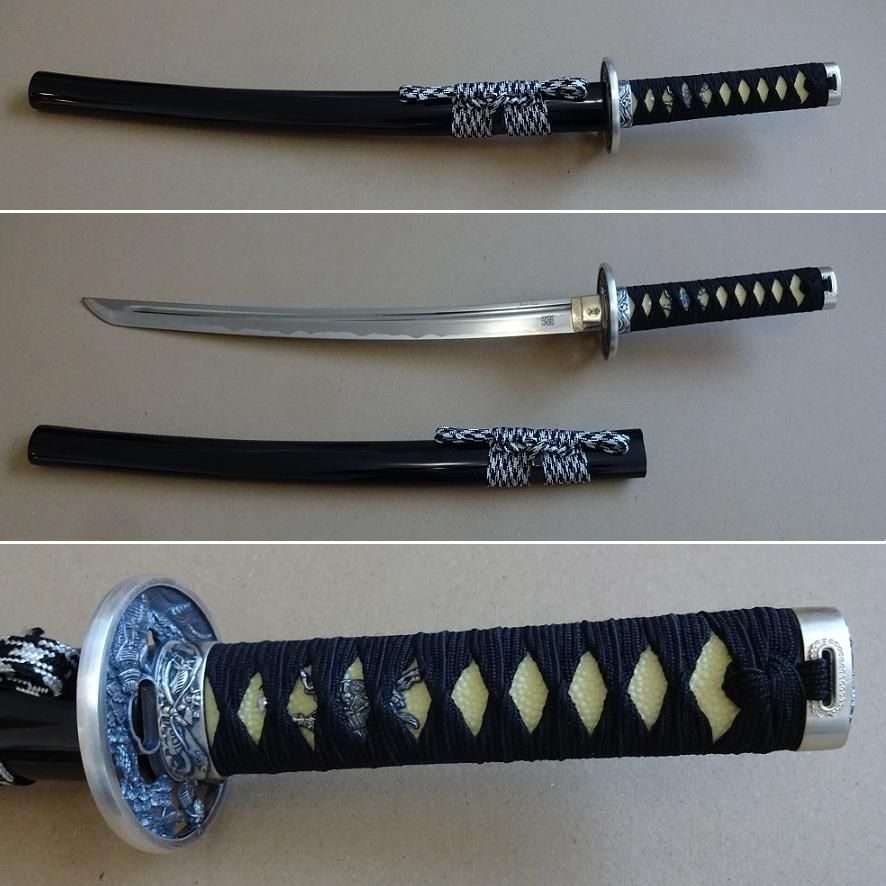
Wakizashi is a smaller curved sword with a single edge similar to a katana. It is smaller in length as it is primarily used for close combat. The sword is a square or squared guard and an ergonomic grip for single-handed usage. Katana and Wakizashi, both as a pair, are referred to as “daisho.”
Tanto: The Deadly Dagger

Tanto is the dagger version of Japanese history dating back to the Heian period. Samurai warriors often used it as a second-choice weapon, along with the katana or the Wakizashi. The tanto was created for thrusting and stabbing tactics, making it a valuable close-quarters weapon.
Description of Tanto

The tanto has a straight or lightly curled one-edged blade shorter than 30 centimeters. The blade has a straightforward guard and a grip made to be used with one hand. Its small size and sharp point make it the perfect weapon to penetrate armor and eliminate enemies within close battle.
Tachi: The Sword of Ceremony

The tachi is an ancient Japanese sword that predates the katana. Its origins date back to the latter part of the Heian period. It was the primary weapon used by samurai before the time when the katana became popular. It was designed to be used while riding horses, and its longer and more curvy blade made it ideal for attacking infantry with a slash.
Description of Tachi

The tachi is a curvaceous single-edged blade typically larger than a katana. The tachi has a length of 70-80 centimeters. It has a squared or circular guard and a grip that was that is designed to be used with two hands. The tachi was usually used with the blade down and connected to the belt via cords. It was different from the katana that was worn with the blade up.
Nodachi/Odachi: The Enormous Sword

A nodachi, also called the odachi, is an ancient Japanese sword dating back to the early Kamakura period. It’s a more robust and extended version of the tachi intended for use in battle. It was used mainly by infantry troops, including cavalry soldiers, to fight enemies. The nodachi has an extended range and powerful slashing abilities, making it a formidable weapon during large-scale conflicts.
Description of Nodachi

The Nodachi comes with a single-edged blade much longer than a tachi. It has a blade length usually exceeding 90 centimeters. The blade has a squared or circular guard and a long grip for two-hand use. Because of its size and heavy weight, the nodachi would usually be carried by the back or a designated sword bearer instead of being carried in the waist as the katana or tachi.
Nagamaki: The Hybrid Blade with an Extensive Reach

Nagamaki is a traditional Japanese sword that first appeared in the Kamakura period (1185-1333) and rose in popularity during the Muromachi period (1336-1573). The Nagamaki was developed by soldiers on foot and infantry to defend against cavalry attacks and increase their range in battle.
Description of Nagamaki

Nagamaki is distinguished by its long handle, generally about the same size as the blade, and its one-edged, curving blade. The length of the blade is typically between 60 and 120 centimeters (24 up to 47″), and handles (tsuka) could extend from 45-90cm (18 up to 35 inches). The design of the handle allows the user to increase force and leverage in swinging the blade, which is why it’s extremely efficient when fighting.
Naginata: The Versatile Polearm of Ancient Japan

The Naginata is a classic Japanese polearm that first became popular during the Heian period (794-1185). It became popular in the Kamakura period (1185-1333) and was one of the most popular weapons during the Muromachi period (1336-1573). Samurai, as well as warrior monks, initially used it. Naginata was later synonymous with female samurai or onna-bugeisha. These women used it to protect themselves as well as defend their families.
Description of Naginata

Naginata Naginata is a straight blade with a single edge attached to a wooden shaft. The length of the blade ranges from 30 to 60 centimeters (12 up to 24 inches). The shaft (nagaye) usually measures between 120 and 240cm (47 to 94 inches). Combining these two provides users an enormous advantage in reach during combat.
Yari: The Timeless Spear of Japanese Warriors

The Yari, the traditional Japanese spear, first appeared in the Heian period (794-1185) and saw widespread usage throughout periods like the Kamakura (1185-1333) as well as the Muromachi (1336-1573) times. The Yari became a weapon of choice by foot soldiers and samurai because of its efficiency in a variety of combat scenarios as well as its simple manufacture and design.
Description of Yari

The Yari comprises an elongated, straight blade mounted onto a wooden shaft. Blades can range in size from 15 cm to 45 centimeters (6 -18 inches), and the shaft (ebu) generally ranges between 180 and 270 centimeters (71 up to 106 inches). The Yari’s design is geared towards cutting and penetration, which makes it highly effective against armor-clad adversaries.
Leave a Reply