A novel approach to road safety is subtly emerging in the center of Kyoto, Japan’s renowned center of technology and tradition. Japanese engineer Takeshi Morimoto has created what could be the next advancement in vehicle intelligence at a tiny but innovative automotive lab: a car navigation system that alerts drivers if they are too drowsy.
This isn’t your typical dashboard alert or wearable technology. It’s a fully integrated system that smoothly incorporates AI-powered monitoring, biometric data, and unambiguous alerts into your car’s navigation system. In a world where distracted and inattentive driving causes thousands of accidents, Morimoto’s technology could be the difference between life and death.
The Engineer Behind the Idea
After graduating from Kyoto Institute of Technology, Takeshi Morimoto has been studying the relationship between human behavior and automotive design for more than ten years. Morimoto, who had previously worked on adaptive cruise control systems, grew more and more alarmed by the increase in fatigue-related collisions, particularly on Japan’s lengthy rural motorways.
“While modern cars are getting smarter, very few of them are really paying attention to the human behind the wheel,” he explains. The objective was to ensure that drivers remained awake while traveling, not just to assist them in getting to their destination. His idea gave rise to a car navigation system that alerts drivers when they are too drowsy. This project was created in collaboration with an automotive software company in Kyoto and tested on Kansai’s highways.
How the System Works – Car Navigation System
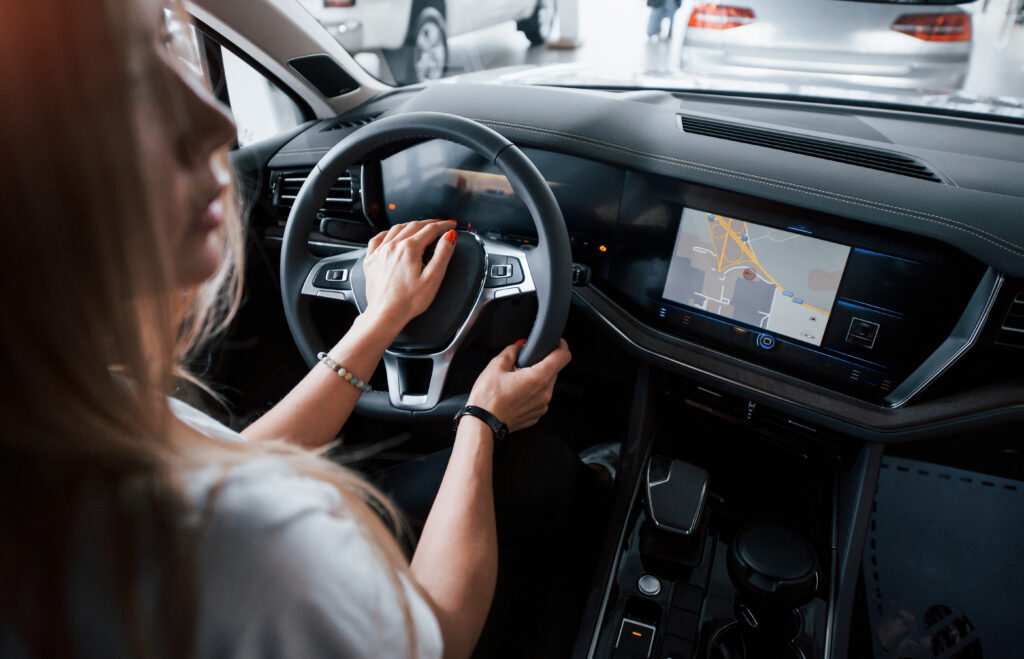
So, how exactly does this car navigation system that warns if drivers are too sleepy function?
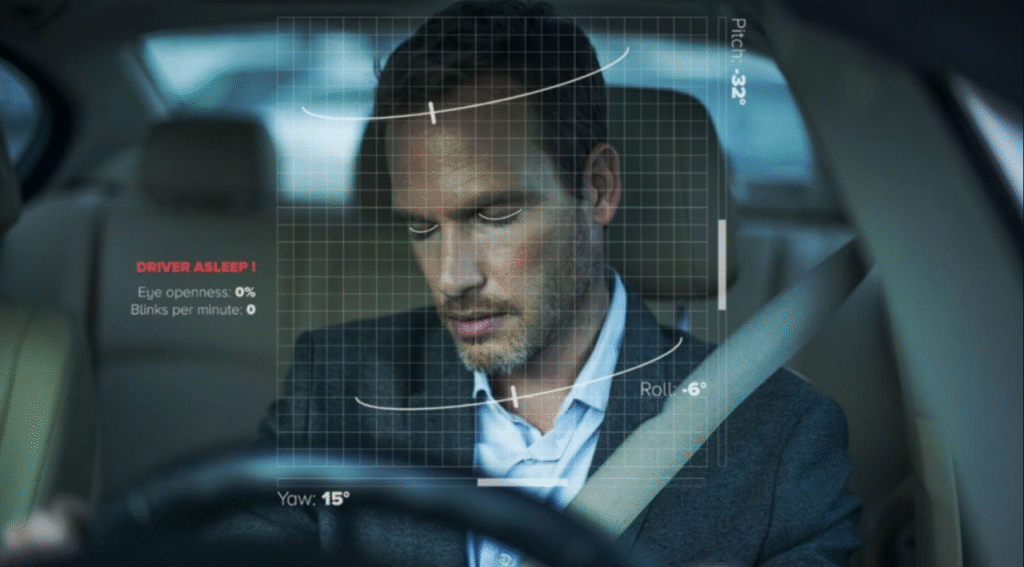
- Facial Monitoring Camera: A discreet infrared camera installed on the dashboard scans the driver’s face for signs of fatigue—blinking patterns, eyelid drooping, yawning frequency, and head position.
- Steering Wheel Behavior Tracking: The system also analyzes how a driver grips and maneuvers the wheel. Subtle signs like micro-corrections, reduced steering input, or weaving within the lane indicate possible drowsiness.
- Heart Rate and Skin Sensors: For cars equipped with biometric integration, sensors in the seat or steering wheel monitor heart rate variability and skin conductivity—two subtle markers of alertness levels.
- AI-Powered Decision Engine: All of this data is fed into an AI algorithm trained on thousands of hours of driving footage. The system then calculates a “fatigue risk index” in real time.
- Smart Navigation Intervention: Here’s where the magic happens: the car navigation system that detects driver fatigue gently pauses the journey with a voice prompt such as “You seem sleepy.” The closest rest area is 12 kilometers away. It encourages the driver to pull over safely by highlighting rest areas, gas stations, or cafés along the way.
A Response to a Real Crisis
The National Police Agency of Japan reports that more than 3,000 crashes were reported in 2023 alone, with driver fatigue being a contributing factor. Base on the National Highway Traffic Safety Administration, approximately 100,000 crashes reported by police in the US each year are caused by sleepy driving.
Morimoto was motivated to take action by this reality. According to him, “navigation systems have always helped us find our way.” “However, why can’t they assist us in staying safe while doing it as well?” His idea for a car navigation system that alerts drivers when they are too tired was to act as a co-pilot rather than an accessory. A silent friend who has the discernment to know when it’s unsafe to go on.
Tested in Real Traffic Conditions
Live testing of Morimoto’s system was conducted using the municipal fleet of Kyoto, which included delivery trucks and taxis. Early indicators of drowsiness were found in 82% of cases during a 3-month pilot before the driver even became aware that their concentration was waning.
“I thought I was fine, just a little tired,” said Fujita, a 42-year-old taxi driver who participated in the test. The system then instructed me to halt. I truly needed a break, even though I didn’t want to acknowledge it. More tellingly, when the car navigation system sent out fatigue alerts, the number of voluntary stops increased by 35%. This indicates that drivers are paying attention and making adjustments.

Integrating Safety with Navigation
Fatigue warning systems have historically been standalone modules that vibrate your steering wheel after erratic movement or beep when you stray across a lane. However, Morimoto’s team discovered that adding fatigue warnings to the GPS itself improves usability and visibility. The car navigation system that detects when drivers are too sleepy not only alerts you to the issue but also provides a quick and secure fix. It even reminds users about their caffeine or hydration intake, suggests alternate rest stops, and modifies ETAs accordingly. What distinguishes the Kyoto prototype from other in-car drowsiness alerts is this smooth experience.
The Road Ahead – Car Navigation System
In order to introduce this technology into mainstream automobiles by 2026, Morimoto and his team are currently collaborating with two significant Japanese automakers. The goal is to incorporate a car navigation system that alerts drivers when they are too drowsy into both high-end and mid-range models.
Even offering the system as an upgrade for older cars is being discussed, either through integration with mobile navigation apps or aftermarket head units. To further improve detection accuracy, the team is also investigating cultural driving norms, language personalization, and more sophisticated sensors, such as posture shifts or pupil tracking.
Broader Applications and Global Potential
Although the technology was first created for Japan’s aging and dense driving population, Morimoto thinks it has potential for use elsewhere. A system like this would be extremely beneficial to nations like the United States, Canada, and Australia that have long-distance trucking industries. Vehicles may also be able to make emergency decisions by slowing down, putting on auto-drive mode, or even stopping when the fatigue detection engine is paired with autonomous driving technology.
What began as a quiet lab in Kyoto has evolved into a driving safety beacon for the future. Takeshi Morimoto and his team have revolutionized the capabilities of car navigation system by combining engineering, empathy, and intuition. The car navigation system that alerts drivers when they are too tired is now more than just a map; it is a caring co-driver. In a world that moves quickly,
Read More: Japan Aims to Beam Solar Power from Space: The OHISAMA Project and the Future of Clean Energy
Leave a Reply