Imagine dropping your favorite ceramic bowl. It shatters into pieces, and your heart sinks. But what if, instead of throwing it away, you could repair it in a way that not only restores it but also makes it more beautiful than before? This is the essence of Kintsugi (金継ぎ), the ancient Japanese art of repairing broken pottery with lacquer and embellishing the seams with gold, silver, or platinum powder.
Kintsugi, which translates to “golden joinery,” is more than just a craft—it’s a philosophy. It teaches us to embrace imperfection, to see beauty in what’s broken, and to celebrate the stories that make us who we are.
The Origins of Kintsugi
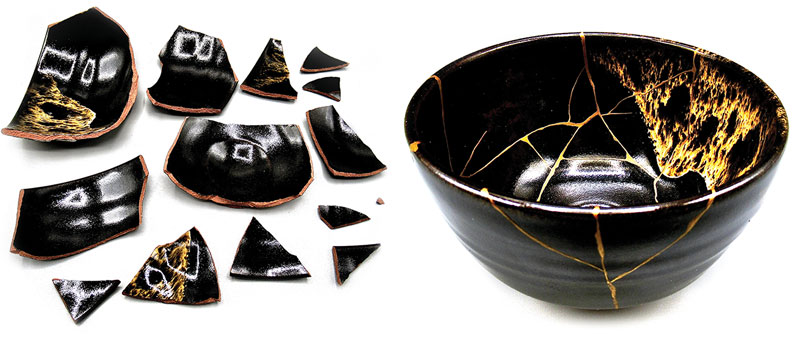
Kintsugi, also known as Kintsukuroi (金繕い), or “golden repair,” dates back to the 15th century in Japan. Legend has it that a Japanese shogun sent a damaged Chinese tea bowl back to China for repairs. When it returned, it was held together with unsightly metal staples. Dissatisfied, Japanese craftsmen sought a more elegant solution. They developed Kintsugi, using urushi lacquer—a natural adhesive derived from tree sap—to bond the broken pieces and dusting the seams with precious metals to highlight the cracks.
This method not only restored the pottery but also gave it a new life, turning its flaws into features. Over time, Kintsugi became a cherished practice, especially in the world of chanoyu, the Japanese tea ceremony, where every piece of pottery tells a story.
The Process of Kintsugi
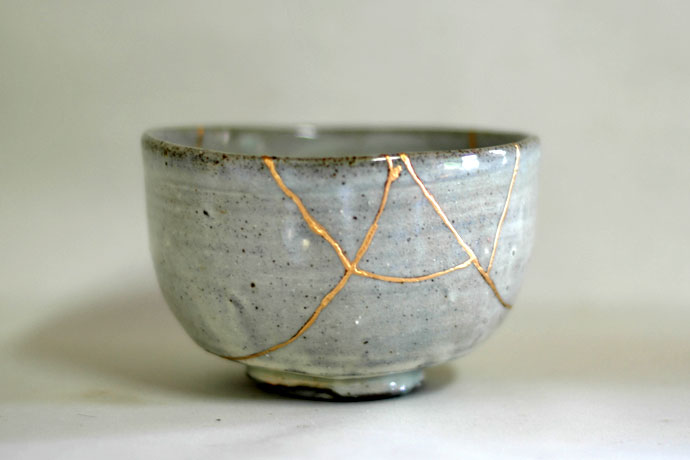
The art of Kintsugi is a meticulous and meditative process. Here’s how it works:
- Gather the Pieces: The broken pottery is carefully collected, ensuring no fragments are lost.
- Bond with Lacquer: The pieces are glued back together using urushi lacquer, a natural adhesive that hardens over time.
- Fill the Gaps: Any missing fragments are filled with a mixture of lacquer and powdered clay or stone.
- Embellish with Gold: Once the lacquer dries, the seams are painted with gold, silver, or platinum powder, transforming the cracks into shimmering lines.
- Polish and Finish: The final piece is polished to reveal its new beauty, with the repaired cracks now glowing like veins of precious metal.
The result is a piece of pottery that is not only functional but also a work of art, its history proudly displayed in its golden seams.
The Philosophy Behind Kintsugi
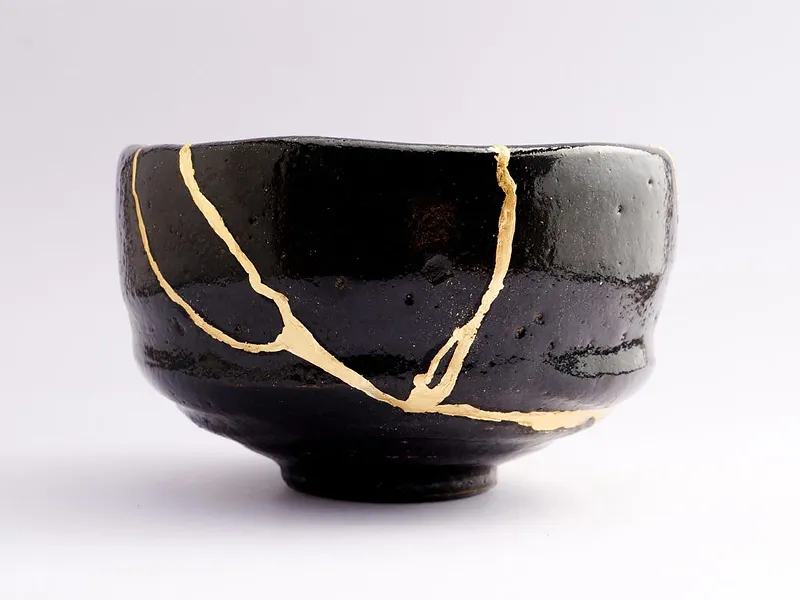
At its core, Kintsugi is a celebration of imperfection. It aligns with the Japanese aesthetic of wabi-sabi, which finds beauty in the imperfect, the incomplete, and the transient. Kintsugi reminds us that brokenness is not the end—it’s an opportunity for transformation.
This philosophy extends far beyond pottery. It’s a metaphor for life. We all experience cracks and breaks—whether it’s a failed relationship, a lost job, or a personal struggle. Kintsugi teaches us that these experiences don’t diminish our worth. Instead, they add to our story, making us more resilient, more unique, and more beautiful.
Kintsugi in Everyday Life
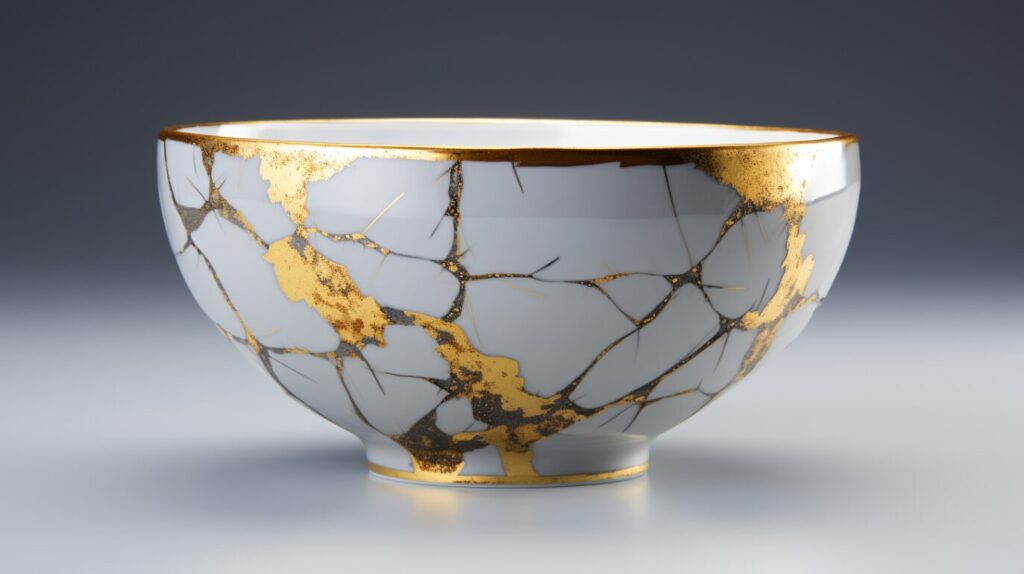
The lessons of Kintsugi are deeply relatable. Here are a few ways this philosophy can inspire us:
- Embracing Personal Scars: Just as Kintsugi highlights the cracks in pottery, we can learn to embrace our own scars—physical or emotional. They are proof of our strength and resilience.
- Overcoming Hardships: Life’s challenges can feel like shattering moments. But like Kintsugi, we can piece ourselves back together, stronger and more beautiful than before.
- Finding Beauty in Imperfection: In a world that often values perfection, Kintsugi reminds us that flaws are not something to hide. They are what make us unique and human.
Think of a time when you faced a setback. Maybe it was a project that didn’t go as planned or a dream that didn’t come true. Instead of seeing it as a failure, consider it a crack in your life’s pottery. With time, care, and a little gold dust, that crack can become a source of beauty and strength.
A Metaphor for Growth

Kintsugi is more than just an art form—it’s a way of seeing the world. It encourages us to approach life with curiosity and compassion, to find beauty in the unexpected, and to celebrate our imperfections.
Imagine your life as a piece of pottery. Every challenge, every heartbreak, every mistake is a crack. But instead of hiding those cracks, you fill them with gold. You honor them. You let them shine. Over time, your life becomes a mosaic of golden seams, each one telling a story of resilience and growth.
Kintsugi invites us to reframe how we see ourselves and the world around us. It reminds us that brokenness is not something to fear or hide—it’s an opportunity to create something new and beautiful.
So, the next time life feels like it’s falling apart, remember the spirit of Kintsugi. Gather the pieces. Take your time. And when you’re ready, put them back together with care and intention. Let your cracks shine, not as flaws, but as testaments to your strength and your story.
After all, it’s not about being perfect. It’s about being whole—golden seams and all.
Leave a Reply