• Skip to main content
  • Skip to secondary menu
  • Skip to primary sidebar

Japan & Extra

You Every day Japan

  • Culture
  • Travel
  • History
  • Food
  • Manga
  • Job
  • Business
  • Technology
  • News

Hachimaki – the Japanese Headband that gives you Energy

May 30, 2024 by Japan Daily Leave a Comment

When thinking of Japan, some of the things that usually come to mind are Sushi and Samurai; perhaps Karate and Bonsai. These are all iconic images in Japan, but when it comes to cultural icons, there is one piece of headwear that embodies the quintessential image of Japan – the Hachimaki (鉢巻).

The Bosozoku wear them while riding their motorcycles, protesters wear them to get strength for perseverance, Mr. Miyagi wore one while attempting to catch a fly, and of course Daniel-san wore one at the Karate Championship.

Yes, the simple headband is a true icon in Japan and conjures images of heroic feats good luck, and acts of severe perseverance.
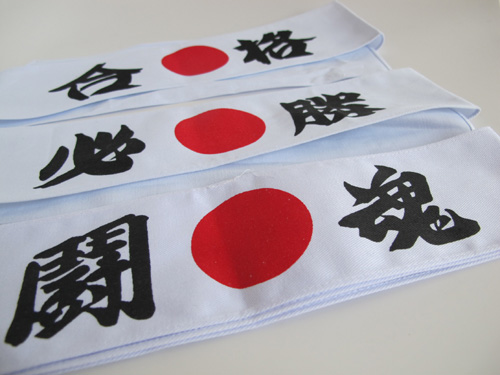
Japanese legend states that hachimaki strengthen the spirit and keep the wearer safe from evil spirits and demons. It is thought that the trend started with the Samurai, who wore the headbands underneath their helmets to absorb sweat, and to keep the helmets in place during battle.
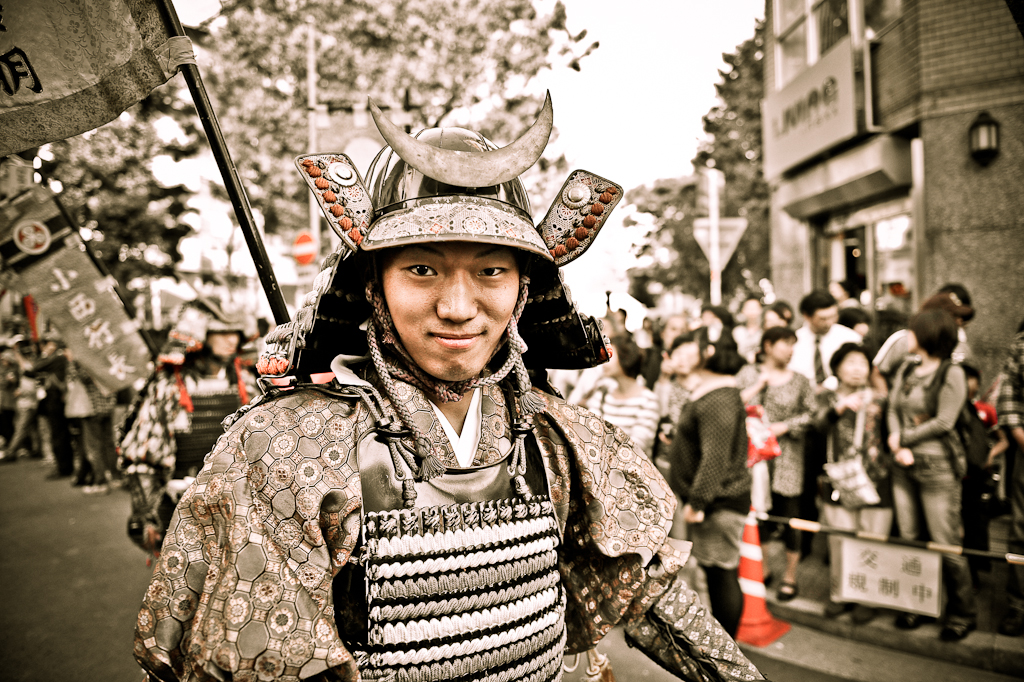
But with swords being outlawed, and the Samurai being pretty much gone in modern society, when can you wear the Hachimaki in more modern times?

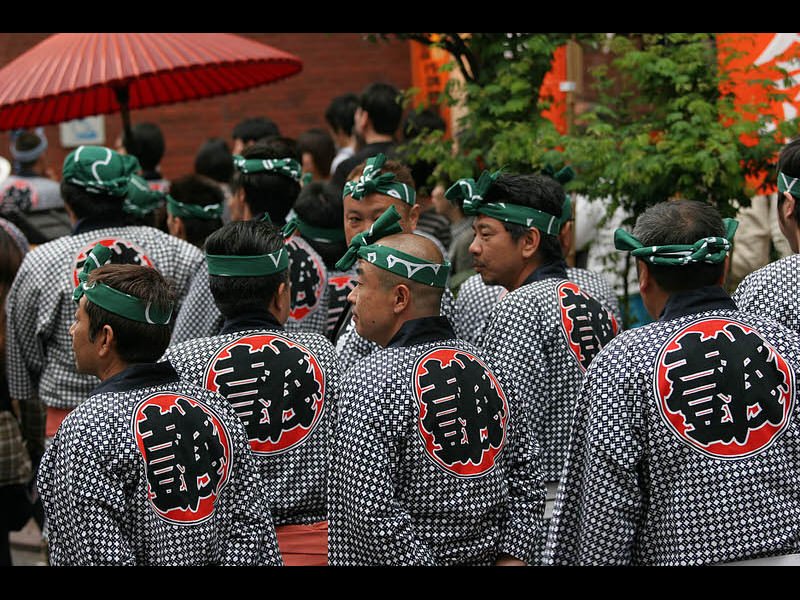
It’s usually worn at festivals, martial arts competitions, by carpenters, and some students even don the headband when taking exams.  Of course, everyone has seen at least one image of a Salaryman simulating the hachimaki by tying his tie around the head during drinking parties (supposedly to energise the liver?).
Also, the bosozoku (biker gangs) seem quite fond of wearing them.
Perhaps the most well known usage of the hachimaki was by the kamikaze pilots toward the end of World War II. These pilots would frequently wear a hachimaki, usually with the kanji “神風” (“Kamikaze”), before flying to their deaths.

There are different types of Headbands that can be used.  Besides the traditional white band with Kanji written on it, there are several others in common usage, which are often seen at festivals and other events.  With the summer festival season in full swing, here is a handy guide on how to tie them.
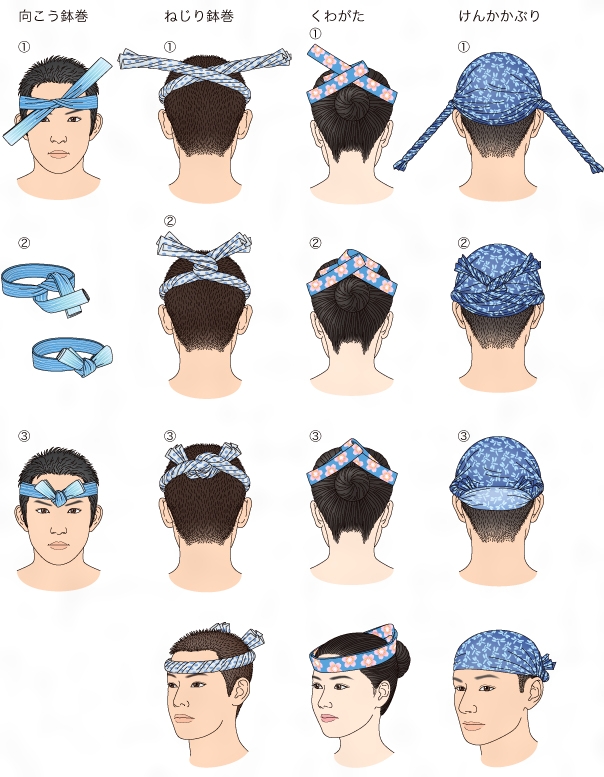
Who would’ve thought that the simple act of wrapping a length of cloth around the head could have such depth?
But like so many other things in Japan, even seemingly simple things often have a much deeper meaning behind them.  Armed with that knowledge, hope you all have a great summer festival season!

Filed Under: Culture, History

Reader Interactions

Leave a Reply Cancel reply

Your email address will not be published. Required fields are marked *

Primary Sidebar

YOU MAY LIKE

Japan Introduces Giant Humanoid Robot for Railway Maintenance

Japan has introduced a towering 12-meter-tall humanoid robot for railway maintenance, equipped with eyes reminiscent of soda bottles, a crudely designed head akin to Wall-E, and large arms capable of handling various tools like blades and paintbrushes. While it resembles a giant menacing robot from 1980s sci-fi, West Japan Railway’s (JR West) new humanoid robot […]

Top Scary Places and Halloween in Japan – From Kawaii to Kowai

Witches, Ghosts, Goblins, and more (Keitai)Zombies than you can shake a stick at are currently shuffling up and down the streets in Shibuya, which can only mean that yes, Halloween is upon us once more. Seeing all the “sexy” scary costumes on display here, you start to wonder just how many people truly know the […]

Japan green traffic lights

Japan Green Traffic Lights: The Curious Case of Blue Signals

Japan green traffic light: The traffic light signals are a universal sight in cities across the world. Those who learn driving will understand those terms very well, like the red colours, yellow, and green are famously recognized in every cities. But Japan green traffic lights in the cities has a different unique quirk that mostly […]

What happened to the Japanese love of nature?

There is a common image that Japanese people love nature. In some ways that is clearly true, thankfully. However, in various important respects what happens in practice seems to go very much against that. In a world increasingly focused on sustainability and protection of the environment there is one habit in Japan which, I suggest, […]

The Johatsu: Japan’s “Evaporated People” Who Vanish Without a Trace

In a world where connectivity is often taken for granted, the idea of someone disappearing without a trace seems almost unimaginable. Yet, in Japan, a phenomenon known as Johatsu (蒸発), or “evaporation,” has been a part of the social fabric for decades. These are individuals who choose to vanish from their lives, leaving behind families, […]

  • Privacy Policy
  • About us
  • Contact

Copyright © 2026 · Magazine Pro on Genesis Framework · WordPress · Log in