Going to an area you don’t know much about might provide a thrilling feel of an adventure. The same can be said about Japan’s maid cafés, which attract many foreign visitors.
A maid café is what it sounds like. The café is run by girls who dress up as maids and behave like one too. Never been to a maid café but are thinking of trying it once? We’ve got you covered with the basics.
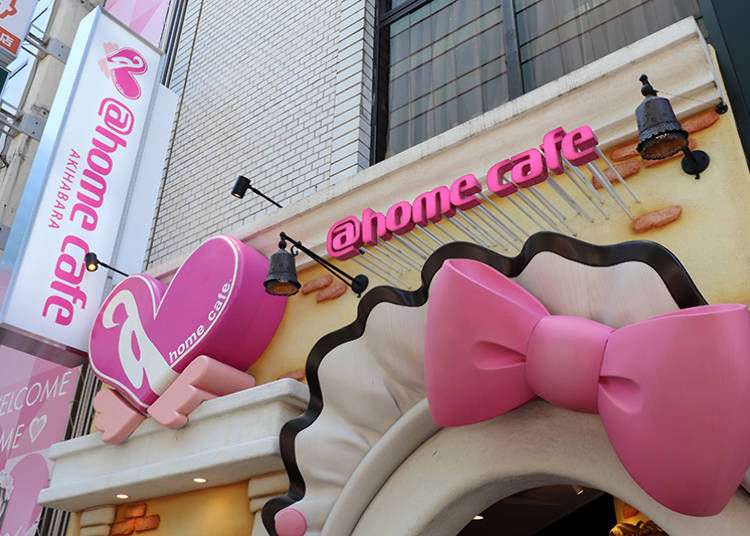
We went to Akihabara’s famed @Home Café, where we met legendary maid Hitomi, who draws visitors from all over the world and teaches us how to enjoy maid cafes in Japan. We’ll tell you everything you need to know from beginning to end!
A monitor on the first level shows videos of maids from @Home Café. You can discover more about the store by watching the video, which has both English and Chinese subtitles.

As soon as you enter the café, you’ll be greeted with “Welcome home, Master (or Princess).” @Home Café is a home-based café. Guests are addressed as “Master” or “Princess,” as is the case with other maid café franchises.
Is “going to the maid café” or “going back home” more entertaining for guests?

Inside the store, a stage is surrounded by the counter and sable chairs. On the stage, maids can act live, and memento pictures with maids can be taken.

The maid will hand you the “License of your Majesty.” When you come to @Home Café for the first time, you’ll be given this card that shows you’re the Master/Princess.

The Master is on the right, while the Princess is on the left. Another thing to note is that your card will be upgraded if you visit frequently. Also, @Home Café does not limit you by charging for the time you spend there.
The menu includes a broad range of foods, beverages, and amusements to enjoy with the maid. It’s critical to pay attention to the cost structure and menu.

A pricing list, course menu, and a remark sheet with notes from maids, Masters, and Ladies will be sent to you. These sheets will be available in various languages such as Japanese, English, Chinese and Korean.

The “Full Course” offers a favorite drink, lunch, dessert, and a snapshot or game with a maid for 2700 yen. The session is expected to last 60 minutes. It might depend on how fast your food arrives, though.
You need to consider that the Maid Cafes are a joint experience, so the more you get into the theme, the more you might enjoy your time in the maid café.
While conversing with maids is entertaining, some ground rules exist. Giving maids your contact information, asking personal questions, or touching them or their clothing is strictly prohibited!
Furthermore, you are not permitted to photograph the maids with your camera or cell phone. Make careful to keep images of the dishes or yourself to a minimum.

You can, however, get a photo with a maid by going to the amusement menu and selecting “Maid and Memorial Photo.” For your image, you can pick your favorite of the maids who served you during your visit.
After stepping onto the stage, you can choose from various accessories, such as cat ear headbands, and strike a pose.

Many maid cafés in Japan use the conventional procedure of taking a photo while paying the bill. You receive a lovely image with the date and maid’s name when the photo is processed.
The maid will notify you when your hour is almost over, and you may begin gathering your items.
Leave a Reply