Schools in many countries around the world require their students to wear uniforms.
This practice can be traced all the way back to 16th century England and the Christ Hospital School in London which in 1552 was the first school to introduce uniforms. Since then many debates have been had whether or not wearing uniforms has a positive effect on students.
Some of people cite the additional costs for parents and the suppression of individuality of the students among the major reasons why wearing uniforms shouldn’t be a requirement in schools. On the other hand, there are those who support this rule claiming that it gives students a sense of belonging to the school, as well as erasing social differences stemming from the price of the clothes they are wearing, and teaching them to dress smartly and take pride in their appearance.
Most schools in the United States do not have uniforms, but they are present in many parts of the world. Here are 15 countries and their typical school uniforms.
1. Japan
Seifuku are the uniforms worn by Japanese schoolgirls. Being often present in anime and manga, these have gained worldwide fame. The uniform consists of a blouse with a sailor-style collar and pleated skirt. The most common colors are navy blue, white, grey, light green and black. The girls also wear shoes with a small heel, and knee-high white socks, held in place with ‘sock glue’.
2. United Kingdom
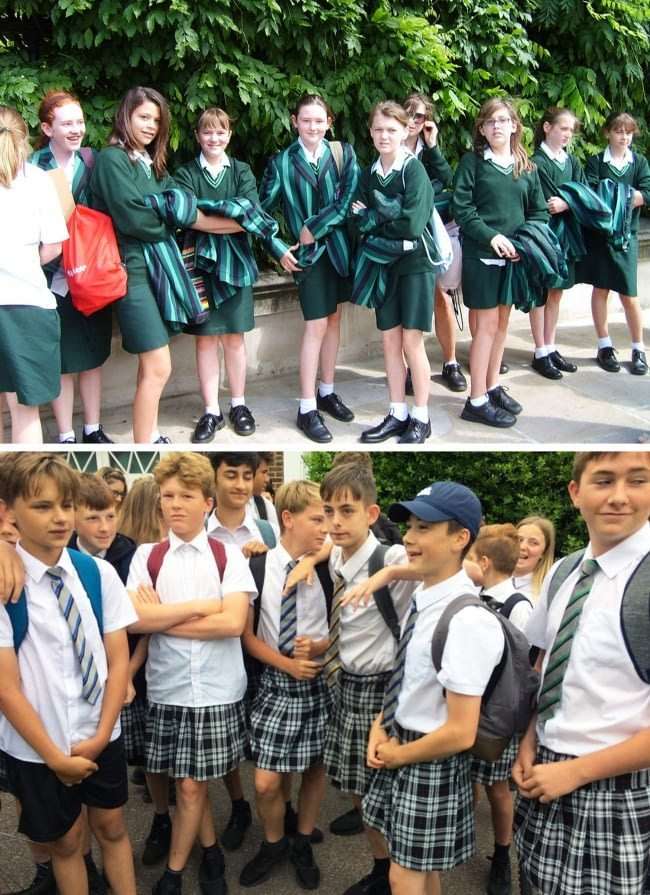
The first uniforms ever, introduced in England, were blue in color, mostly because blue was the cheapest dye available and it was supposed to inspire humility in the students. However, today every school in the UK has its own uniforms and emblems. Rules regarding the dress code are very strict, not even allowing boys to wear shorts. In the summer of 2017, due to the unusually hot weather, and as sign of protest against the no-shorts policy, boys came to school dressed in skirts. After this incident, the rules were revised and it’s said that the summer uniforms next year will include shorts.
3. Australia
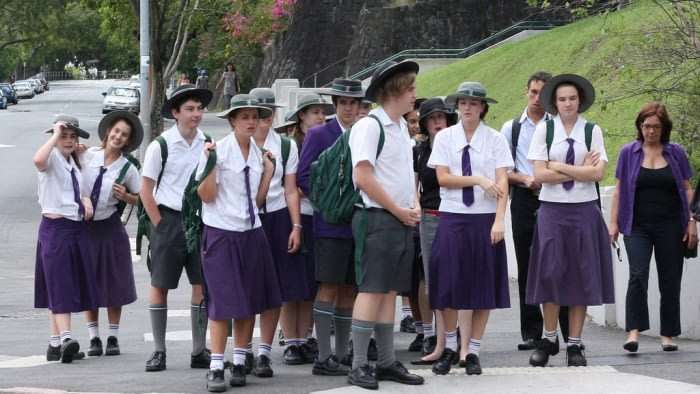
Australian uniforms are very similar to the British ones. However, due to the much hotter climate, these are more open and light, and in some places students are required to wear hats to protect them from the sun.
4. Cuba
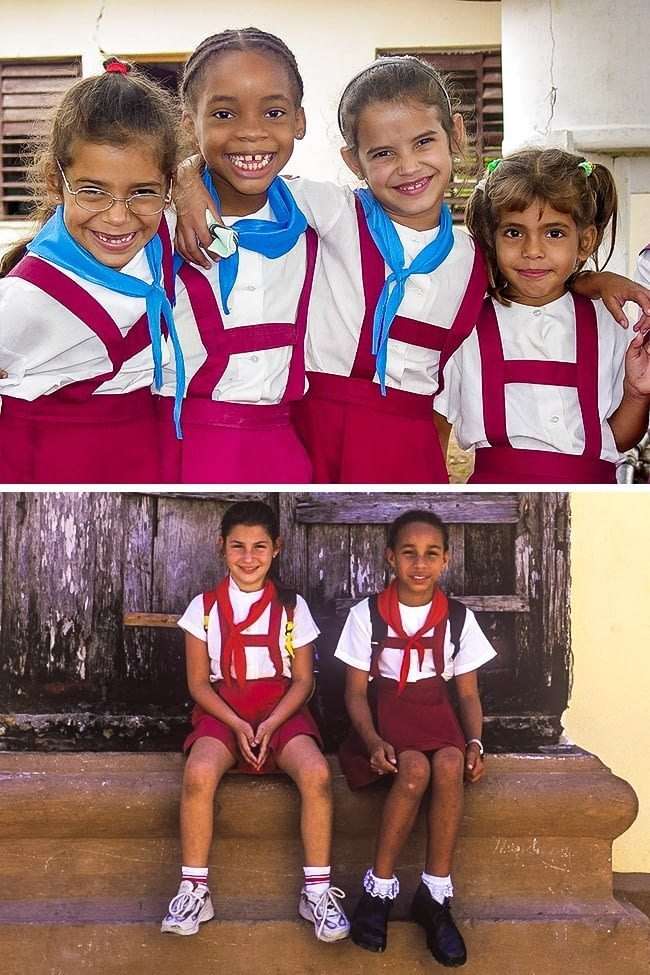
Cuban school uniforms are different for different levels of education. Children in kindergarten wear white tops, blue bottoms, and blue scarfs. In primary school, the uniform consists of a white top, red bottom, and red scarf, and in secondary school it’s a white top and yellow bottom.
5. Indonesia
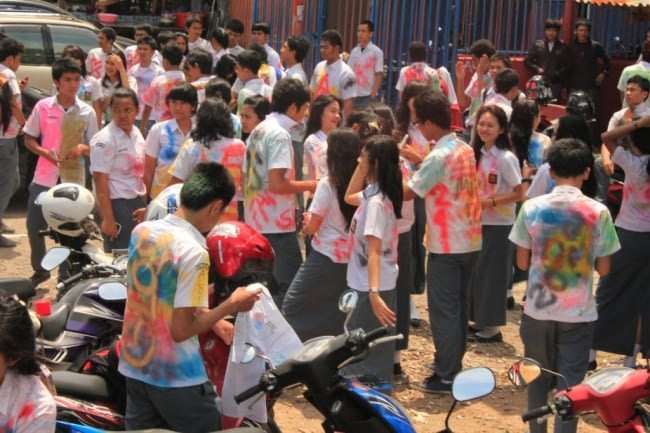
The same goes for Indonesia: the colors of the uniform depend on the level of education. Students always wear white tops, but the bottom is red for primary schools, navy blue for lower secondary, and blue-gray for upper secondary school. Students celebrate passing the National Exam and finishing school by painting each other’s uniforms with markers and spray paint. Sounds fun!
6. China
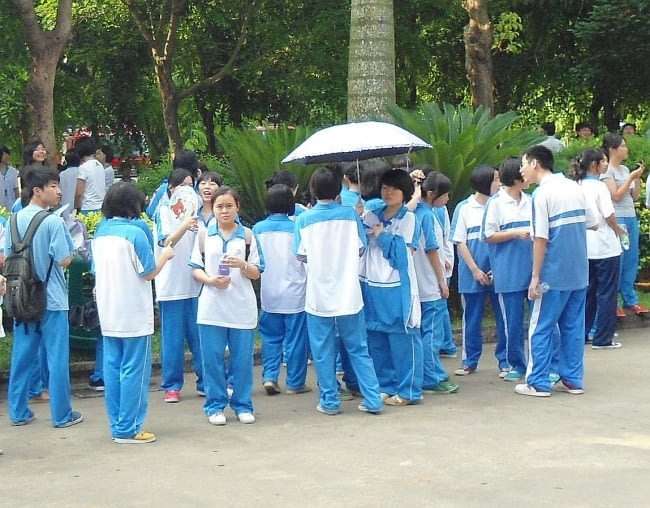
In China, students have five sets of uniforms: two formal and three for everyday use. The formal ones consist of a with shirt, sweater, and skirt for girls, and a suit for boys. The everyday uniforms are almost identical for boys and girls and they consist of white shirts, zip-up sweaters and trousers.
7. Ghana
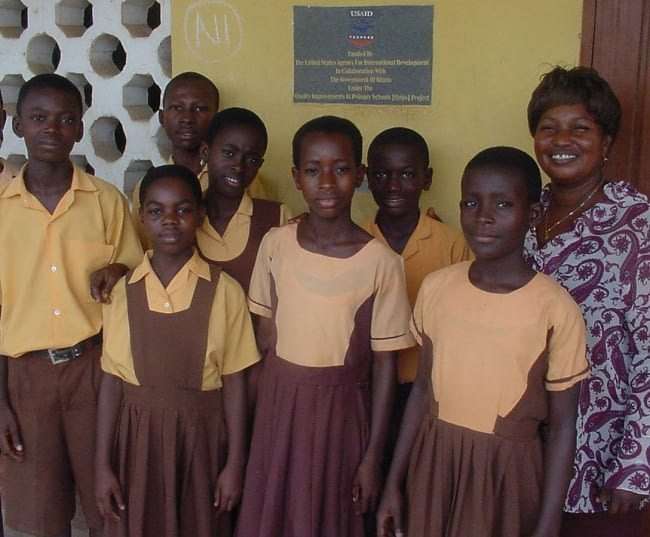
In Ghana all students must wear uniforms. However, due to the low incomes and widespread poverty, parents often can’t afford the uniforms. This is why many children can’t get an education. Trying to make education more accessible, the Ghanaian government distributed uniforms for free and introduced several programs offering financial help for the poorest families.
8. Vietnam
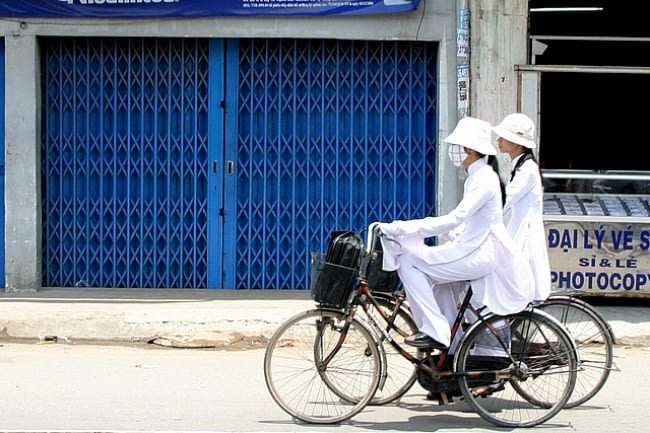
Uniforms in Vietnam are rather simple: white shirts with the logo of the school and black or navy blue trousers for both boys and girls. High school girls can also wear the áo dài, a traditional Vietnamese outfit consisting of tight-fitting silk tunic worn over trousers. The áo dài is obligatory in some schools, but mostly it’s worn only on special occasions.
9. Syria
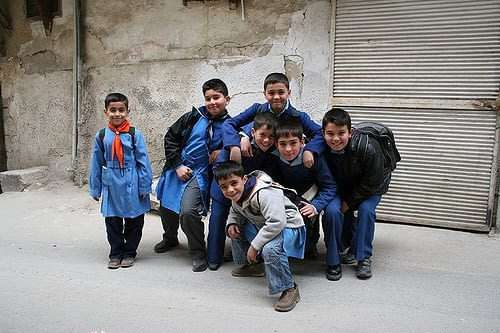
For a long time, the school uniforms in Syria were strictly a military-style khaki color. However, in the early 2000s they were changed to brighter blue, gray and pink tones to symbolize Syria’s wish to live in peace.
10. Bhutan
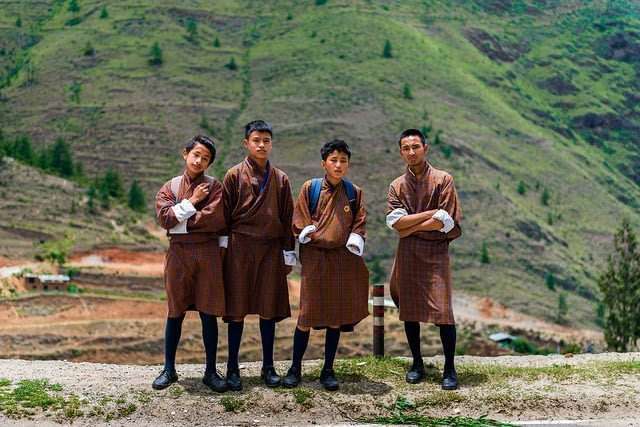
In Bhutan, students also wear the national costume. The girls’ outfits are called kira, and the boys’ gho. In the past, students carried their school supplies in the uniforms, but they have since adopted the use of backpacks and bags.
11. South Korea

In South Korea, elementary schools usually don’t have uniforms, but their use is obligatory from middle school and up. The uniforms are heavily influenced by the Western style and they consist of a shirt, blazer and tie, with skirts for girls and trousers for boys. School uniforms are very popular in this country, and they are sometimes worn by celebrities who aim to sell their products to younger and teen audiences.
12. Sri Lanka
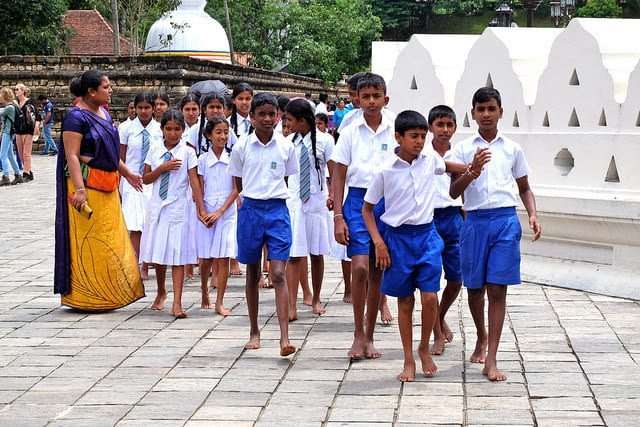
Uniforms in Sri Lanka are compulsory in all schools. Boys wear white shirts and blue shorts, and girls wear white dresses with different kinds of sleeves and collars. In some schools girls are required to wear ties, and boys usually wear them only for special occasions. Black shoes and socks are also usually part of the uniform.
13. Russia
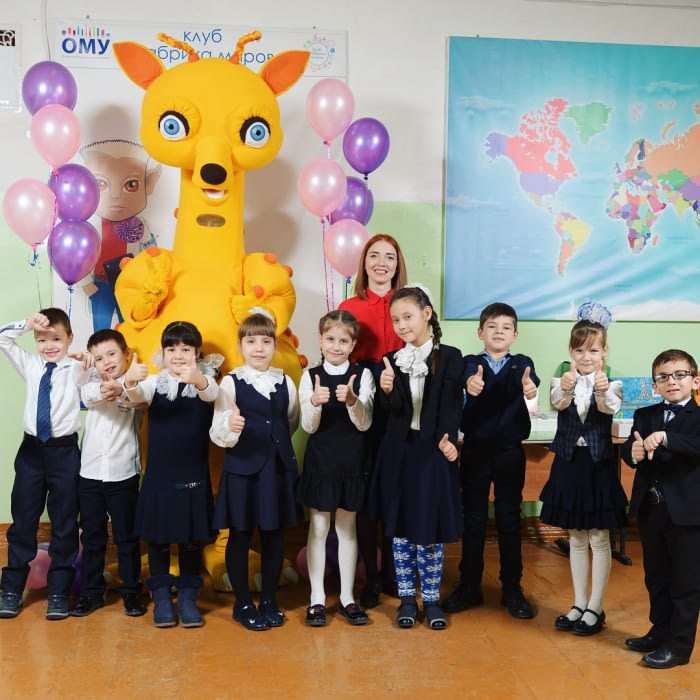
Uniforms in Russia were not obligatory from 1994 to 2013. But with the introduction of the new uniform law, schools can now choose the kind of uniforms the students should wear, or they can only enforce a stricter dress code consisting of a white top and dark bottom.
14. North Korea
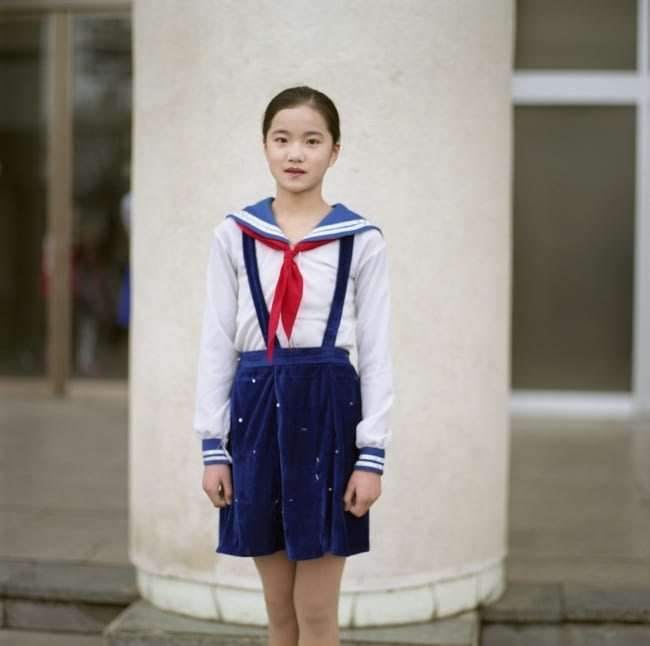
Students in North Korea must wear uniforms. Girls wear dresses and boys shirts and trousers. All of them have to wear a red scarf as well – this symbolizes their support for the North Korean political party.
15. India
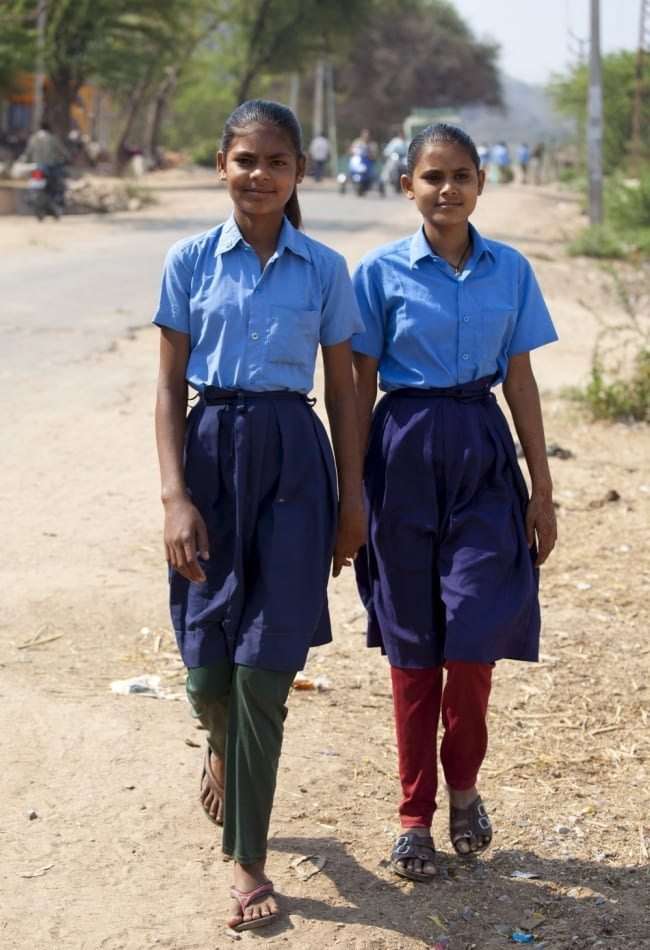
School uniforms are very important in India and they are mandatory in both public and private schools. Boys wear light-colored buttoned shirts with short sleeves and long blue, white, or black trousers. Girls wear shirt with skirts, or in some places knee-long tunics and pants.
Leave a Reply