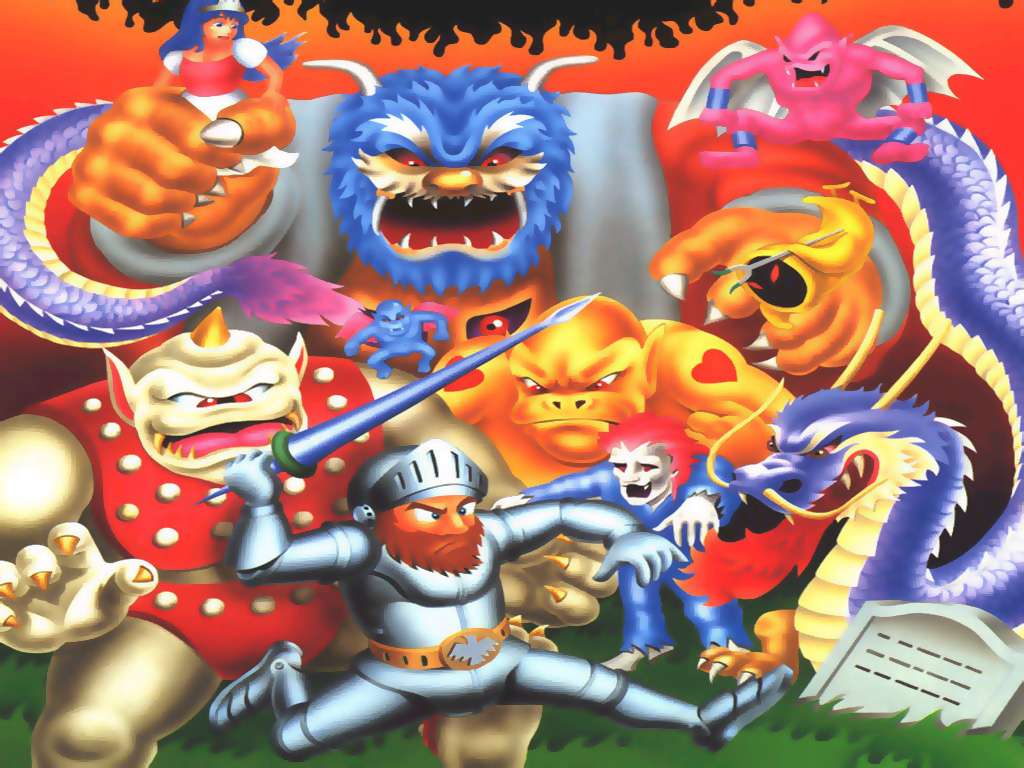
Art, as the saying goes, imitates life. Well, for quite a few old-school Japanese arcade games, life actually inspired the art and beauty of retro games we still hold dear these days. Ghosts and Goblins, for instance, was inspired by the Aokigahara forrest in Japan, which is proclaimed to be the most haunted place in the entire country.
It wasn’t just the myth surrounding the forrest, but also tales of ghosts and even goblins living therein, which inspired Capcom designer Tokuro Fujiwara to conceptualize a game around it. You see, he needed a hit game, and he loved Japanese myth and folklore, having been influenced by his grandparents at a young age, who told him stories and issued dire warnings about entering the infamous Aokigahara (aka suicide forrest).
Trying to appeal to both Japanese and international audiences, he took aspects of Arthurian Legend (which was super-popular in Japan at the time) and mixed it with some Japanese myth and folklore, put it in a blender (along with copious amounts of Sake, most likely), added “insane” difficulty just for some extra spice, and out came one of the most fun, and memorable games ever made, namely the old and beloved arcade classic, Ghosts and Goblins

The Japanese name is 魔界村 / Makaimura, which literally translates to: Demon World Village.
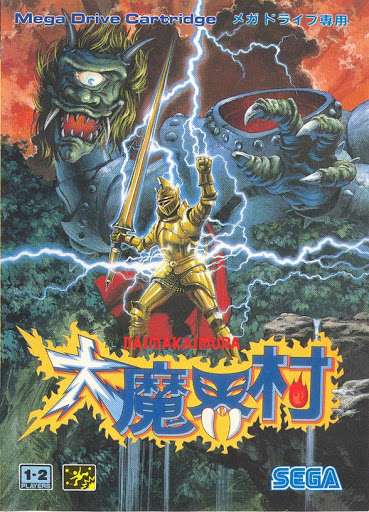
Designed by previously mentioned gaming legend, Tokuro Fujiwara long before Capcom was a household name (and still called ‘Capsule Computers’), Ghosts ’N Goblins STILL has a reputation of being frustratingly hard, yet tons of fun at the same time. Is that true? Is it really as hard as its preceding reputation suggests?
Yes, it’s hard — brutally hard, in fact – but admit it, you kept coming back for more whenever you played the game.
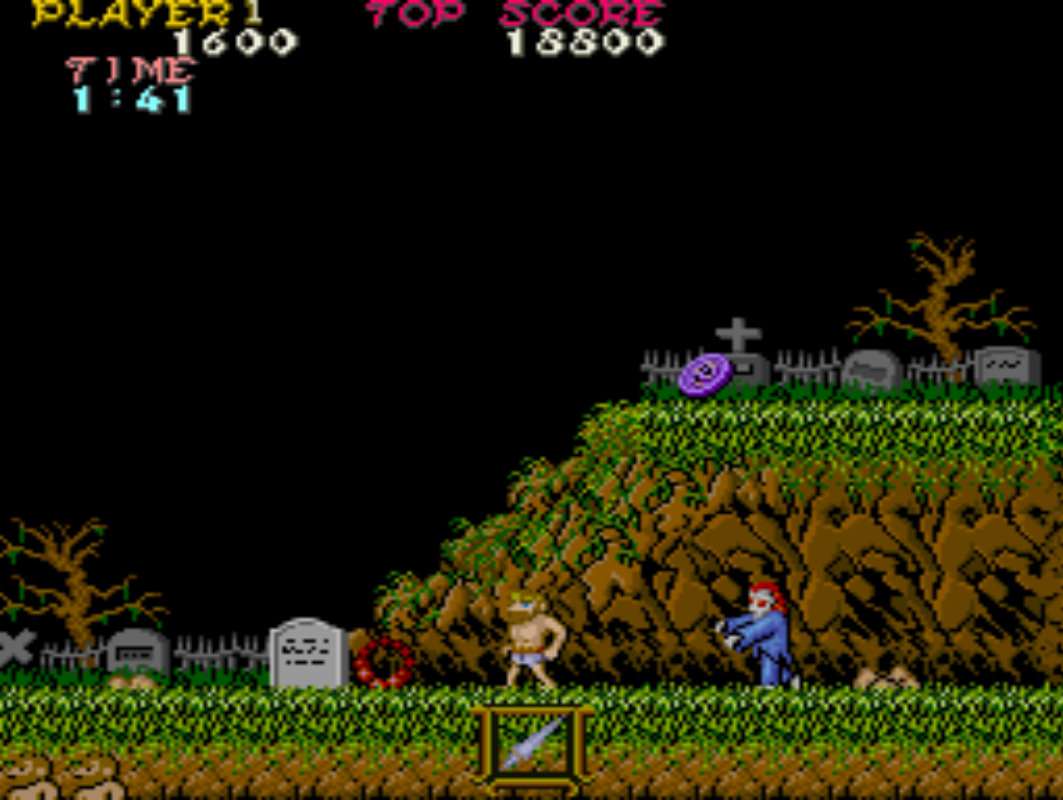
If you can’t get a hold of the game these days, here’s a quick breakdown: Arthur, the heroic knight you control, stumbles determinedly forward (on a mission to rescue a princess, of course) while hurling weapons straight ahead; even in a full suit of armor he’s about as fragile as a paper kite in a torrential rainstorm, however. Just two hits from the freaky demons flying all around, and Arthur first loses his armour and is left only with his underwear, and is then down for the count as he crumbles into a pile of bones, if hit again. Yes, in this game it’s two hits and you’re out – or at least back to the last checkpoint, which are few and far between.
Anyone above the age of 35 out there probably remembers countless hours popping those quarters into the machine at your local arcade and feeling both exhilarated and frustrated at the same time at this amazing game. People will also undoubtedly remember the extreme frustration you felt when (warning!! Spoilers ahead…) you FINALLY beat the game only to be transported all the way back to the beginning and having to do everything over again – only on a higher difficulty.
In this day and age, people would’ve grabbed their pitchforks and stormed Capcom’s offices (or warmed up their twitter-ready fingers and tweeted a barrage of outrage and frustrations); but back in those days in 1985, people enjoyed a challenge.
Despite its reputation, Ghosts ’N Goblins isn’t using difficulty to just scam you out of more money or keep you from beating the game too quickly, however. It’s trying to do those things, of course, but more importantly, it’s also trying to make you laugh.
Everything about Arthur is telling you not to take things too seriously. Yes, he’s surrounded by monsters as he runs through a graveyard full of leering trees, but the goofy knight runs with an elongated stride Monty Python would be proud of. When he’s hurt, a life bar doesn’t go down – he’s left standing there in his underpants instead. When he’s put down for good, he’s thrown backward and crumples into a musical pile of bones. Everything about him feels like the failing bravado you experience every time you try to explain to your Japanese friends that the “go” signals in traffic lights in Japan aren’t actually blue, but rather green instead. Those of you who’ve been here a while know the struggle….
All of this was by design… You see, Fujiwara loved to make people “suffer” with delightful frustration. He would haunt people (not literally, of course…) playing early versions of the game to get the frustrating timing of certain aspects of the game just right.
“IF THE PLAYERS THAT TRIED THE GAME TENDED NOT TO GET STUCK AT A CERTAIN POINT, I’D HAVE TO HURRY BACK TO THE COMPANY AND REDO THAT PORTION,” HE SAID IN A 2009 INTERVIEW. “I COULDN’T LET THEM GET BY SO EASILY. THERE ARE TRICKS YOU CAN USE TO AVOID DYING, RIGHT? ONCE I FIGURED OUT WHAT THEY WERE, I’D QUICKLY THWART PLAYERS WHO ATTEMPTED TO USE THEM.”
Ghosts ’N Goblins’ tradition of relying on the audience to take a pie in the face rather than act as a clown on a stage lives on. For those of you who have played the game, Dark Souls’ oppressive atmosphere and punishing gameplay would be rather wearying if it didn’t make you laugh when some slavering freak jumps out of a pile of debris after you finally got past the knights guarding a bridge. By making players laugh at themselves, by designing a game as not just a colorful challenge but more of a prank, Ghosts ’N Goblins created a new incentive to overcome and embrace failure as you play – and have fun with it, thus setting the stage for amazing games such as Dark Souls.
In a certain way, it is a metaphor for life… The game sets you up, you get knocked down, you learn from the experience, you feed it another quarter / a life, you get up again, and get past the difficulty, only to see what else it can throw at you.
And all that was made possible by a classic game infused with a love of folklore and inspired by a haunted forrest in Japan.
Leave a Reply