Teachers in Japan are highly respected and valued in society, often addressed with the honorary title Sensei, which signifies authority, expertise, and deep respect. This term isn’t exclusive to teachers—it’s also used for doctors, lawyers, and other professionals—but in the classroom, it underscores the teacher’s role as a figure of authority and knowledge.
However, the life of a teacher in Japan isn’t all roses. They work incredibly hard, juggling numerous responsibilities beyond teaching. For instance, if a student gets into trouble with the police, it’s the teacher—not the parents—who is called first. Teachers also act as counselors, supervise lunch breaks, communicate with parents, conduct home visits, and organize extracurricular activities.
Salaries and Career Growth
After World War II, Japan’s prime minister decreed that teachers’ salaries should be 30% higher than those of other civil servants. While this gap has narrowed over time, teachers still earn more than many other professions. Salaries are consistent nationwide, funded jointly by the government and local municipalities.

Pay scales depend on qualifications, experience, age, and performance. On average, a teacher with 15 years of experience earns around $47,561 annually. Career progression is structured, with 36 steps for teachers, 20 for senior roles like head teacher, and 15 for school directors. Highly experienced teachers may even be transferred to municipal administrative roles to share their expertise before returning to schools as directors.
Strict selection

Becoming a teacher in Japan is no easy feat. Candidates must hold a degree and complete specialized training programs approved by the Ministry of Education, Culture, Sports, Science, and Technology (MEXT). They also need to pass rigorous exams administered by local municipalities. Competition is fierce, with far more applicants than available positions.
Even after passing the exams, candidates aren’t guaranteed immediate employment. Top scorers are placed on a waiting list, and only the highest-ranked are assigned to schools. Those not selected must retake the exams the following year. For university-level teaching, a master’s degree and additional evaluations are required.
Early Career and Mentorship
New teachers spend their first year under the guidance of a mentor, who helps them navigate classroom management, counseling, and lesson planning. After this probationary period, they can secure permanent positions with full benefits. Teachers typically rotate roles every three years, and experienced educators are often assigned to schools needing extra support.

Continuous Professional Development
Japanese teachers are expected to engage in ongoing professional development. Schools allocate time for this, and municipalities offer training programs at key career milestones—5, 10, and 20 years. Nationally, senior teachers and directors attend 30-hour workshops every decade to renew their certifications.

Collaborative Culture
Teamwork is central to Japanese education. Teachers and directors regularly collaborate to improve teaching methods. They identify challenges, develop solutions, and test new lesson plans. These “trial lessons” are observed by colleagues, who then discuss and refine them.
Long Hours and Challenges
Despite the respect they command, Japanese teachers face grueling workloads. A 2018 survey by the Ministry of Health, Labor, and Welfare found that elementary and junior high school teachers work an average of 11 hours a day.
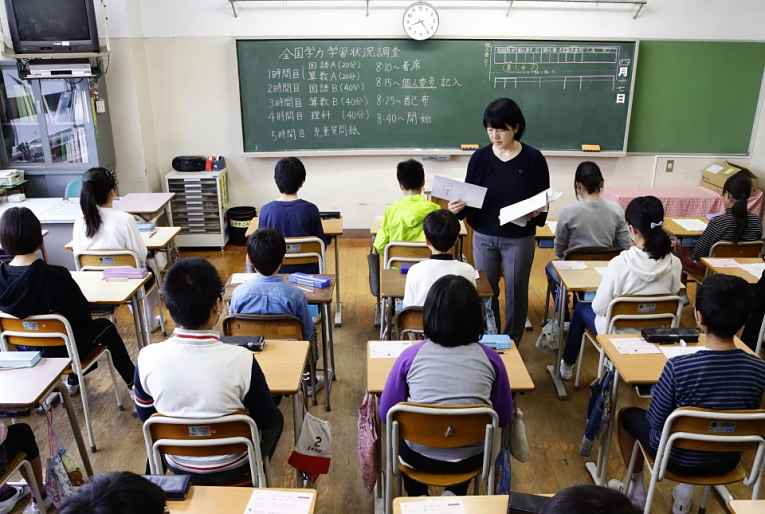
According to a 2016 study by the Ministry of Education, primary school teachers worked 57 hours and 25 minutes per week, while high school teachers logged 63 hours and 18 minutes. Many also reported working over 80 hours of overtime each month.
In conclusion, while teaching in Japan is a prestigious and rewarding profession, it comes with immense responsibility and demanding hours. Teachers are pillars of society, shaping future generations, but their dedication often comes at a personal cost.
Leave a Reply