The Taika Reforms (“Great Change”) were a series of political and administrative reforms implemented in Japan in 645 CE under Emperor Kōtoku. Those reforms represented a substantial turn toward centralized imperial rule, primarily influenced by Chinese Confucian and bureaucratic ideals.
The Taika reforms aimed to consolidate power under the emperor and establish a structured government, replacing the decentralized and clan-based rule of the past.
Background and Causes of Taika Reforms
During the early 7th century, Japan was largely governed by powerful aristocratic clans, with the Soga clan wielding significant influence over the imperial court. The Soga had dominated court politics for decades, controlling emperors and consolidating power for their own benefit.
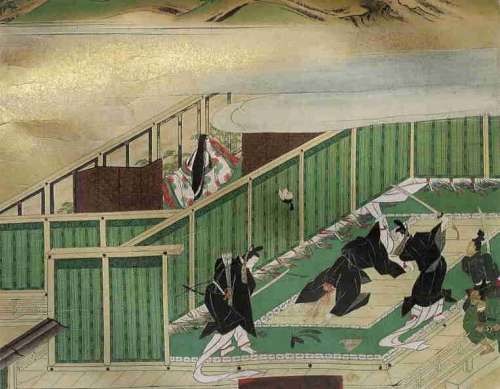
In 645 CE, Prince Naka no Ōe (later Emperor Tenji) and Nakatomi no Kamatari assassinated Soga no Iruka, bringing an end to the Soga hegemony and paving the way for a new centralized rule in Japan. Inspired by the highly structured and efficient government of the Tang Dynasty in China, Japan sought to modernize its political system and strengthen the emperor’s authority.
Don’t Miss: Gunkanjima: 5 Haunting Secrets of Japan’s Ghost Island
Key Features of the Taika Reforms
- Land Redistribution and Taxation:
- The Taika reforms abolished private land ownership by powerful clans and declared all land to be under imperial control, a move intended to weaken the aristocracy.
- A new land distribution system, modeled after the Chinese equal-field system, was introduced to allocate land based on population needs.
- Taxation was standardized, with peasants required to pay taxes in the form of rice, textiles, and labor to support the imperial government.
- Centralized Government Structure:
- A hierarchical bureaucratic system was established, where officials were appointed based on merit rather than hereditary status, although in practice noble families continued to dominate high-ranking positions.
- The emperor became the supreme ruler, with local governors (kokushi) appointed to administer provinces on behalf of the central government.
- The capital was planned in a grid-like structure, resembling Chinese cities, symbolizing the shift towards an organized, centralized state.
- Legal and Administrative Reforms:
- A new legal code, based on Chinese law, was implemented to regulate governance and maintain order.
- The introduction of census records ensured an accurate count of the population for taxation and military service.
- The construction of roads and improved infrastructure facilitated better communication and administration across Japan.
- Cultural and Diplomatic Influence:
- The adoption of Chinese-style court rituals, official ranks, and diplomatic missions to China reinforced Japan’s engagement with continental influences.
- Buddhism, which had already gained prominence in Japan, was further institutionalized and supported by the state, leading to the construction of temples and monasteries.
Implementation Challenges and Resistance
Despite the ambitious scope of the Taika Reforms, their implementation faced several obstacles. Many local aristocrats resisted the changes, as the new system threatened their traditional power and land ownership.
Additionally, enforcing the land redistribution policies proved difficult, as some powerful clans found ways to circumvent the system. The reliance on a Chinese-style bureaucracy also required educated officials, a challenge in a society where literacy was still limited outside the aristocracy and Buddhist clergy.
Impact and Legacy of Taika Reforms
The Taika Reforms laid the foundation for the later Ritsuryō system, a legal and governmental framework that guided Japan for centuries. While the Taika reforms were intended to bolster imperial authority, strong aristocratic families and Buddhist institutions maintained major influence over government.
Over time, the centralized model evolved, culminating in the establishment of the Heian period (794-1185), where the Fujiwara clan dominated court politics. Although not all aspects of the Taika Reforms were successfully implemented, their significance in shaping Japan’s political and social structure remains profound.
The Taika reforms helped transition Japan from a loosely governed collection of clans to a more unified state, setting the stage for future developments in Japanese history. The bureaucratic and taxation principles introduced during this period influenced Japanese governance for centuries, demonstrating the long-lasting effects of these historic reforms.
Read More: Ogimi Village: The Secret to Japan’s Village of Longevity
Leave a Reply