Off the coast of Nagasaki, Japan, lies a place that feels frozen in time—a crumbling relic of a bygone era that whispers tales of ambition, resilience, and abandonment. Gunkanjima, or “Warship Island,” earned its nickname from its striking silhouette, resembling a battleship rising from the sea. But this tiny, fortress-like island is far more than a curious shape on the horizon. Once a thriving coal-mining hub, Gunkanjima is now a hauntingly beautiful ghost island, its decaying buildings and empty streets drawing adventurers, photographers, and history buffs from around the world.
The Rise of an Industrial Powerhouse
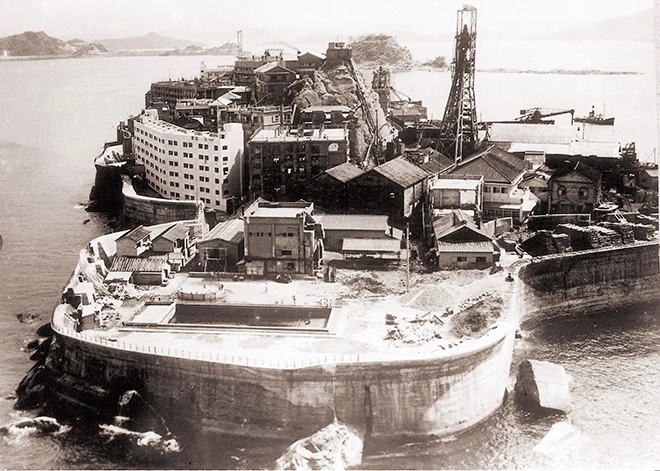
Gunkanjima’s story begins in the late 19th century when Mitsubishi Corporation purchased the island to tap into its rich undersea coal reserves. At the time, Japan was rapidly industrializing, and coal was the lifeblood of its economy. Mitsubishi transformed the barren rock into a bustling industrial community, constructing concrete apartment blocks, schools, shops, and even a hospital. By the mid-20th century, Gunkanjima was one of the most densely populated places on Earth, with over 5,000 residents crammed into its 16-acre expanse.
The island’s infrastructure was a marvel of engineering. High-rise apartment buildings, some of the first of their kind in Japan, were built to house workers and their families. A network of tunnels connected the island’s surface to the coal mines deep below the ocean floor. Despite its small size, Gunkanjima was a self-sufficient microcosm of modern life, complete with a cinema, pachinko parlors, and even a rooftop garden.
Life on Gunkanjima
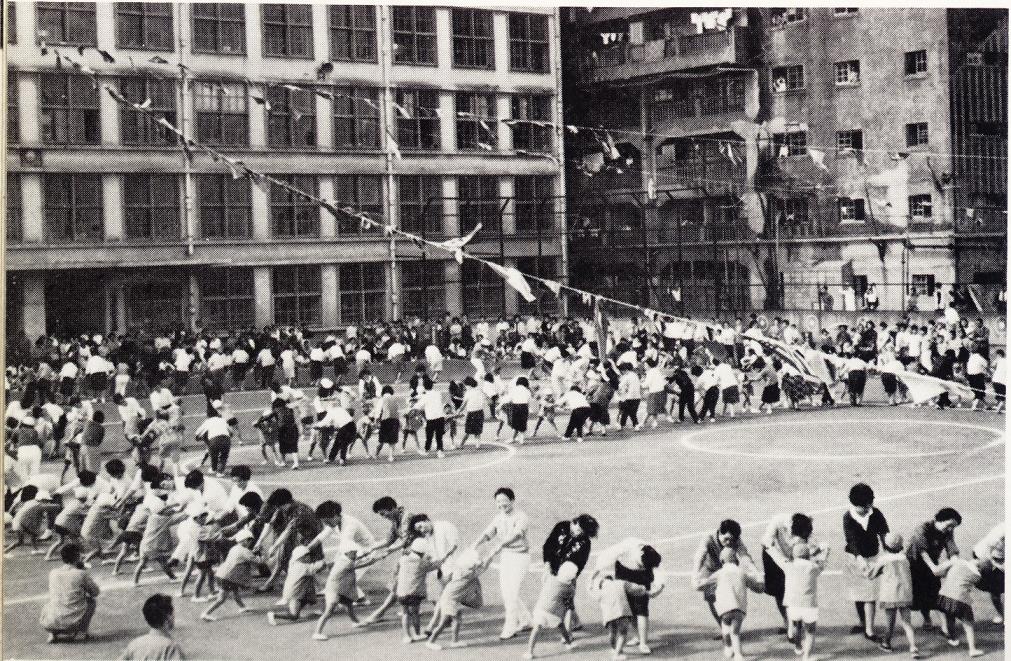
For the families who called Gunkanjima home, life was a mix of modernity and confinement. Children attended school on the island, playing on rooftops and in narrow alleyways. Housewives shopped at bustling markets, and miners returned home to their families after grueling shifts underground. Despite the island’s cramped conditions, residents enjoyed amenities that were considered luxurious at the time, such as televisions, refrigerators, and running water.
But life on Gunkanjima wasn’t without its challenges. The island’s isolation and the constant hum of industrial activity created a unique, almost claustrophobic atmosphere. Families lived in close quarters, and the ever-present coal dust permeated every corner of daily life. Yet, for many, Gunkanjima was a place of opportunity and community, a testament to human ingenuity in the face of adversity.
The Dark Side of Gunkanjima
Behind the island’s prosperity lay a darker history. During World War II, Mitsubishi forcibly conscripted Korean and Chinese laborers to work in the mines under brutal conditions. Many of these workers died from accidents, malnutrition, or exhaustion, their stories buried alongside the coal they extracted. This chapter of Gunkanjima’s history remains a painful reminder of Japan’s wartime past and a point of contention for those seeking acknowledgment and reconciliation.
The island’s decline began in the 1960s as Japan shifted from coal to petroleum as its primary energy source. By 1974, the mines were no longer profitable, and Mitsubishi shuttered operations. Within weeks, the island was abandoned, its residents leaving behind their homes, belongings, and memories. Gunkanjima became a ghost town, its buildings left to the mercy of the elements.
A Hauntingly Beautiful Ruin
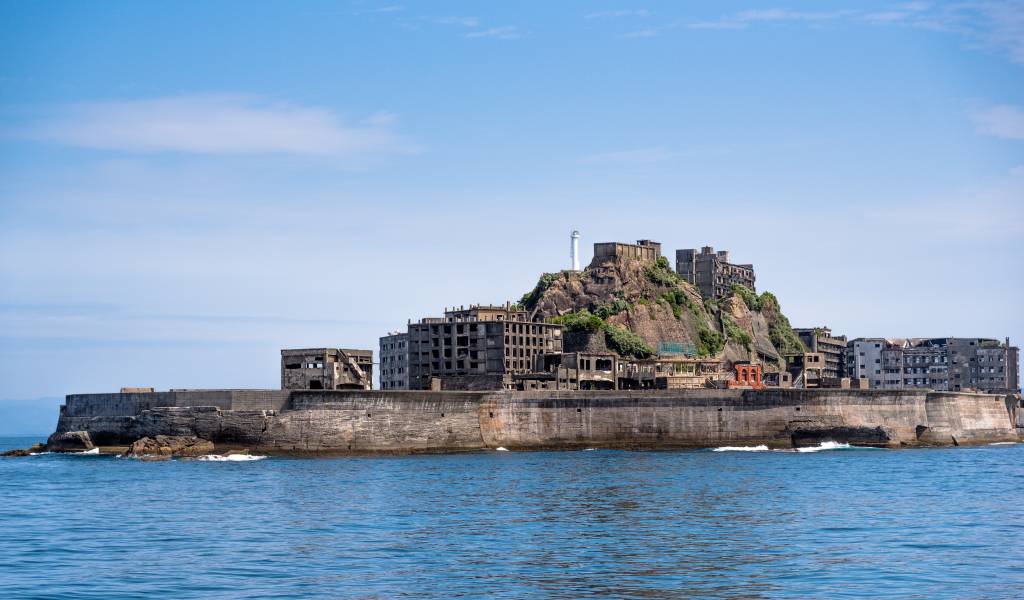
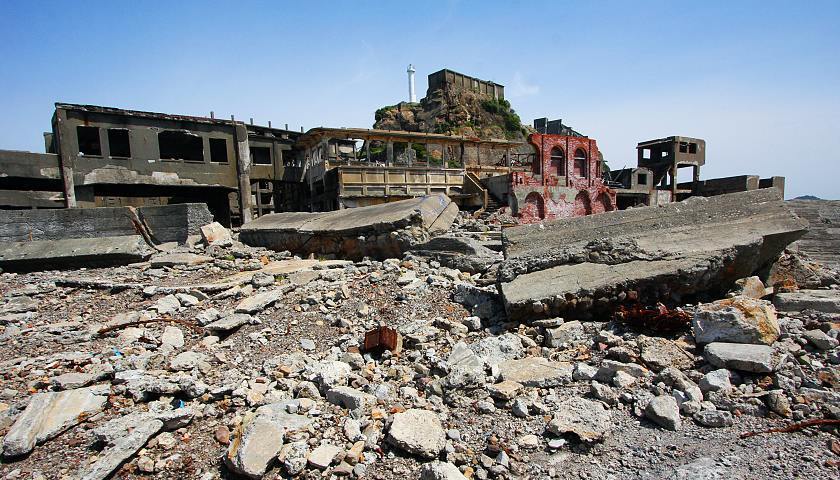
Today, Gunkanjima is a surreal landscape of decay and resilience. Crumbling apartment blocks stand like skeletons against the sky, their windows hollow and walls scarred by decades of saltwater and wind. Nature has begun to reclaim the island, with weeds sprouting from cracks in the concrete and birds nesting in the ruins. The silence is profound, broken only by the sound of waves crashing against the seawall.
This eerie beauty has made Gunkanjima a magnet for photographers, filmmakers, and urban explorers. The island has appeared in movies like Skyfall, where it served as the lair of the villain Raoul Silva, and in anime such as Attack on Titan, where its dystopian aesthetic perfectly complemented the story’s tone. Yet, despite its pop culture fame, Gunkanjima remains a place of solemn reflection, a monument to the rise and fall of industrial ambition.
Visiting Gunkanjima
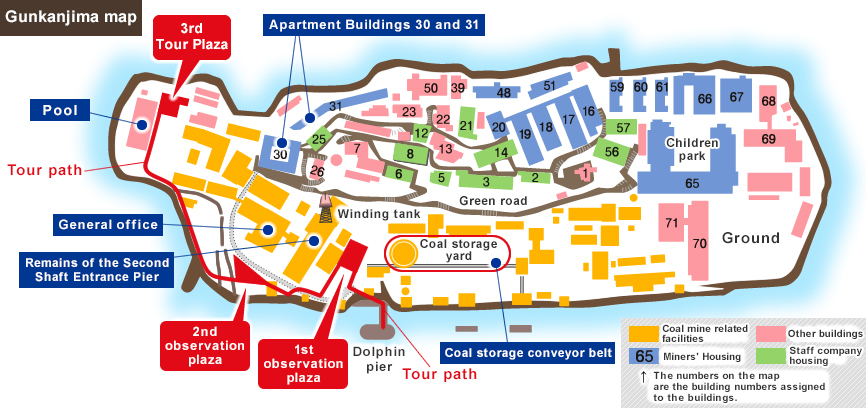
For those eager to experience Gunkanjima’s haunting allure, guided boat tours offer a chance to step onto the island and explore its ruins. Visitors can walk along designated pathways, peering into abandoned buildings and imagining what life was like during the island’s heyday. The tours also provide historical context, sharing stories of the people who lived and worked on Gunkanjima.
Before setting foot on the island, many visitors stop by the Gunkanjima Digital Museum in Nagasaki. This state-of-the-art facility uses virtual reality and interactive exhibits to bring the island’s history to life, offering a deeper understanding of its past and present.
Practical Information:
- Tours: Operate daily, weather permitting. Book in advance, as spots fill up quickly.
- Fees: Approximately ¥4,000-¥5,000 (around 30−40 USD) per person, including the boat ride and guided tour.
- Safety: Visitors must stay on designated paths due to the unstable condition of the ruins. Wear comfortable shoes and bring sunscreen and water.
A Journey Through Time
Gunkanjima is more than just an abandoned island—it’s a window into Japan’s industrial past, a testament to human resilience, and a hauntingly beautiful reminder of the impermanence of progress. Whether you’re drawn by its history, its eerie atmosphere, or its cinematic fame, a visit to Gunkanjima is an unforgettable journey through time, where the echoes of the past linger in every crumbling wall and rusted beam.
So, step aboard the boat, feel the sea breeze on your face, and prepare to be transported to a world where history and decay intertwine. Gunkanjima awaits, ready to share its stories with those who dare to listen.
Leave a Reply