Have you ever wondered if the house or apartment you’re about to rent or buy has a dark past? In Japan, there’s a website that can answer that question for you. Meet Oshima Teru (お島てる), a unique platform that maps real estate locations where deaths, crimes, or mysterious incidents have occurred. Known as jiko bukken (事故物件) or “stigmatized properties,” these places are often avoided by locals due to cultural superstitions.
Oshima Teru has become incredibly popular in Japan, where many people believe that living in a property with a tragic history can bring bad luck or even attract spirits. The website helps users identify these properties, ensuring they can make informed decisions before signing a lease or purchasing a home. But it’s not just for the superstitious—bargain hunters also use the site to find cheaper rentals or real estate deals, as jiko bukken are often sold or rented at significantly lower prices.
In a country where cultural beliefs and modern technology often intersect, Oshima Teru stands out as a fascinating tool that bridges the gap between the supernatural and the practical. Let’s dive into why this website matters, how it works, and some of the eerie locations it has uncovered.
Why Oshima Teru Matters
In Japan, the concept of jiko bukken is deeply rooted in cultural and superstitious beliefs. Properties where deaths, suicides, or crimes have occurred are considered “stigmatized,” and many people avoid them out of fear of bad luck or spiritual disturbances. This belief is so strong that real estate agents are legally required to disclose if a property has a dark history, though some may try to downplay it.
For those who aren’t superstitious, jiko bukken can be a golden opportunity. These properties are often priced much lower than comparable real estate, making them attractive to budget-conscious renters or buyers. Oshima Teru serves as a valuable resource for both groups: it helps cautious tenants avoid unwanted surprises, while also guiding bargain hunters to potential deals.
The website also highlights Japan’s unique blend of tradition and modernity. While many countries have superstitions about haunted houses, Japan has taken it a step further by creating a tool that combines technology with cultural beliefs. Whether you’re a skeptic or a believer, Oshima Teru offers a fascinating glimpse into how people navigate the intersection of the supernatural and the everyday.
How does it work?
When you access the Osima Teru website (http://www.oshimaland.com/) You will see the map of Japan with several fire approaches with an inside number.
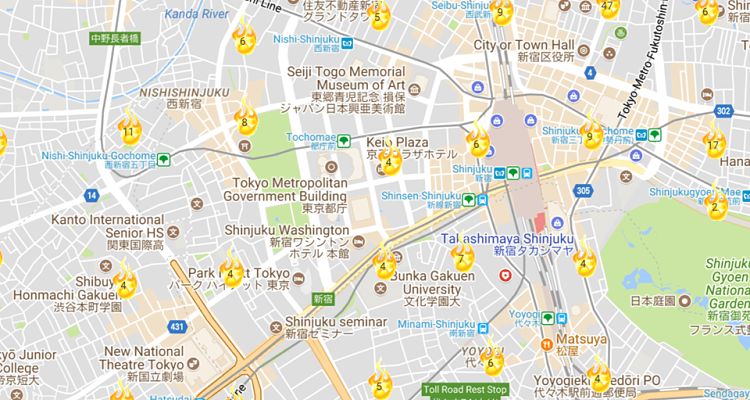
Oshima Teru is incredibly user-friendly. The website integrates with Google Maps, allowing users to explore properties with a dark history across Japan. Each location is marked with a fire icon, and clicking on it reveals details about the incident that occurred there. These can range from natural deaths and suicides to more gruesome crimes.
For example, you might find an apartment building where a tragic suicide took place or a house that was the scene of a violent crime. The site provides enough information to satisfy curiosity without being overly graphic. It’s also available in English, making it accessible to international users who are curious about Japan’s haunted real estate.
One of the most interesting features is the ability to filter properties by type of incident. Whether you’re looking for places with a history of natural deaths, accidents, or crimes, Oshima Teru makes it easy to find exactly what you’re looking for. It’s a powerful tool for anyone interested in the darker side of real estate.
Famous Cases and Locations
Oshima Teru has uncovered some of Japan’s most infamous haunted locations. Here are a few notable examples:
- Sunshine 60 (Tokyo): This iconic skyscraper in Ikebukuro was built on the site of a former prison where executions took place. Many believe the building is haunted by the spirits of those who died there.
- Sugamo Prison (Tokyo): Known as Japan’s “Alcatraz,” this prison housed war criminals and is said to be one of the most haunted places in the country.
- Tomayama Park (Tokyo): This park is rumored to be built on a former execution ground, and visitors have reported eerie encounters and unexplained phenomena.
These locations are just the tip of the iceberg. Oshima Teru’s database includes thousands of properties, each with its own chilling story.
Public Reactions and Uses
People use Oshima Teru for a variety of reasons. Some are simply curious, exploring the site to satisfy their interest in the supernatural. Others use it for practical purposes, such as researching potential rental properties or avoiding places with a dark history. There’s even a community of ghost hunters who use the site to plan their next spooky adventure.
However, the website isn’t without controversy. Some argue that listing properties with tragic pasts can be insensitive to the families of the deceased. Others believe it perpetuates stigma around jiko bukken, making it harder for property owners to sell or rent these spaces. Despite these concerns, Oshima Teru remains a popular and widely used tool.
Oshima Teru is more than just a website—it’s a window into Japan’s cultural beliefs, real estate practices, and fascination with the supernatural. Whether you’re looking to avoid a haunted property or snag a bargain, this platform offers a unique way to explore Japan’s darker side.
So, would you use Oshima Teru before renting or buying a property? And do you think superstitions about stigmatized properties are rooted in reality, or are they just stories we tell ourselves? Whatever your beliefs, one thing is certain: Oshima Teru proves that sometimes, the past is never truly buried.
What’s your take? Would you live in a jiko bukken if it meant saving money? Let us know in the comments!
Leave a Reply