Steeped in a long history and plenty of mystery, the Samurai 侍 have been a cornerstone of Japanese mythology since 794 AD (Heian Period). Having fought their way into popular culture worldwide, this Japanese cultural and historical export is now as recognisable as Sushi and Pokemon, and is even responsible for inspiring many costumes and story elements in Star Wars.
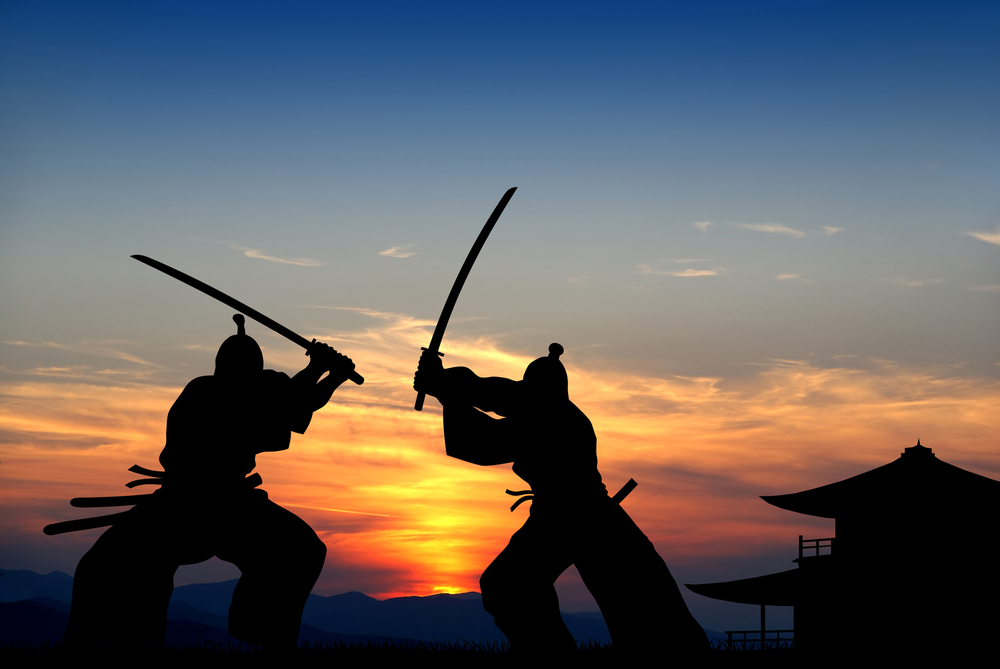
So what do we really know about the Samurai? We all know they were highly skilled swordsmen, right? So far so good. There are quite a few widely held erroneous beliefs about these honourable, Ancient Warriors, however. Were the Samurai really as loyal to their masters as previously thought? Were there only male Samurai? Were all Samurai straight? Well, if you picked YES, you’d be wrong on all accounts. Now that I’ve got your undivided attention, read on, and let’s take a look at some commonly held beliefs about Samurai that are just plain wrong.
1. Samurai were extremely loyal.
Sorry to destroy this idealised image of the fierce warriors of yore, but as is often the case, reality and fantasy occupy two very different spectrums, and as for the actual Samurai, well, some were as loyal as Tiger Woods at a Thai brothel.
In the early period of their emergence in the Heian period (794-1185), they were loyal to whoever paid the most for their services, and their allegiances could shift at any time. Yes, they weren’t always the skilled, extremely moral and loyal force we now associate with them. Their moral fibre depended heavily on what they were paid to do, and by whom.It wasn’t until the 12th Century when the “modern” image of the Samurai began to emerge. I can already hear you scream “Waitjustagoshdarnminite, what about the famous stories of Samurai being extremely loyal to their masters?”.
Reading old Japanese stories about famous warriors living in the 12th century can be misleading, as there are many examples of the utmost loyalty in these tales. The thing is, quite a few of these tales were taken out of their original context and rewritten centuries later to reflect the idealized values of that time period, not those of the past. Many of these edited, and re-edited compilations are the versions that are presently in common circulation, and it can take some digging to unearth the older, less embellished editions. Famous Daimyo Todo Takatora, for example, switched allegiances, which was not uncommon, to various masters no less than 7 times during his long-lived career.
2. Only men could become Samurai.
Nope, not even close. There were actually numerous female warriors amongst the Samurai class, called Onna-Bugesha 女武芸者,
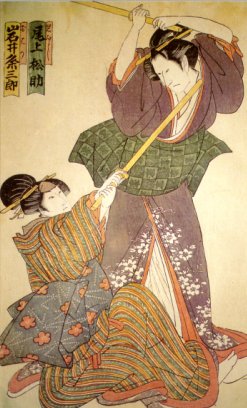
who participated in combat every bit as much as their male counterparts; such as in the Genpei War (1180-1185), in which Tomoe Gozen, wife of renowned Samurai Minamoto Yoshinaka, rode into the enemy forces, flung herself on their strongest warrior, unhorsed, pinned, and subsequently decapitated him. Pretty badass, right?
Nakano Takeko, another prominent female warrior, led a regiment of female warriors into the Battle of Aizu (1868) and took a bullet to the chest (to her chest armour, actually). Now wounded, she asked her sister Yuko to cut off her (meaning Nakano’s) head and bury it, rather than allowing herself to be captured.
Another example is the Battle of Senbon Matsubara (1580), where apparently 35 of 105 bodies found were female.
Although they also had their trademark Samurai swords, due to their smaller stature compared to the male variety, These female Warriors favoured a long spear called a Naginata 薙刀 rather than the sword.
3. They lived, breathed, ate, and slept Bushido 武士道 (The Way of the Warrior).
Yes, yes, I know that the seven commonly-accepted tenets or virtues of Bushido are: Benevolence 仁, Courage 勇, Honesty 誠, Honour 名誉, Loyalty 忠実, Respect 礼(禮), and Rectitude 義. Sorry to disappoint you again, however. Bushido is actually a relatively recent aspect of Samurai Culture. Truth is, if you had the chance to talk with even an early 17th Century Samurai about Bushido, they would most likely stare at you in utter confusion.Prior to the Tokugawa Era, the only notable attempt to quantify a strict set of samurai values can be attributed to Hojo Soun (1432ish – 1519) who wrote “Lord Soun’s Twenty-One Articles”, a number of lessons directed at regulating the behaviour of Samurai retainers.The “modern” Bushido principles are actually based on Confucianism, and gained popularity with the the populace during the late Meiji Era, which was much later in the 18th Century.
What about their indestructible Code of Honour, specifically? Almost all people think due to the aforementioned Bushido principles, the Samurai were extremely honourable. Well, that was also born during the later period of their reign. You see, our “Western” sense of honour meant absolutely nothing to the Heian era Samurai. That all came into the picture much later. The earlier variety did not shy away from deception and what we would now consider less than “honourable” tactics and behaviour, simply because they had no concept of anything similar to what we in the west would consider honour. It was kill or be killed in those early days and that’s all that counted at the end of the day. Survival of the fittest, if you will. The current image we all have of Samurai was actually born during the Tokugawa Era, thus neglecting a vast portion of actual Samurai History.
4. The Samurai were a rare elite force.
Nope, nope, nope. They were not quite the tightly defined small number of elite warriors we think them to be. Imagine 1,000 of these fierce warriors running towards you. Scary as hell, right? Now imagine over 2 Million! Yep, at the height of their reign, there were over 2 Million armed Samurai roaming around the islands.
They made up roughly 10% of the population of Japan – an entire social class, and were the only class legally allowed to possess swords or any kind of weapon (after 1588). Their weapon of choice, of course, was the sword – or rather two of them. They always wore the Katana (long sword), and a short sword, either the Wakisashi, or the Tanto together. Another weapon they were also extremely skilled with was the Yumi, or short bow. You see, what most people don’t know is that Samurai were also excellent Bowmen. As a matter of fact, they used the bow and arrow much longer before their famous swords even entered the picture. Speaking of Bow and Arrow…
5. All Samurai were as straight as an arrow.
Well, not exactly! You see, homosexuality in feudal Japan was very much like that in ancient Greece. Any Society with a highly ritualised class structure, thus Master/Slave/Submissive relationships, is bound to have some kind of homosexual activity, and the Samurai were no different. Actually, rare was the Samurai who didn’t partake in some “fun” with a younger (male) lover, which was actually encouraged, especially during the Edo period. Called Wakashudo 若衆道, this relationship with an older, more experienced “mentor” was extremely common in those days. That doesn’t mean all Samurai had homosexual tendencies, but it was not as rare as most people would probably imagine, given the extremely fierce image we now have of these mythicised warriors.
6. Only Japanese could become Samurai.
And one last time… NOPE! While the image of the Samurai we have nowadays is almost exclusively of Japanese people, the title of Samurai was also given to non-Japanese on several occasions. In one instance, none other than Ieyasu Tokugawa himself presented two swords (representing the authority of a Samurai) to English Sailor and Adventurer William Adams (1564-1620), thus naming him the first Westerner to be named a Samurai. Many others followed, including a Dutch colleague of Adam’s (Jan Joosten van Lodensteijn), a French Soldier (Eugene Collache), and a Prussian Military Instructor (Edward Schnell).
Surprised the history and image of the Samurai is not as clear-cut as you thought? Perhaps even a bit shocked about these insights into Samurai culture and history? As is often the case when it comes to the mysteries of history; there is always more to the story than meets the eye.
For many of us, these ancient warriors do hold some kind of special mystery though, and I bet many of you out there have secretly fantasised about becoming Samurai just for a day.
Should you be interested in doing some (17th century style) Samurai training, please check out these Samurai Schools in Japan, where you can learn Samurai Style Martial Arts:
Kyoto
-Samurai Kembu Theatre
Tokyo
–Samurai Training Tokyo
There’s even a Samurai Store should you want to buy some paraphernalia.
So, as you can see, these unique Japanese Warriors were as multifaceted as they are mysterious. They have a long, varied, and extremely interesting history. They were not quite the two dimensional characters many movies and modern stories make them out to be, but rather possess a deep, rich, layered cultural history.
Leave a Reply