Perhaps you’ve seen some anime or Japanese drama shows and have heard the term “senpai” (先輩) more than a few times. Your friends who don’t even understand Japanese may also have heard of this word.
If you’ve seen it with subtitles, you have likely been able to understand the meaning. However, we’re here to clarify what it means and how you can use it.
What exactly do you mean by “senpai”? It can be described as “senior, superior, or elder” in its simplest form. This raises the issue of who is qualified as a senpai. What are the prerequisites to earn this title?
A senpai is someone with a superior place than you are in terms of ability and experience, age, or social standing. Senpais can also mean someone who attended a school or workplace before you.
Let’s take a look at some examples.

When it comes to Japanese school, both the words senpai and kouhai (後輩) are introduced first. The older students attend school sooner than younger students and are therefore automatically Senpais. In this situation, the age of the student doesn’t need to be a factor (although it is typical that the students more advanced than you may be in the same grades as you). If there’s someone the same as age you, however, who starts school earlier, they are still considered a Senpai.
In particular, during activities after school, The senpai-kouhai bond is strong because Senpais have to teach their kouhais. There’s also the workplace. Senpai isn’t just for schools. When working, the relationships between senpais and kouhais can differ somewhat. Instead of instructing the kouhais, they take on the responsibility of caring for those under their care. If you’re a senpai at work, you’re bound by an obligation to care for your Kouhai. In the company you work for, the senpai-kouhai relationship may be different.
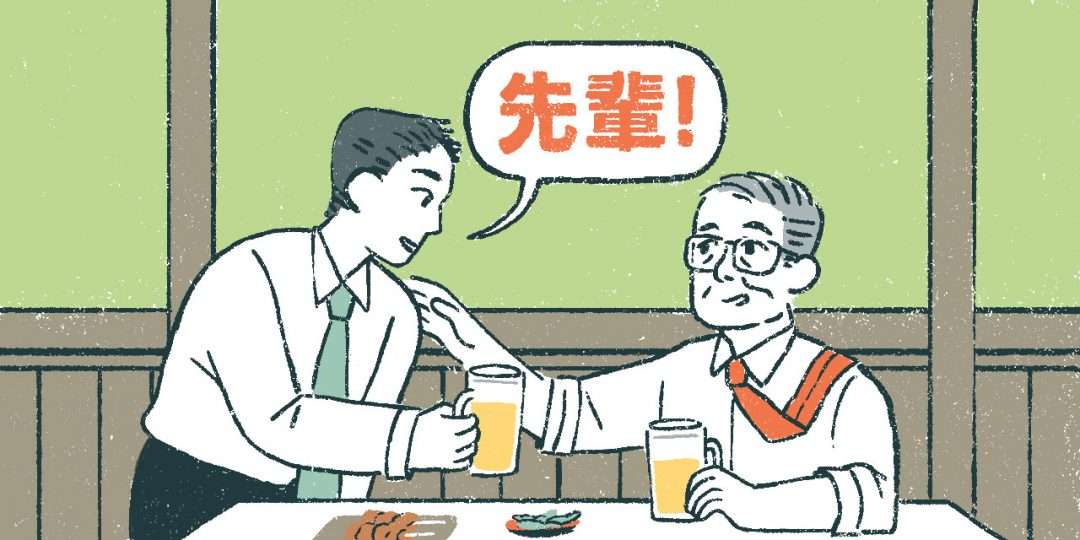
Other companies, like part-time employment and those relying on mentorship partnerships like dojos, have similar senpai-kouhai relationships.
What is the best way to use the word “senpai”? In school, you typically place it at the last letter of the individual’s name. If the student in the class above you is known as Miyamura Izumi, then you can refer to him as “Izumi-senpai.” Occasionally, depending on the situation, you might even refer to them with their initials, such as “Miyamura-senpai.” This indicates the closeness of the relationship. However, typically it’s their last name.
At work, it’s standard to add “san” (san) instead of “senpai.” “San” acts more like “Mr.”, “Miss,” and “Mrs.” but it has the same effect the same way as “senpai.” Imagine that the same person is in a higher-ranking job than you do. You could refer to him as “Nami-san.” This will be more fitting than the previous method.
Or, you can refer to him as “senpai” on its own without a name associated with the title. It can be used in both work and school.
As with any other title, it’s essential to know how you have to act with someone who is a holder of the title. It’s not a good idea to go to the boss with a question like “Hey Man! How’s your day going” is it? If yes, you’re extremely lucky and have a cool boss.

Your Senpai, in other words, is someone who is more knowledgeable or skilled, more senior than you, or who will learn to train and take care of you. If it’s in school’s club activities or at work, Your Senpai is a wealth of knowledge and expertise they could transmit to you.
When speaking to your Senpai, you should try to use the proper or polite form. That includes “desu” (です) and “masu” (ます) forms.
When you use these forms, you’re demonstrating respect for your Senpai.
At least, for the first few months of the senpai-kouhai connection. In time, you may become extremely close to your Senpai, and it will become an increasingly “douryou” (同僚) relationship where you don’t speak formally. All boils down to the level of calm your Senpai. It is possible to have a senpai that strictly abides with hierarchical formality.

You now are aware of the person who is classified as a senpai and how to apply the term and behave with the Senpai do you plan to practice this with your bosses at your workplace or in school? I’m sure they’ll be honored to be your Senpai.
Leave a Reply