The tradition of Japanese tattooing, known as Irezumi, has been inseparable from the Yakuza from the beginning of time. During the Edo period (1603 until 1868), criminals were tattooed in the hands of authorities using a method called bokkei.
They were branded as a criminal using these tattoos back in the day, which made it hard for them to get back into society and get jobs. The tattoo practice in the Japanese Yakuza grew as a protest against this type of branding.
The significance of tattoos in the Yakuza is typically related to imagery and symbols in Japanese art, culture, and religious beliefs. Tattoos on the body specifically are an expression of the yakuza culture. It was once mandatory in many clans of Yakuza for members to be tattooed. Today tattoos aren’t so common. Many Yakuza in the 21st century keep their skin clean to be able to blend into the rest of society. In contrast, a growing number of non-yakuza people in Japan have tattoos.
Still, the tradition of tattooing for Yakuza hasn’t died down. This list features the most well-known themes and images used in tattoos of the Yakuza and their significance. Certain of them are symbols of protection, while others relate to the person’s life. Yakuza tattoo designs are a part of fascinating histories rich in symbolic meaning and tradition.
The Koi Fish
The Koi fish is a typical Yakuza tattoo that is usually associated with luck. It is believed that in Japanese folklore, the koi fish can ascend waterfalls and work against the force of a strong flow. Therefore, koi is a symbol of determination and are frequently used to show that someone has overcome difficult circumstances. All of this is true for black koi.
The red koi tattoos symbolize love of some sort, usually masculine and robust love, like the bonds of friendship that are a part of the Yakuza. Blue koi represent reproduction and are thought to be highly masculine.
The Dragon

Dragons are treated differently in Japan and the West. The Japanese consider dragons to be patrons and protectors of humanity. Dragon tattoos are a symbol of courage as well as wisdom and strength. Black dragons symbolize the past and knowledge. Dragons of green are linked to nature, while gold dragons are associated with the value of gold and have a range of virtues. Dragons of blue are soothing, tolerant, and generous, and yellow dragons are noble and loyal companions.
There are six forms of Japanese dragons that can be associated with tattoos. They include Sui, Han, Ri, Fuku, Ka, and Hai and are usually printed with “Ryu” (“dragon,” for example, Sui-Ryu). Each variant each has its meaning. Sui, for example, the dragon’s king, and Ri have an extraordinary sense of vision.
The Phoenix
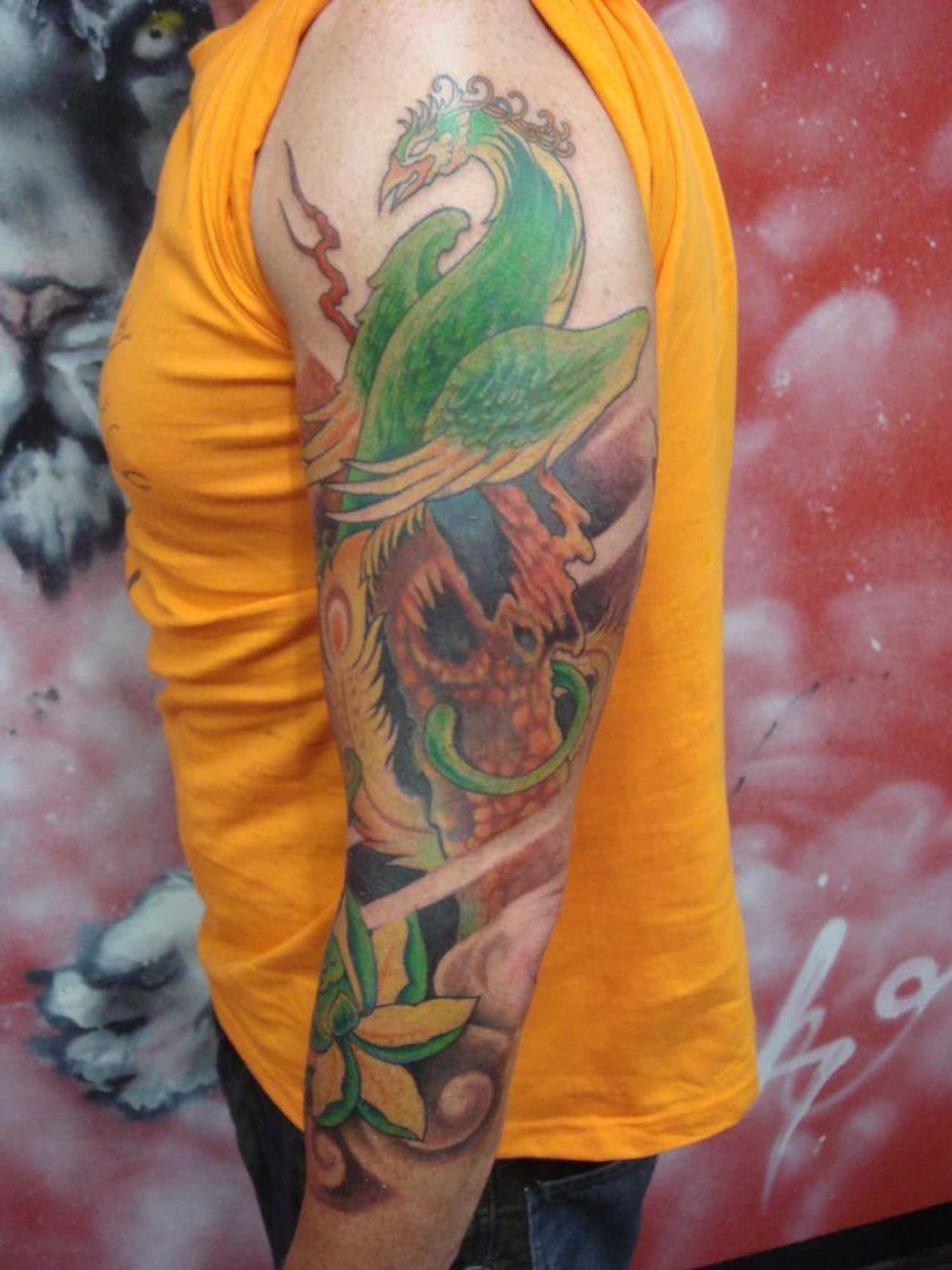
The Phoenix symbolizes a mystical bird that is engulfed by fire, only to be reborn from the ashes of its former self. As per the legend of the Phoenix, this tattoo symbolizes triumph, rebirth as well as fire. It is a frequent design in tattoos of the Yakuza. Phoenix mythology first appeared in Japan through China and also many aspects of Japanese culture.
The Snake
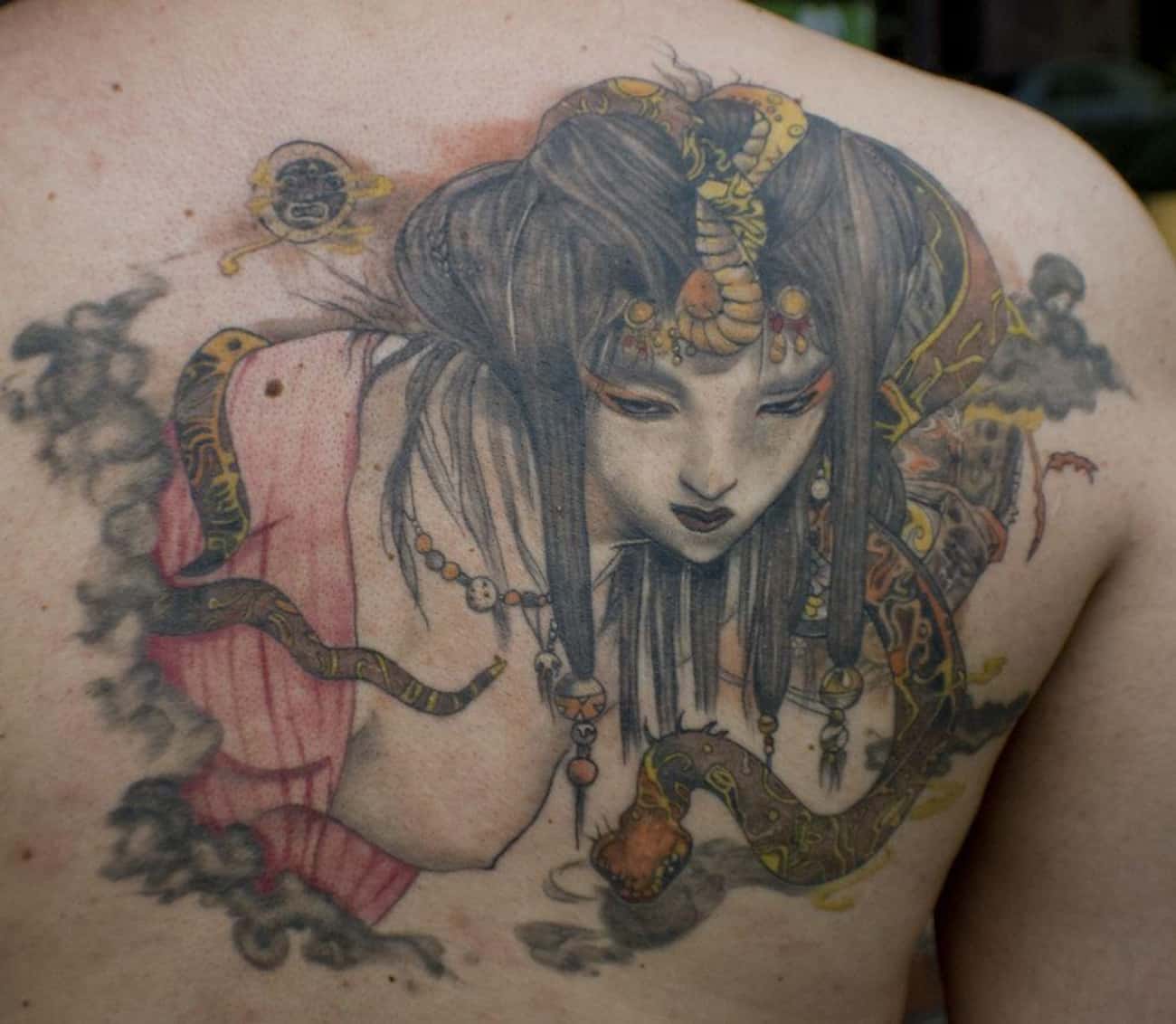
The snake tattoo can have many significances throughout Japan’s history. They are revered as a messenger of god or a creature that embodies a curse if their habitat is destroyed. In Japanese mythology, snakes are linked to wisdom, prophecy, and power from the Earth. They also symbolize divine feminine qualities and may also be a symbol of protection from sickness or bad fortune.
According to the Chinese zodiac, the people who are born during the Year of the Snake are philosophers and thinkers, intelligent individuals with a strong streak.
The Samurai
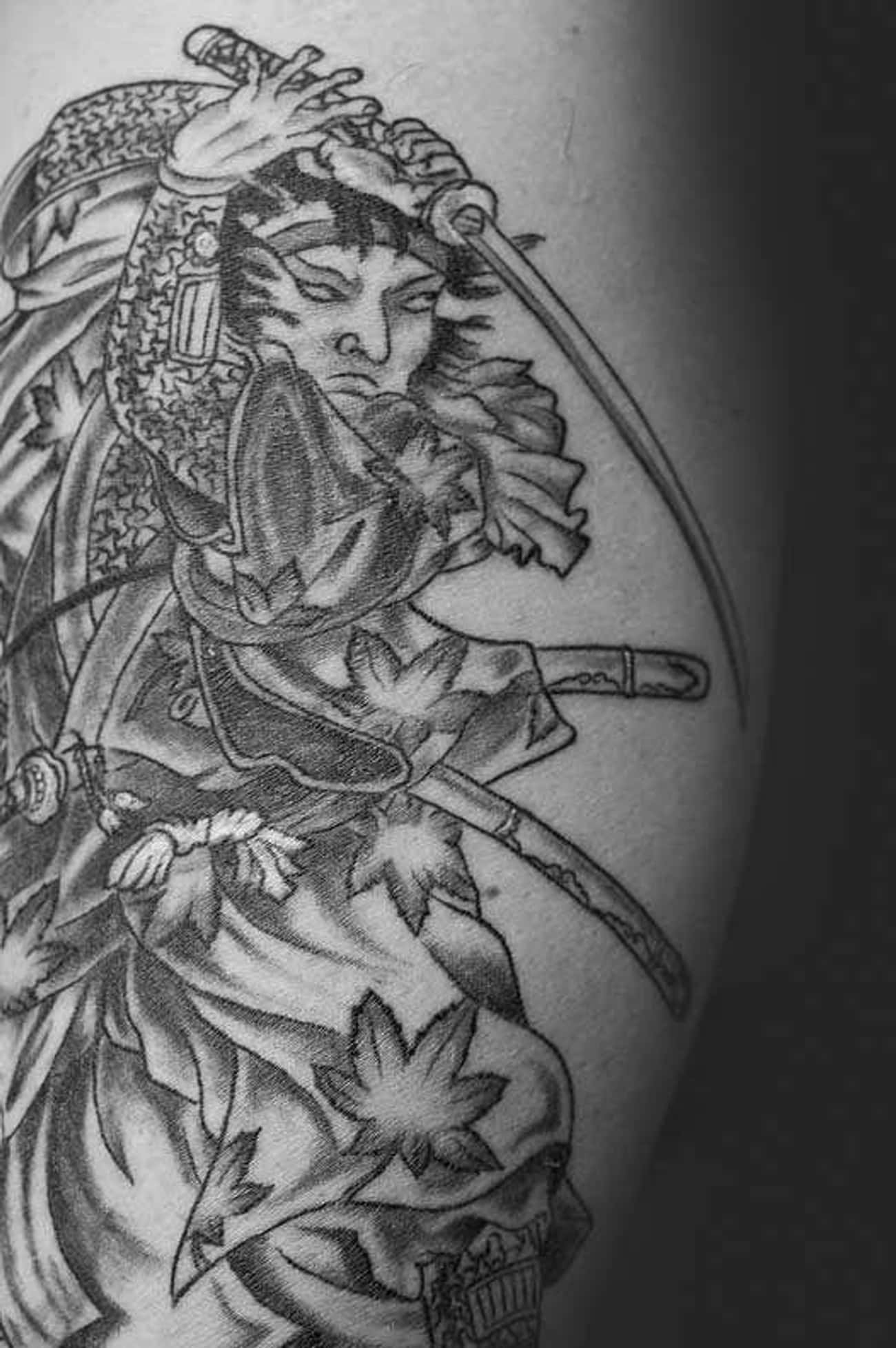
Samurai tattoos are an ideal code of Bushido. The code emphasizes respect, courage, honor, and proper behavior and is integral to Buddhist and Confucian concepts. Yakuza has adopted several rules from Bushido and are regarded as the protectors of the old Japanese tradition. An examination of the Yakuza’s history reveals this is not the case. The early Yakuza were enemies of the samurai or had a very uncomfortable relationship with them.
When samurai came into mainstream society during the Edo and Meiji period, some joined the Yakuza and were given samurai tattoos to show a sense of their identity and heritage.
Cherry Blossoms
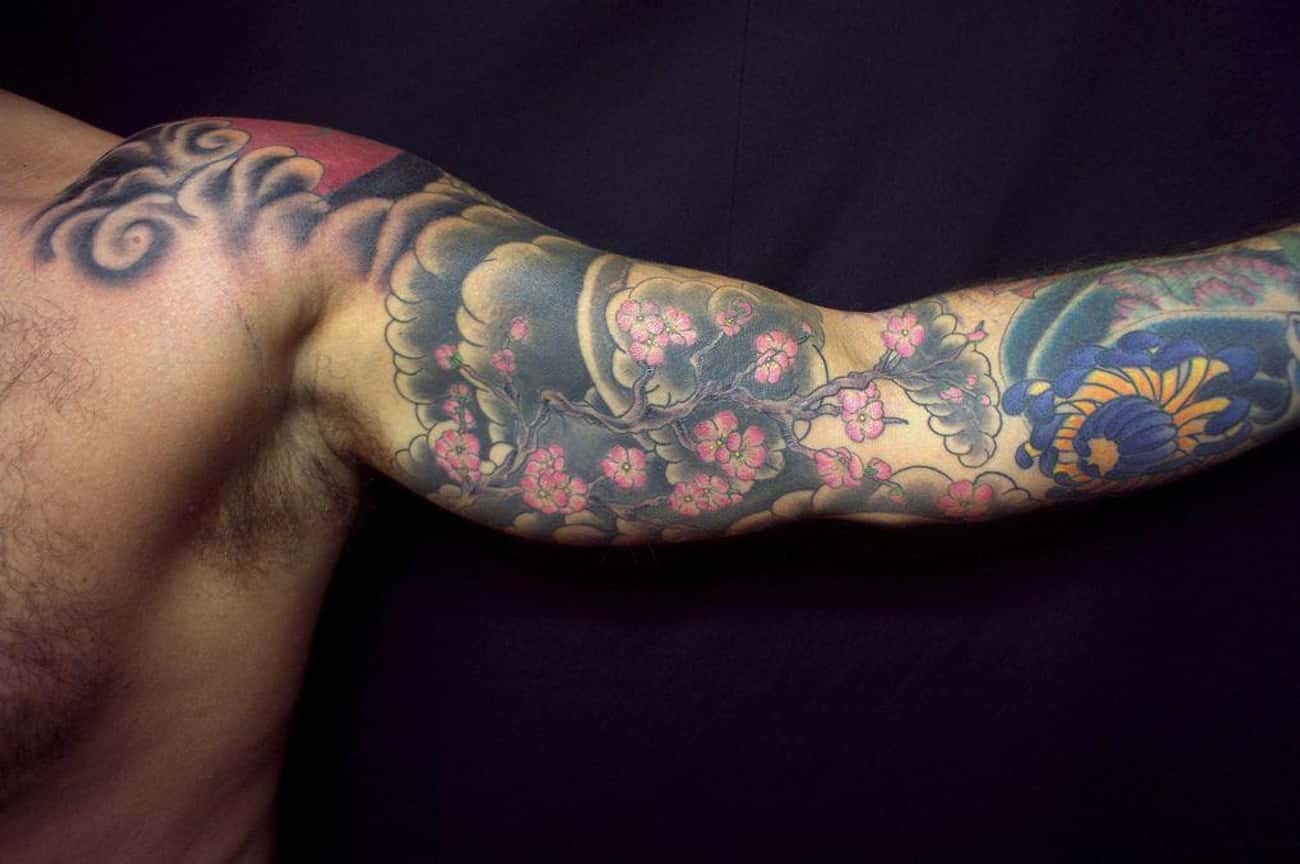
The cherry flowers (“sakura”) are essential in Japanese culture. Their short duration and short life span symbolize the existence of life, which in the traditional Japanese belief is nothing as grass in a fast-moving stream. After Sakura has fallen off the tree, they’re scattered by rain and wind and disappear into the ground.
Every year, the Japanese celebrate the hanami (flower viewing) as a celebration of life where family and friends get together and enjoy a drink while taking in the beauty of spring Sakura. If you think about it, the sakura tattoos show that life is brief but filled with color and beauty.
Oni Mask

Onis are demons or ogres who inflict brutal punishments on those who are wicked. They’re tall, terrifying, and usually depicted in blue or red skin, wild white hair, and tusks. They carry massive, spiked clubs and alter their appearance at will; they can inflict illness, sanity, and even death as they please. They are intelligent and highly vile. Their preferred food is human flesh.
So, the oni mask tattoo is a symbol of the enforcement of the code of conduct or the distribution of punishment. Oni is believed to be a terror to villages, create social discord, are regarded as reincarnations of a particular group of criminals, and are compatible with the yakuza style of life.
The Tiger

The Tiger (“tora”) is a symbol in Japanese tattoos to protect against evil forces, diseases, and unlucky luck. In Japanese folklore, the tiger symbolizes the autumn season and can manage the wind as one of the four sacred animal species representing the elements. It also symbolizes determination and strength.
The Skull

Also known as “zugaikotsu” in Japanese, Skull tattoos are a symbol of changes, cycles of existence, and reverence for the ancestors. The concept of death is seen as part of the cycle of life, which is why the skull can be a symbol of the life cycle itself.
The Foo Dog

Foo dogs often referred to as”the Lions of Buddha, are guardians of Buddhist temples. If you’ve visited any Japanese temple, you’ve seen statues of foo dogs, usually in pairs and known as Komainu. The animal is a lion and is named after the resemblance it has to dogs.
A popular tattoo choice of the Yakuza, The foo dog, offers security against evil and danger. Since foo canines are in groups, it’s not uncommon for someone to get two tattoos.
The Severed Head
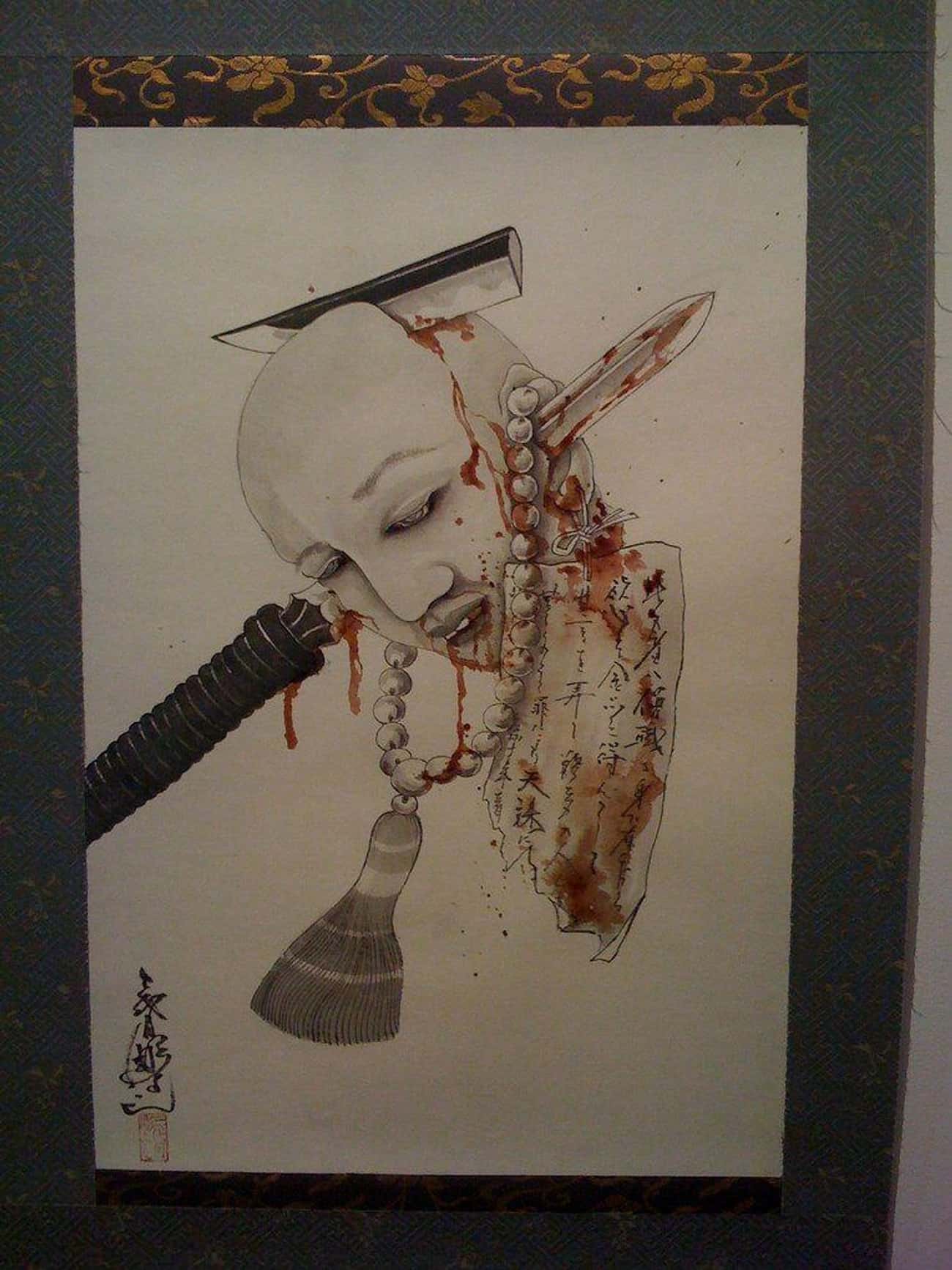
The head tattoo severed or Namakubi could mean courage, confidence, and, more bizarrely, respect for an enemy. It could also be interpreted as an act of warning. Nothing can say “don’t play with me” as clearly as a head that has been cut off tattooed on your body. The design has its roots in the samurai culture of hunting heads during combat.
The Peony
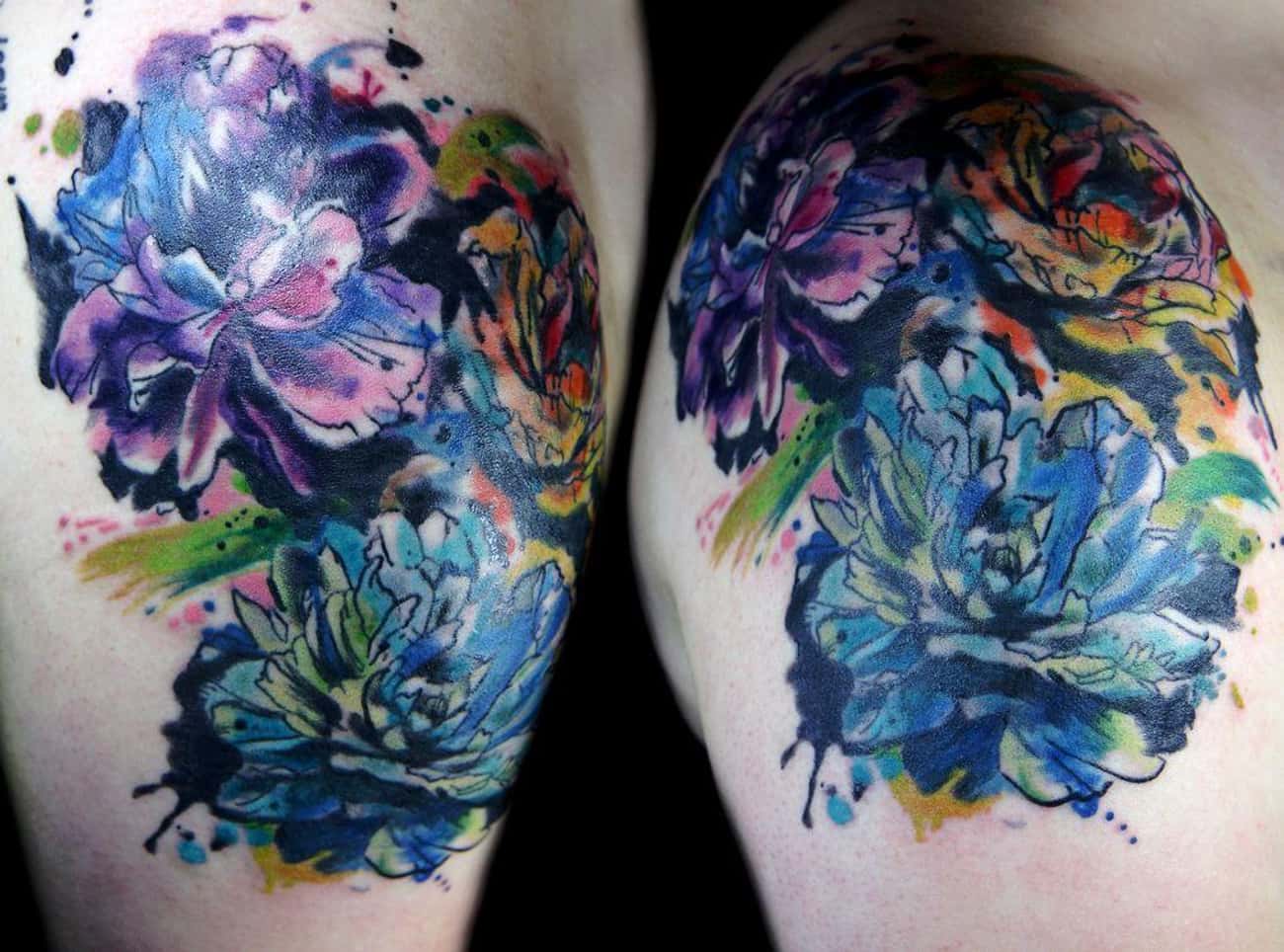
The peony flower or Botan symbolizes wealth, beauty, and prosperity. Contrary to its physical beauty and connection with beauty, the peony flower is referred to as “the King” of Flowers in Japan. As such, it symbolizes masculine character and a devil-may-care attitude.
The Chrysanthemum
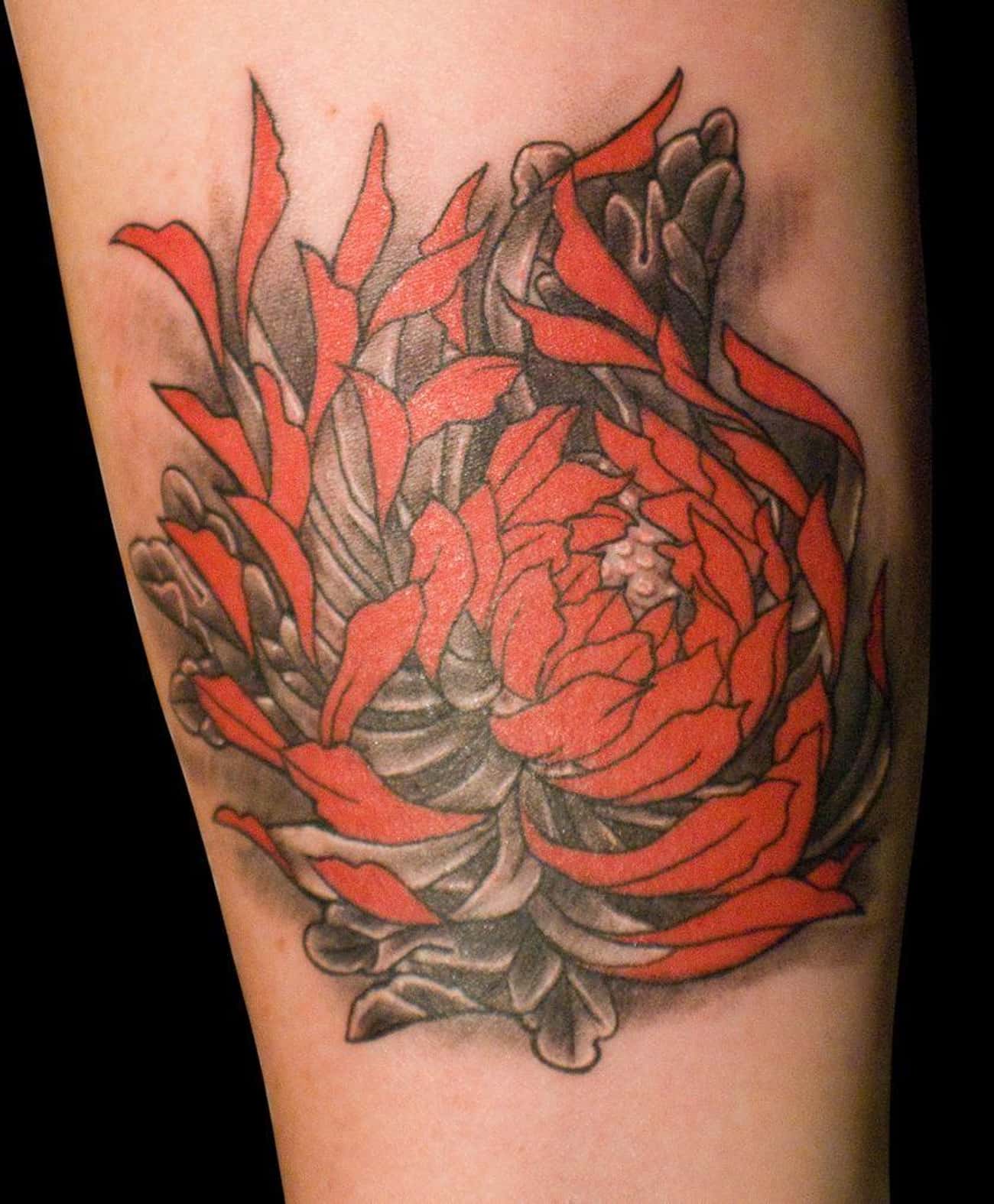
In Japan, the chrysanthemum flower is the emblem of the Imperial family. It is believed to be the sun’s flower, with its petals radiating outwards like flames. The flower’s central part symbolizes the Emperor’s status in the center of everything. The tattoo is a symbol of long-lasting happiness and longevity. The flowers are often incorporated along with other themes in intricate, large-scale tattoos. Chrysanthemums often appear alongside dragons in these pieces.
The Maple Leaf

The maple leaves (“Momiji”) represent the symbols of the passage through time. The leaves are usually depicted in tattoos caught in the breeze or floating on the water, symbolizing people caught up in the flow of time. The change of the leaves illustrates this cycle as the seasons change.
The Lotus
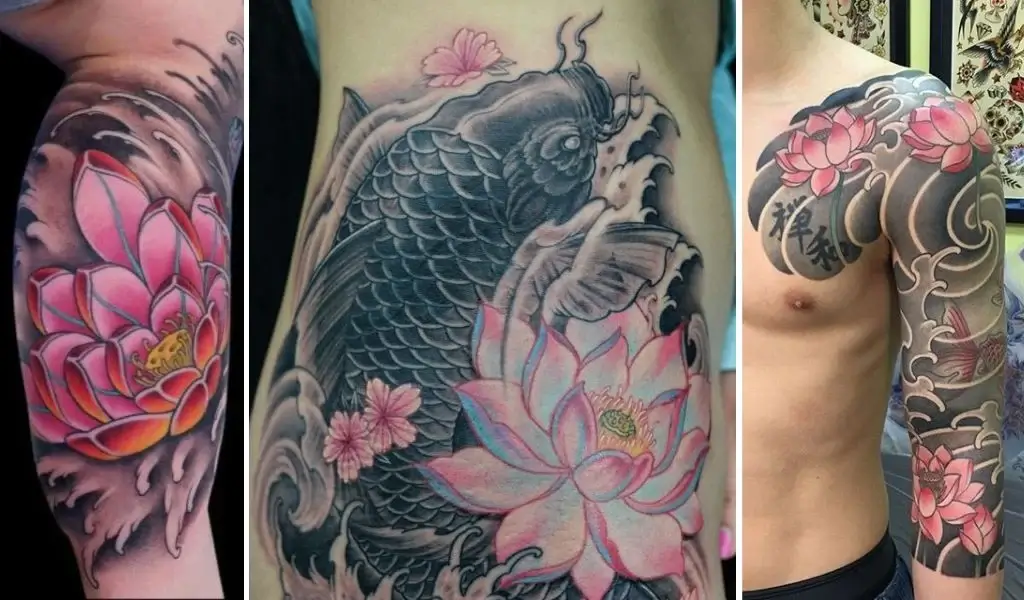
The lotus flower is deeply connected in a way to Buddhist religious tradition. In Japan, the lotus symbolizes the struggles of life to achieve its maximum fantastic potential. The flower is born in the depths of a lake and slowly moves up to the surface where it blooms. The blooming lotus tattoo symbolizes spiritual awakening and the metaphorical trek through the mess of existence to a higher realm of reality.
Water

A lot of Japanese tattoos include water-based articles. It symbolizes change, adaptation, and life. The island nation frequently features water in its art, and the ocean is commonly used to symbolize the power of nature.
Leave a Reply