• Skip to main content
  • Skip to secondary menu
  • Skip to primary sidebar

Japan & Extra

You Every day Japan

  • Culture
  • Travel
  • History
  • Food
  • Manga
  • Job
  • Business
  • Technology
  • News

Did Hirota People in Japan Deliberately Deform Their Skulls?

August 22, 2024 by Japan Daily Leave a Comment

The Mystery of Flattened Skulls

For decades, archaeologists have been captivated by an enigmatic discovery on Tanegashima, a Japanese island. In 1957, as researchers delved into the remnants of the Indigenous Hirota people, they stumbled upon an intriguing puzzle. Each unearthed skull bore a peculiar deformation, leaving archaeologists questioning whether these alterations were intentional or the result of unforeseen natural forces.

According to the study authors, the Hirota skulls bear a distinct trait: they exhibit a short head with a flattened rear section, encompassing the occipital bone and the posterior regions of the parietal bones.

The Findings: Artificial Cranial Deformation

Now, a comprehensive study conducted by scientists from Japan’s Kyushu University and the University of Montana offers fresh insights into this age-old mystery. Their research, recently published in PLOS ONE, was led by Noriko Seguchi from Kyushu University. By comparing the Hirota skulls to those of contemporaneous Japanese groups spanning the third to seventh centuries C.E., they shed light on the matter.

Using 2D imagery and 3D scans, the team meticulously analyzed the shape of 19 Hirota skulls alongside skulls from the Jomon people of Kyushu Island and the Doigahama Yayoi people. Astonishingly, only the Hirota skulls exhibited deformations, characterized by bulges and irregular shapes that could not have occurred naturally. The conclusion? The Hirota skulls had undergone intentional cranial modification.
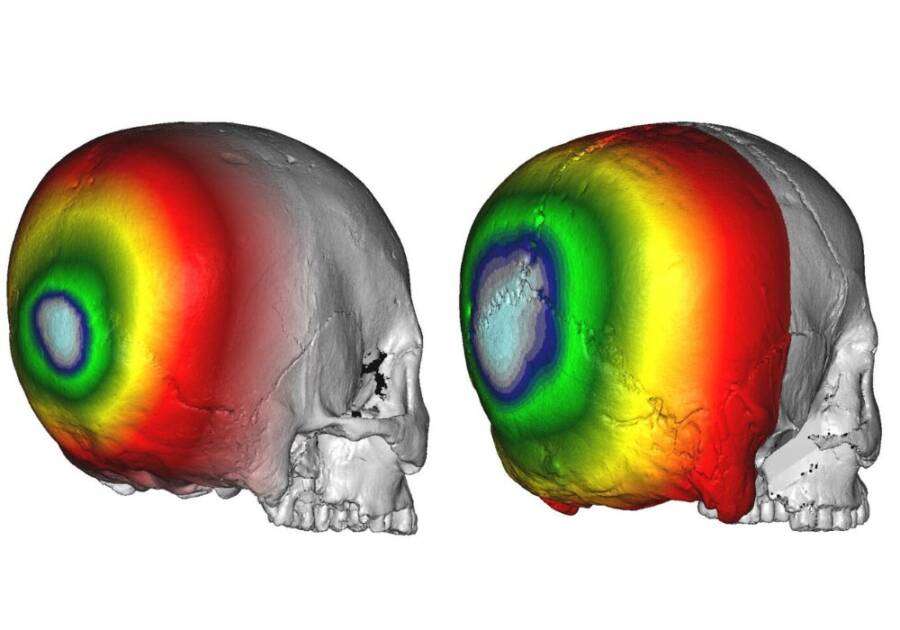
A deformed Hirota skull (right) compared to a Yayoi skull from a similar time period (left).

Unraveling the Motivation Behind the Practice

The research also revealed that both male and female skulls displayed these deliberate deformations, with no discernible difference between the sexes. While various cultures throughout history practiced artificial cranial deformation, motivated by factors such as religious beliefs, beauty standards, and social status, the reasons behind the Hirota people’s cranial modification remain shrouded in mystery.

Preserving Group Identity and Trade

The researchers postulate that Hirota people might have deformed their crania as a means to safeguard their group identity and, intriguingly, to facilitate long-distance shellfish trade. Their practice likely commenced early in an individual’s life, with infants’ skulls being gently reshaped over time. The Hirota site yielded crania that were notably shortened and flattened at the back, exhibiting peculiar depressions where the skull’s bones interconnected.
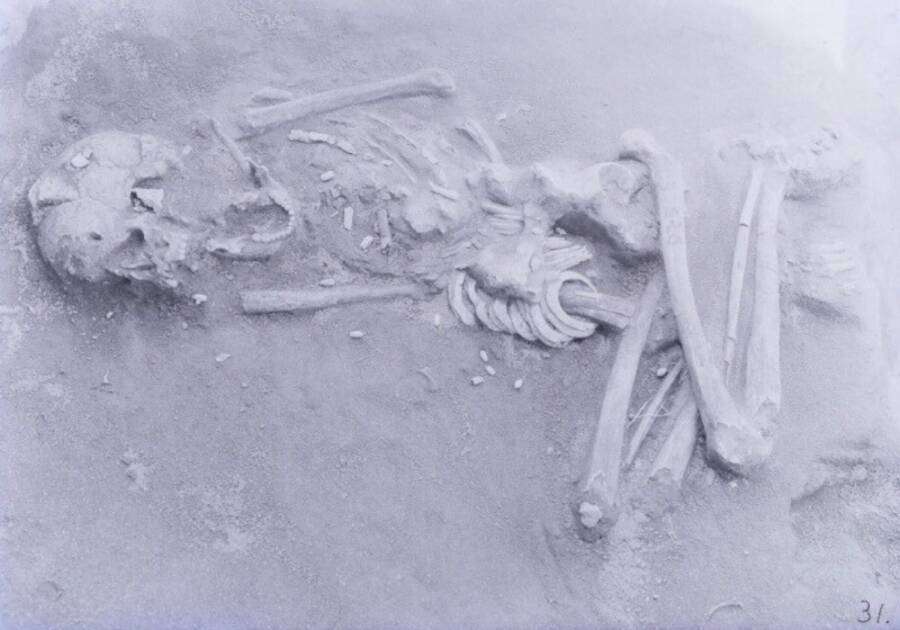
One of the skeletons found on Tanegashima

Unraveling the Tapestry of History

With the deliberate nature of the deformations established, the researchers now aim to uncover the underlying motivations driving this practice among the Hirota people. Additionally, they hope to explore the connection between these deformations and the extravagant shells, sourced from hundreds of miles away, found alongside the skeletal remains.

The Hirota people’s ancient tradition of cranial modification remains an intriguing enigma, and further investigations in the region may illuminate its social and cultural significance within East Asia and the broader world.

Filed Under: Culture, History

Reader Interactions

Leave a Reply Cancel reply

Your email address will not be published. Required fields are marked *

Primary Sidebar

YOU MAY LIKE

5 Sites To Visit During Your Trip To Kyushu

Kyushu, the southernmost of Japan’s four main islands, is a treasure trove of natural beauty, rich history, and vibrant culture. From steaming volcanic landscapes to centuries-old shrines and bustling hot spring towns, this island offers an unforgettable experience for every traveler. Whether you’re a history buff, nature enthusiast, or food lover, Kyushu has something special […]

Japanese White Strawberries That Cost 10$ Per Piece

Imagine sinking your teeth into a strawberry that’s not just a treat but a marvel—a golf-ball-sized, milky-white gem bursting with a pineapple-candy flavor. In Japan, this isn’t a dream; it’s the White Jewel strawberry, or Shirou Houseki, a rarity that costs a stunning $10 per berry. For fruit lovers, it’s not only about taste—it’s about […]

COVID-19 Infections Surge Again in Japan Amid Heatwave; 80% Linked to Nimbus Variant

September 15, 2025, reports indicate a resurgence of COVID-19 infections across Japan this summer, driven by the Nimbus variant (NB.1.8.1), an Omicron sublineage. The variant, first detected globally in January 2025, has been designated a “variant under monitoring” by the World Health Organization (WHO) due to its increased transmissibility, though it does not appear to […]

Jesus: The Japanese Rice Farmer

Imagine yourself taking a scenic drive through rural Aomori prefecture. Up ahead you see some road signs for a rest stop, some gas stations, the grave of Christ…wait! Stop the car! Wipe your glasses and give yourself a quick drug test. Nope, your eyes are not playing tricks on you. You have just discovered the […]

Top 15 Best Japanese Actors of All Time

Japan has given the world some of the most talented and iconic actors in film history. From classic samurai epics to modern blockbusters, these actors have left an unforgettable mark on cinema. Many of its finest actors have achieved international acclaim, captivating audiences across Asia, Europe, and the U.S. Known for their versatility, they shine […]

  • Privacy Policy
  • About us
  • Contact

Copyright © 2026 · Magazine Pro on Genesis Framework · WordPress · Log in