In the 1990s while I was awkwardly transitioning from childhood to adulthood, the world was in the throes of another strange transitional period between analog and digital.
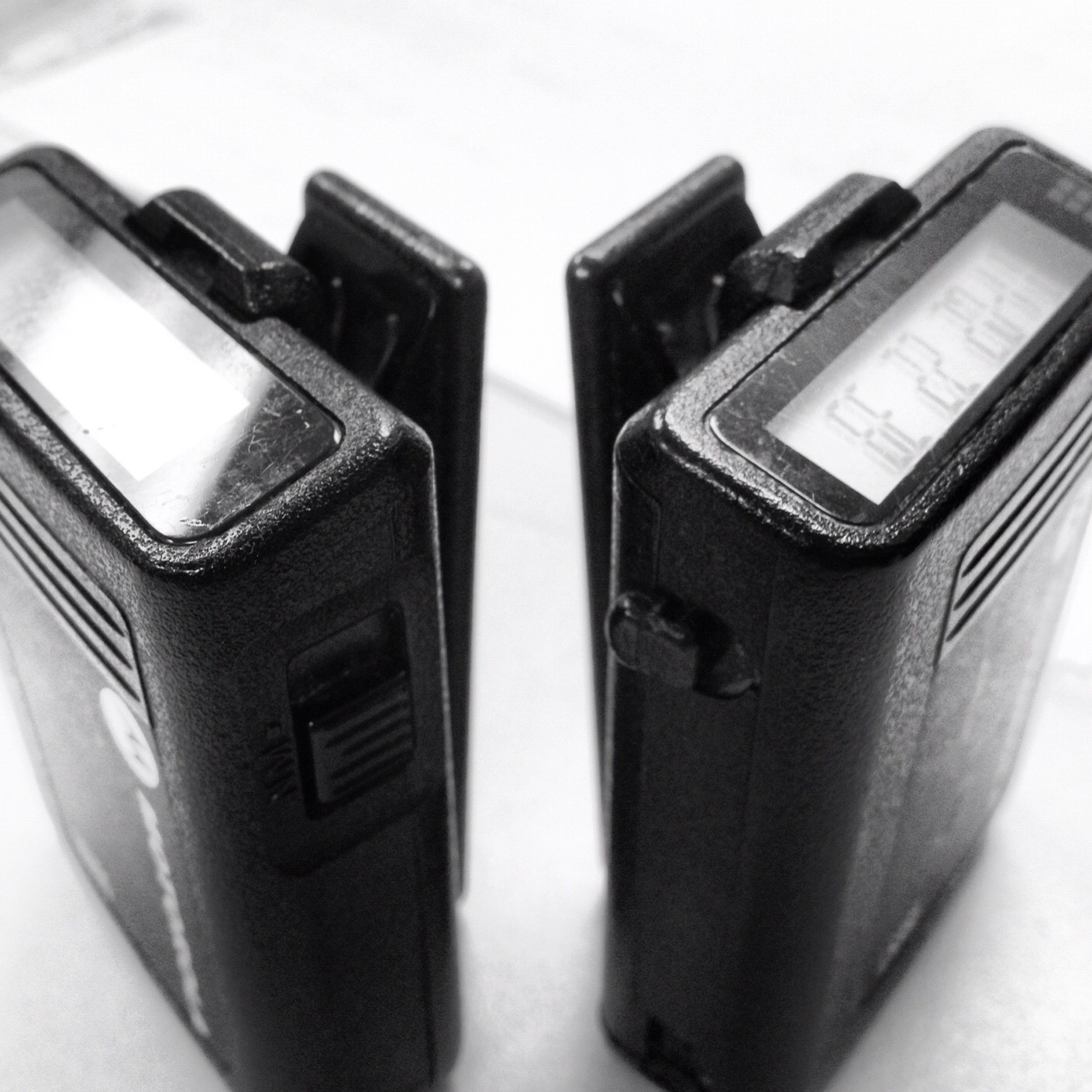
It was a time when the internet was still charged by the minute and your high score in Slingo could be ruined when your sister picked up the phone and cut your dial-up connection. When emails were downloaded once a day, and SNS took the form of message boards. It was a time before smartphones, and really before any sort of mobile phones had become commonplace. It was the era of the pager.
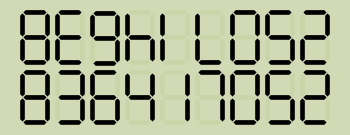 English: “Beghilos” conversion table (digit character). Vectorized by Mysid on a PNG by Saxbryn. (Photo credit: Wikipedia)
 43770 81764 (Hello Bitch?) – we said that a lot back then too, might as well own up to it. Beepers were the world’s first foray into texting, and teenagers the world over were obsessed. There is nothing like that anticipation of waiting for your special someone to get your message, get their ass to a pay phone, and reply with an equally obscure combination of numbers to decipher.Basically English pager code was based on numbers that slightly, and in some cases just barely resembled roman orthography. For example “4” sort of looks like a one-legged “A,” and “8” more or less resembles a “B.” It wasn’t perfect; some letters overlapped, others were a stretch of the imagination, but it got the job done. More complex phrases involved counting the number of letters in each word of a common phrase. For example 143 represented “I Love You.”
Pager code was all the rage in the States. Meanwhile across the Pacific, Japanese teenagers were sending each other similar messages on their pocket bells. Without an alphabetic system, you may wonder how they sent each other all the sappy drivel their American counterparts were sending. How did they call each other a bitch in Japanese pager code? This is where all the various readings of Japanese numbers comes in handy. For example, the number four can be read as shi or yon. The number eight can be read as hachi, or ya. So the numbers 0906 would be read as o-ku-re-ru, 遅れる – the Japanese equivalent of “running late!”
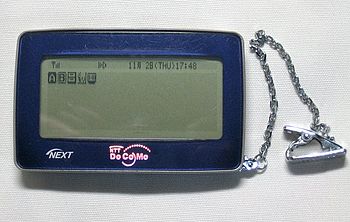 Pocket Bell (Photo credit: Wikipedia)
0833 could be read as o-ya-su-mi (お休み) with 0 being read as an English “O,” 8 being read as ya as in yatsu, the first 3 being read as su (the first syllable of the English word “three” but pronounced suri スリー) and the second three being mi as in mitsu 三つ. Now you know how Japanese teens told each other “good night.”How about some other mainstays of American pager code. “Where R U?” would be written in Japanese pager code as 10105 with one being i, the zero becoming the word for “gap” – 間 or “ma”, 10 being read as the Japanese cardinal number to, and 5 read as the usual go. Only in Japanese pager code, the little diacritical marks (ten-ten 〃) that change certain sounds can be applied or disregarded willy-nilly, so a to can be read as do, or a go can become ko. *That gives us the reading i-ma-do-ko – 今どこ?
To decipher these messages either requires an enigma machine, or a deep knowledge of Japanese linguistics. Then of course there are some messages where Japanese teens simply got creative. How about the short but sweet invitation -015? The hyphen is often called a “stick” in Japanese, or bo. The circle in this case is called a “ring” and the next two are read as usual, i-ko. So this tricky little message translates to bo-ringu-iko (ボーリング行こう) or “Let’s go Bowling.”
No introduction to pager code would be complete without the quintessential message sent by millions of teens worldwide. 114106. In this case the first 1 looks like the English letter “I” which makes this word ai-shi-te (short for ten)-ru better known to Westerners as 143, or for the pager code illiterate – “I love you.” Looking back, the tec
Leave a Reply